

Congress was faced with a deadline decision about federal funding: pass short-term funding to buy more time to budget or let the federal government shut down.

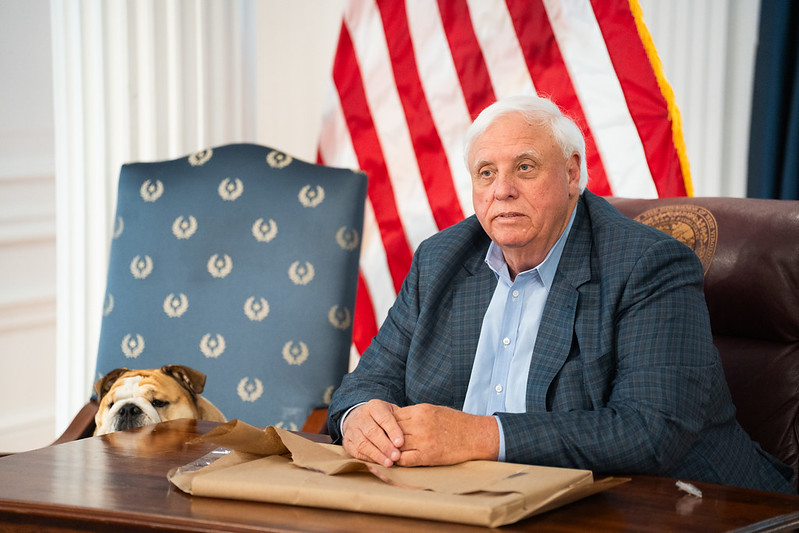
Jim Justice, a leading candidate for U.S. Senate, says he isn’t sure how he would have voted.
In a news briefing this week, MetroNews asked the governor whether he would have opted for the short-term funding or allowed the government to shut down while holding out for longer-term allocations aiming for steeper cuts.
“I won’t give you how I would have voted because first and foremost I’m not voting today, and the reason I’m not voting today is I don’t have all the information, do I?” Justice said in response to the question.
“Lay that aside just a second and let me just make these comments: For gosh sakes a living, anybody in their right mind that looks at Washington, D.C., today would have to say ‘Good Lord, what a mess. What a mess.’ And the other flip side of it is that anybody in their right mind that would look at the bloated federal budget today and all the dollars we spend and just throw away in every direction known to man would have to think surely to God above we can do a little bit better about spending the taxpayer dollars than what’s being done today.”
HOPPY KERCHEVAL: Justice dodges shutdown/CR questions
The national debt, reflecting borrowing, is $33 trillion.
The five most expensive areas of federal spending are Social Security (23%), healthcare (15%), national defense (13%), Medicare (13%) and income security programs that provide cash and other government assistance to individuals in need, such as those who are unemployed or earning a low income (13%).
“With all that being said, surely to goodness we can find areas of waste and unnecessary spending without hurting folks and absolutely find a way to curb our spending,” Justice said.
Mooney: ‘I am calling on Justice to state clearly’
The federal government was set to shut down at midnight Saturday if no resolution had been found.
The stopgap bill that passed Congress assures funding of the federal government only until Nov. 17. Senators Joe Manchin, a Democrat, and Shelley Moore Capito, a Republican, voted in favor of the bill. So did Congresswoman Carol Miller, R-W.Va.
Congressman Alex Mooney, R-W.Va., voted against it. Mooney has been advocating for longer-term legislation that cuts more deeply into federal spending.
Mooney is competing against Justice in the Republican primary election for U.S. Senate.
Mooney’s Senate campaign put out a statement shortly after the vote, asking “Where is Jim Justice on the latest 45-day stopgap spending measure?”
“I am calling on Jim Justice to state clearly for West Virginians whether or not he supports the latest 45-day stopgap spending measure,” Mooney stated. “Justice has tried to fly under the radar and keep his thoughts on the matter concealed, but voters deserve to know where stands: does he support more reckless spending or getting our economy and inflation under control? Congress keeps kicking the can down the road.”
Then-House Speaker Kevin McCarthy, R-Calif., chose Saturday to pursue the continuing resolution, relying on more Democratic votes than Republican to get it done. This week, McCarthy lost a vacate-the-chair motion introduced by Congressman Matt Gaetz, R-Fla., whose long-standing criticism of the speaker culminated with the short-term funding vote.
Mooney, speaking this week on MetroNews’ “Talkline,” said he voted against the continuing resolution but in favor of retaining McCarthy because it’s so challenging to identify a leader who can galvanize a majority of House members. But now that the search is on for a new speaker, Mooney wants an emphasis on an open budgeting process with bills that roll back government spending.
“I think we need to pass the 12, single-issue spending bills. We did pass four of them, the Department of Defense being the biggest one. Actually, the four that we passed comprise 70 percent of government spending as far as discretionary spending,” Mooney said on “Talkline.”
He added, “Continuing resolutions are no way to run government.”
Kevin McCarthy: ‘The Senate hasn’t passed one bill’
The bills that have passed the House are not anticipated to move any farther in the Democratic-led U.S. Senate.

McCarthy, speaking Sunday on “Face the Nation,” defended what the House had been able to do leading up to the funding deadline and offered a comparison to the Senate.
“So compare this to the Senate. The Senate hasn’t passed one bill. The Senate didn’t pass anything about the shutdown. The Senate hasn’t passed anything about securing the border. The Senate hasn’t passed anything about $100 a barrel,” he said, referring to the price of oil.”
By Tuesday afternoon, McCarthy was out as House leader.
The Senate has been working on 12 longer-term appropriations bills that reduce the rate of federal government growth, but without the steeper cuts. That approach has largely been bipartisan.
Now, the Senate is on recess until Oct. 16.
Government funding expires on Nov. 17.
Capito: ‘We are facing headwinds from our own members’

Capito, a Republican who serves on the Senate Appropriations Committee, was asked by MetroNews during a news briefing this week whether McCarthy’s assessment was fair.
“What we did do was pass all 12 of our appropriations bills out of committee. That’s the first time we’ve done that in three to four years on the Senate side,” Capito said. “We do have three bills that are combined into what’s called a minibus to pass, hopefully, on the floor.
“But he is correct: We hadn’t passed it yet because we are facing headwinds from our own members, our own members being Republicans who won’t permit us to move forward. But we’re going to move forward, I think, and this will give us greater impetus to do this.”
Republican senators like Ron Johnson of Wisconsin and Rand Paul of Kentucky have objected to bundling the appropriations bills together and, instead, want to debate one spending bill at a time.
As the federal government hurtled toward potential shutdown, Capito said, senators wanted to see what the House could do.
“There was a lot of coordination between leadership to see if we should move forward or if we should wait and see what the House can pass in the end. Well, I think we did it the right way to keep government open because that to me was the number one issue — a very plain and simple vote for me, keep the government open and try to work out our differences,” she said.
Now Congress could be in a similar position next month.
Justice: ‘It is a flat-out dog’s mess’
Justice is campaigning to join the Senate and its difficult decisions about federal spending. Today he said that’s because he thinks it’s his duty.
“I can’t tell you how I would have voted because there’s probably a whole lot of other factors that would have come into play, but I can tell you it is a flat-out dog’s mess. That’s all there is to it and you know, I’m not a congressman and I’m not a senator today. I’ve told people over and over and over, as far as a burning desire for me to go to Washington, D.C., there’s nothing that they’re doing up there that I’m crazy about.
“But I will go, and I will go because I truly believe I can make a difference and I’m a patriot.”
Justice was recruited for the run by Republican leaders in the Senate, including Minority Leader Mitch McConnell. Capito has endorsed Justice’s campaign.
Mooney’s campaign responded to Justice’s comments today by saying the governor has to rely on their advice.
“Big Spending Liberal Jim Justice Needs the D.C. Swamp to Tell Him What to Think,” the Mooney campaign headlined a press release.
“Every Republican in West Virginia has an opinion on whether the government should have stayed open or not. Everyone but Jim Justice,” stated John Findlay, Mooney’s campaign manager.
“He can’t be straight with the people of West Virginia because he supports the skyrocketing Washington spending. Not having an opinion disqualifies him for the U.S. Senate.”