

CHARLESTON, W.Va. — The state Public Service Commission began taking testimony Monday in an evidentiary hearing in Appalachian Power Company’s latest fuel cost case.
Appalachian Power and its sister company, Wheeling Power, are seeking a rate increase of $20.4 million under what’s called the Expanded Net Energy Cost. Both companies are subsidiaries of American Electric Power.

ENEC allows the companies to be reimbursed dollar-for-dollar for the coal and natural gas it had to purchase to fuel its plants.
In the current case, Appalachian Power and Wheeling Power, are asking the PSC to decrease rates by $1.9 million for their residential customers but raise the ENEC part of its approved rate by $22.3 million for their larger industrial customers.
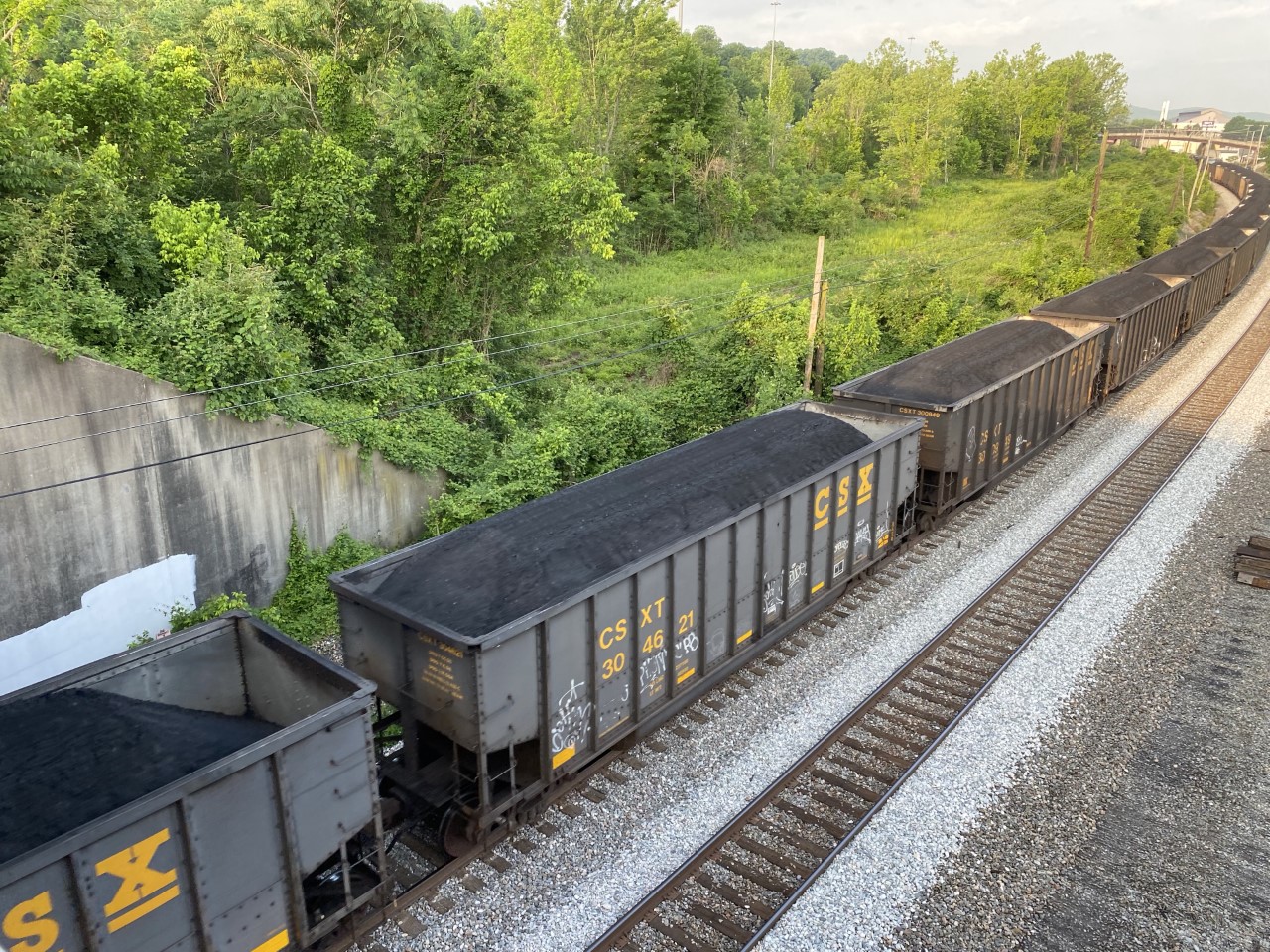
A point of contention between the state Public Service Commission and Appalachian Power Company in recent years has been coal supplies for the company’s power plants.
PSC Chairman Charlotte Lane asked AEP Director of Coal Purchasing Kimberly Chilcote Monday how much coal is currently stockpiled at Appalachian Power’s three coal-fired power plants in West Virginia.
“Amos (John Amos plant) low-sulfur (coal) we have 82 days and Amos high-sulfur we have 45 days. There is 82 days at Mountaineer and Mitchell low-sulfur is unfortunately our biggest pile at 123 days and Mitchell high-sulphur is at 59 days,” Chilcote said.
Lane asked.
“Do you have enough (exiting coal agreements) to keep the plants running for the foreseeable future?”
“I believe we do,” Chilcote said.
The power companies agreed to a settlement last year to recover fuel costs that have been piling up since 2021. The companies were joined by The West Virginia Energy Users Group, which includes some of the state’s biggest industrial customers, and the West Virginia Coal Association in the settlement.

The settlement allows an agreed-to $503 million balance to be secured through bonds and then paid off over a period of time. The legislature passed securitization legislation which opened the door for the deal.
The settlement also stops Appalachian Power and Wheeling Power from from raising ENEC rates again until sometime in 2025.
Lane asked Appalachian Power Company Director of Regulatory Services Randall Short Monday why the companies couldn’t settle the new case which is for a relatively low amount of $20.4 million. Short said it couldn’t be worked out because residential customers are getting a decrease in the case and larger users of power an increase.
“We feel these are costs that we’ve incurred and to attempt to settle it and give away dollars and not recover those would not be in the interest of the company, our viability going forward,” Short said. “It wasn’t quite as easy to settle as other cases, while the dollars were small, the issues were quite entrenched.”
Short said many things go into the ENEC filing. He said one of the largest elements is transportation costs.
“We have tried to explain that there are further considerations that we take when we consider how we are going to bid our fuel,” he said.
Also at issue in the case is the percentage of full-capacity at which Appalachian Power operates its power plants. Short testified Monday it’s in the industry acceptable range of 33%.
“I think we’ve demonstrated that while people may hope we maybe could have achieved something differently, we think we’ve achieved something very similar to our peers and that’s a measure of prudency,” he said.
The PSC will hold both an in-person and virtual public hearing in connection with the case at 5:30 p.m. Monday at its headquarters in Charleston.
The evidentiary hearing is scheduled to continue Tuesday.
The ENEC makes up just one portion of a customer’s monthly bill. In a separate case that will be discussed during the next year, the utilities are seeking an increase in their base rates of 15.4%. If approved, it would increase the average residential bill in by $28.72 a month.