


State school board President Paul Hardesty has consistently described his concerns about the adequacy of West Virginia’s school funding formula and has described the situation in terms of a shipwreck about to occur.
“The boat’s getting ready to hit the rocks, and I can’t make anyone in two of the branches of government to understand that,” Hardesty said in a briefing with state government reporters earlier this summer, referring to the executive and legislative branches.
“Therefore it might rely on the third to get some clarity to the situation, just like it did 40 years ago.”
By “the third,” Hardesty was referring to the judicial system.
And now that proposition is under way. On Friday, lawyers for American Civil Liberties West Virginia filed a lawsuit asking the West Virginia Supreme Court to determine that West Virginia’s school funding formula is inadequate and results in inequities across the state.
The lawsuit asks justices to order state officials to fix school funding. The filing spotlights Lincoln County as a primary example of constitutional failure.
The petition lists as respondents House Speaker Roger Hanshaw; Senate President Randy Smith; Auditor Mark Hunt; Tax Commissioner Matthew Irby; Treasurer Larry Pack; the state Department of Education; members of the state Board of Education, the School Building Authority, State School Superintendent Michelle Blatt, plus Lincoln County school board officials and county officials.
So, technically, Hardesty is one of the people being sued.
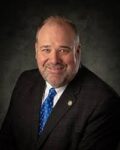
In a statement provided to MetroNews, Hardesty said he is not surprised by the lawsuit, in part because the lawyers who filed it provided the 30 days notice that is required.
But, he reflected, “In my four years as president of this board, I have repeatedly asked for help with regard to the school aid formula. It is a 44-year-old formula that does not meet the current needs of our 55 county boards of education and the 234,000 children they serve every day.
“The lack of adequate funding for our 45,000 special needs children is the fatal flaw in the current formula that is crippling county boards and contributing to the large number of school closings across the state. County BOEs ran a collective deficit of $224 million during the last school year to educate our special needs children.”
In recent years, West Virginia has again faced widespread school funding shortfalls, driven largely by an enormous deficit in special education costs and leading to school closures and consolidations all over the state.
Education officials have warned that 8 to 20 schools face closure or consolidation across West Virginia in the coming year.
Lawmakers have discussed replacing the enrollment-based funding formula with an updated needs-based tiered system, but all of their proposals have crashed out the past couple of legislative sessions.
In the off season, lawmakers have focused several interim committee discussions on possibilities for reforming the school aid formula but it’s not yet clear what they intend to do.
Gov. Patrick Morrisey has taken a reserved approach to West Virginia public school funding, with his administration maintaining that simply injecting more money into the system is not the solution.
Hardesty said, “It would be easy for me to point fingers and cast blame. I have no interest in doing that. That does absolutely nothing to help fix a problem.
“I do, however, stand ready to work with this administration, this legislature and anyone else who has a genuine interest to help find a solution to this problem. I remain hopeful that a solution can be hammered out prior to this lawsuit moving forward.”
The filing echoes West Virginia’s 1982 Recht Decision, a landmark court ruling that declared the state’s public school funding system unconstitutional because it created severe financial inequalities between rich and poor counties.
The original 1975 class-action lawsuit was filed by Janet Pauley, a Lincoln County parent who argued that children in low-income counties were denied the “thorough and efficient” education guaranteed by the West Virginia Constitution.
The 244-page opinion by Judge Arthur Recht, a circuit judge in Ohio County, found that reliance on local property taxes for school funding resulted in drastic funding disparities across West Virginia’s 55 county school systems.
The decision mandated that the state overhaul its public school financing, upgrade substandard facilities and establish equal, high-quality educational opportunities for all students regardless of where they live in the state.

“More than 40 years later, the same problems exist in schools across the state and particularly in Lincoln County,” ACLU-WV Legal Director Aubrey Sparks said.
“In many respects, the school funding formula is yielding results that are even less fair, and raise more constitutional concerns, than the system previously declared unconstitutional.”