

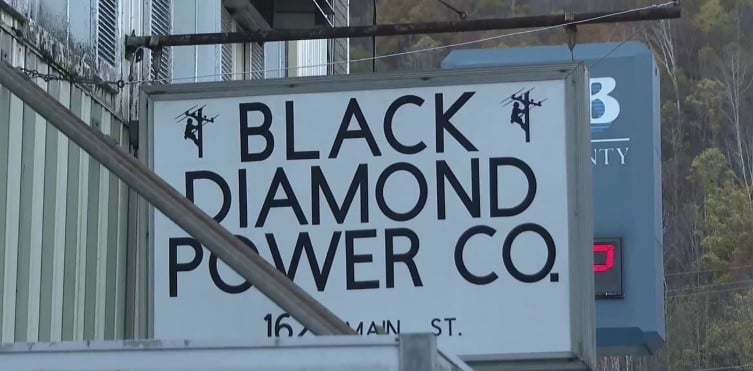
CHARLESTON, W.Va. — There are several unknowns about what’s next for a potential deal between troubled Black Diamond Power and Appalachian Power.
The two companies appeared before the state Public Service Commission last week for a status hearing. Black Diamond, which buys its power from ApCo, has been the subject of a PSC investigation after complaints from the customers it serves in Clay, Wyoming, and Raleigh counties. That investigation was launched more than a year ago.
Appalachian Power recently suggested that Black Diamond be put into a receivership, as the company owes ApCo around $3 million in back payments. PSC Chairwoman Charlotte Lane ordered Black Diamond and Appalachian Power to report back within 10 days with a timeline for next steps. That deadline comes up this Thursday, Oct. 1.

Speaker of the West Virginia House of Delegates Roger Hanshaw, R-Clay, said recently on MetroNews “Talkline” that Black Diamond’s footprint, giving electric service to around 4,900 customers in three counties, isn’t especially large.
“It’s a very small service territory, which is part of the problem,” Hanshaw said. “It’s hard to deliver service as a utility to a very small customer base. Over the years, the municipality has suffered from lack of maintenance, lack of investment by the company into the physical infrastructure and to the capital assets of the company.”
“As a consequence of that, there have been outages that have gone unaddressed for some period of time,” Hanshaw continued. “We’ve had reports of businesses that have got inadequate services at their businesses and place of operation.”
Hanshaw paid close attention to last Monday’s status hearing. He came away impressed by the direction of the new Black Diamond decision makers.
“The team that’s now running Black Diamond Power Company, now being led by former state Treasurer, former senator Tom Loehr, appears to finally have started a process of getting its hands around the problem,” Hanshaw said. “I was encouraged by that.”
Loehr is now the chief operating officer of Black Diamond. Loehr was hired three months ago. During his testimony before the PSC, he said much has been done in the last 90 days to get a handle on where Black Diamond is and what must be done to pay its bills.
There’s uncertainty about whether the entirety of Black Diamond will be sold to American Electric Power/ApCo, or just the areas of Wyoming, Raleigh, and Clay counties. Hanshaw said right now, the northern half of Clay County is serviced by FirstEnergy, while the southern half receives its service from AEP. Hanshaw said he hopes the PSC keeps the ratepayer in mind when considering whether or not to sign off on a deal.
“We want to be sure that, if that’s the path the companies choose, it doesn’t come with massive increases in rates to the ratepayers,” Hanshaw said. “That’s a situation we’re going to monitor pretty closely. I’m pleased that the Public Service Commission is taking it seriously, I’m pleased that Black Diamond Power — the first time now in a long time — is taking it seriously, and I appreciate that AEP has come to the table to offer assistance in whatever way that the commission and the company has deemed to be appropriate.”
Concern over Black Diamond Power’s overall status, if it were to be sold, could raise some questions. Hanshaw said there’s a chance that the PSC could order Black Diamond to get several ducks in a row, with respect to the issues highlighted by customers, before AEP takes over.
“The commission does have that authority,” Hanshaw said. “Before this series of events comes to finality, I expect that some version of that to be the case, there’ll have to be an appropriate exchange of information and what I heard was the I’ll-say-current leadership of Black Diamond Power say that they were willing to swing wide the gate on their books and records to let AEP or whomever see whatever records that anyone wanted to see.”
However, Hanshaw said, such a step may not be necessary. He pointed to the testimony from Loehr as showing a desire for transparency going forward.
Hanshaw said the PSC’s first concern with these types of potential deals is reliability of service. He said that the commission always considers the question, does this meet the needs of the community? From there, the PSC works with utilities to determine a rate structure, Hanshaw explained. He said that Black Diamond hadn’t negotiated with AEP on wholesale purchase rates in over a decade, which Hanshaw called “unacceptable.”
While the new Black Diamond leadership has shown a “remarkable departure” from its past leaders, Hanshaw said, he remains cautious about what bills will look like going forward.
“I just want to be sensitive, and I want the commission and the companies to be sensitive, to the fact that, if there’s substantial capital investments that have to be made, that that doesn’t happen with substantial sticker shock in one billing cycle, in one rate increase, or one rate-hike cycle. There’s got to be some method to the approach here.”