


West Virginians are just about evenly split on the financial issues surrounding the businesses owned by Gov. Jim Justice and his family.
Most people who responded to the latest MetroNews West Virginia Poll, though, said they have only heard “a little” or nothing at all about the financial conflicts.
Justice’s political persona has been as a businessman who can buzz the numbers. His list of assets stretches for 147 entries on financial disclosures, ranging from checking accounts to the network of companies in his family-owned coal, timber and tourism operations.
For many years, Justice was described as West Virginia’s only billionaire, but Forbes downgraded him after 2021 debt disputes. He is a leading Republican candidate for U.S. Senate in the Nov. 5 general election.
Yet Justice’s companies face waves of financial disputes in court cases, with some now focused on how the plaintiffs could ever collect. Justice’s most recent financial disclosure as a U.S. Senate candidate reflects personal liabilities amounting to $158 million or more.
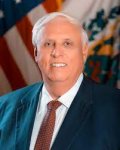
“If I had chosen not to be a senatorial candidate, if I had chosen not to be your governor and I had had all the time to spend with our businesses, just maybe some of this stuff along the way that has happened wouldn’t have happened,” Justice said last week during an administration briefing.
He added, “Nobody will deny. Nobody in the world will deny that our businesses have been through a little bit of rough road. But our businesses are going to be just fine. Nobody will deny the fact that the road’s been pretty dadgum rough. But I hope that everyone, everyone will agree that, along the rough road, would we not be so much better to be able to some way get through the rough road and battle through the rough road versus just throwing our hands up and saying ‘Eh, it’s OK, just let those 2,000 people go and close The Greenbrier, or whatever; it’s OK.’ Well, it’s not OK and so we try. We’ve tried really, really hard and we’re going to continue to do that. Everything’s good in the neighborhood and we move forward.”
Views of the financial issues
The latest MetroNews West Virginia Poll showed that only 38% of respondents say they have “heard a lot” about the Justice financial issues.
A little less than half, 47%, said they have “heard a little.”
And 16% said they have heard nothing.

“Only a little more than a third of the electorate has really heard a lot about it. It’s telling in terms of the electorate and the level of information they have about news in the state,” said Rex Repass, president of Research America and author of the MetroNews West Virginia Poll.
Those who had heard at all about the issues were then asked to make a choice about two ways of thinking about them. Those who had heard only a little about the Justice financial issues were screened out and did not respond.
The question was cast as the points of view of “Mr. Smith” and “Mr. Jones,” and respondents were asked which view most closely reflected their own.
In the end, Repass noted, “it was equal.”
Fifty-one percent agreed with Mr. Smith, who believes that “the financial issues of the governor and his family businesses have, including late payments to banks and vendors, can happen to any business during a tough economy. Mr. Smith also says the governor has a 50-year record of managing multiple successful businesses. He says Justice is being singled out by political opponents who want to make him and his family look bad in an election year with the U.S. Senate up for grabs.”
Forty-nine percent agreed with Mr. Jones who “says the financial issues the governor and his family businesses have are the result of delinquent bank loans, unethical business practices, bullying vendors and loans that were gotten using inflated financial data. Mr. Jones says the governor has a long history of bad business practices and unethical behaviors that are coming back to haunt Justice and his family in an election year with the U.S. Senate up for grabs.”
Repass said that, as would be expected, most people selecting the Smith view intend to vote for Justice in the upcoming election.
But the pollster said that more than a quarter of the people who agreed with the more critical Jones view still plan to vote for Justice for Senate.
“Even with the negative information about the Justice family’s financial condition with respect to their businesses, you still have a significant percentage of people that that’s not swaying their opinion about voting for him,” Repass said.
High popularity, big debt
Another set of West Virginia Poll results released last week showed that Justice is leading his Democratic opponent, Wheeling Mayor Glenn Elliott, 62% to 28%, in the race for U.S. Senate. The poll showed Justice’s job approval, registering at 65%, at its highest level ever.
Justice’s financial situation has long flowed through his political life. In 2017, shortly after he took office, Justice described pursuing a blind trust — although most of his family’s dozens of companies uncovered by a blind trust to this day. Justice has consistently said that he does not manage the companies on a day-to-day basis but that control has been passed along to his son and daughter.
A 2017 letter from Justice to state employees said “I expect all laws, regulations and policies to be strictly adhered to and enforced with respect to any business associated with my family.”
Continued financial conflicts have been made clear through filings in the court system and county tax offices.
A foreclosure sale of The Greenbrier Hotel owned by the Justices has been set aside until at least Oct. 24, with the Justices saying they are readying the means to satisfy a credit collection company. The state Tax Department has placed liens on The Greenbrier over $2,752,907 still owed for sales taxes collected but not remitted.
U.S. attorneys have asked a judge to declare the Justices in contempt over late and unpaid mine safety fines, with lawyers for the Justices saying they don’t have the money to pay. In a separate case, a federal judge in Delaware has been making final considerations over whether to order liquidation of Bluestone Mineral, a Justice-owned holding company, to satisfy debt to multiple claimants.
Some of the debt is enormous.
The Justice business network and Carter Bank & Trust on and off have been in conflict over $300 million in defaulted, personally guaranteed loans. Earlier this summer, the Justices and Carter Bank announced a resolution. The debt was still on the books but with revised terms that included “a pathway of curtailment and payoff.” Carter Bank’s statement said the loan balance had been reduced from $301.9 million as of the end of the 1st quarter to a balance of about $294.1 million as of June 20.
Meanwhile, the Justices also have been trying to pay down $700 million in debt from their Bluestone Resources to an even bigger international lender. Two years ago, Credit Suisse announced an agreement, with an element of securing the future for Bluestone’s mining operations, alluding to the possibility of a future sale. Since then, the Swiss bank group UBS has completed acquisition of Credit Suisse.
Justice has consistently described the matters as overblown or as the products of political skulduggery.
Last week he again described the averted foreclosure sale of The Greenbrier in terms of political hijinks, blaming the financial giant JPMorgan Trust, which sold a financial stake in Justice properties to the credit collection company Beltway Capital.
“Beltway came out of no man’s land, and I’ll never, ever, ever believe in my life that it wasn’t political because it made no sense. It made no sense in the world. We had JPMorgan paid down to $9.4 million, and they sold the note for significantly less than that, I think. You know, I don’t know that for sure. But you know, that doesn’t make any sense. How can we make any sense out of this that JPMorgan doesn’t call us? Fourteen years — 14 blooming years — and they didn’t even call us.
“How does it make any sense that we paid them in excess of a million dollars in June in paying down the note and doing exactly the things we had already had in place and didn’t even call us? How does that make sense. How does it make sense that possibly, just possibly, that Beltway maybe even paid even less. Why didn’t they call Carter Bank? It doesn’t make any sense at all.”
He said the difference over the prior 14 years of the lending relationship with JPMorgan was that “I didn’t absolutely announce that I’m running for the U.S. Senate and then win the primary when it’s an absolute guarantee that I’m going right in there.”
He continued by saying news coverage of these issues “can’t be bad, bad, bad, bad bad. It’s got to be at least, you know, bad, bad, good, bad, good, whatever.”