


The Catholic church in West Virginia is supporting a constitutional amendment that would ban physician-assisted death in the state.

“The Catholic Church respects human life at all stages from conception to natural death. Medically assisted suicide is not natural death but direct help to a person to end his or her life. It violates God’s commandment, ‘Thou shalt not kill,’ for, if we should not directly kill others, we should not help them kill themselves,” said Mark Brennan, bishop of the Wheeling-Charleston Diocese in a statement provided by the church.
“Their lives still matter. Rather than hand an afflicted person a cocktail of poisons to end his or her life, we should keep the person company and give emotional support. Adequate pain relief should also be given. We urge West Virginians to reject the culture of death that medically assisted suicide represents and to support palliative care for the dying, assuring them of our love and that their lives still have meaning.”
Brennan is responding to a question that will be on ballots for the general election in West Virginia: whether the state constitution should be amended to explicitly prohibit physician-assisted deaths.
Amendment One will tell voters: “The purpose of this amendment is to protect West Virginians against medically-assisted suicide.” Then voters will be instructed to mark “for” or “against” to determine whether the state constitution should be changed to reflect a policy against physician-assisted death.
The amendment would add a section to the state Constitution to say, “No person, physician, or health care provider in the State of West Virginia shall participate in the practice of medically assisted suicide, euthanasia, or mercy killing of a person.”
Furthermore, “Nothing in this section prohibits the administration or prescription of medication for the purpose of alleviating pain or discomfort while the patient’s condition follows its natural course; nor does anything in this section prohibit the withholding or withdrawing of life-sustaining treatment, as requested by the patient or the patient’s decision-maker, in accordance with State law. Further, nothing in this section prevents the State from providing capital punishment.”
Physician-assisted death is legal in nine states — California, Colorado, Hawaii, Maine, New Jersey, New Mexico, Oregon, Vermont, Washington — and the District of Columbia. It is an option given to individuals in Montana via court decision. Oregon became the first state to legalize physician-assisted death in 1997.
If the ballot measure passes, West Virginia policy would be diametrically opposed to those states.
Organizations have been lining up for and against enactment of the amendment.
The national organization Death with Dignity describes West Virginia as “under threat.” That organization characterizes West Virginia’s ballot measure as eliminating a potential option for terminally ill people.
ACLU West Virginia is also urging a no vote. The organization says medically assisted suicide is not legal in West Virginia. And the organization says constitutions exist to safeguard individual freedoms from government overreach — but this amendment does the exact opposite.
West Virginians for Life, the state affiliate for the National Right to Life Committee, released a statement urging West Virginians to vote in favor of Amendment One.
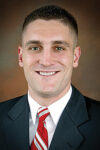
The measure was placed on West Virginia ballots because members of the state Legislature passed a resolution during the most recent regular session. One of the most outspoken legislators has been Delegate Pat McGeehan, R-Hancock.
McGeehan has since distributed several written op-ed pieces to local newspapers and appeared in broadcast interviews with national platforms like Washington Watch, which is on streaming channels and Christian TV stations, and EWTN Pro Life Weekly, which stands for Eternal Word Television Network, a cable channel with Catholic-themed programming.
His most recent opinion piece focused on patients who had been diagnosed with terminal illnesses and whose insurers would not pay for treatments that could extend their lives — but would cover drugs for physician-assisted death.
McGeehan concluded by writing, “We should vote For Amendment One and enshrine in our state constitution that medically-assisted suicide will not be tolerated in our beautiful Mountain State.”
In a recent interview with MetroNews, McGeehan said the amendment is “aimed to secure our people from physician-assisted suicide. It’s important for us to think through this issue and what it really means for our families, our healthcare system and ultimately our values as a community and as a state.”
McGeehan, who has been working toward completing a doctoral degree in philosophy, says the way market forces can influence end-of-life decisions undercuts arguments about autonomy.
“Many people who may think it does little harm or even might favor it typically do so because they’ve seen loved ones suffer from sort of terminal illness, and this is very understandable — but medically assisted suicide is just not the answer,” McGeehan said.
“Some people think it’s purely a consensual contract with your doctor, but when we look at the states and western countries that are doing this — this is definitely not the case. One of the biggest problems with medically-assisted suicide is the power of suggestion, especially from doctors and healthcare providers who have an extraordinary amount of recognized authority in our society. So the doctor-patient relationship is just not one of equal power.”