

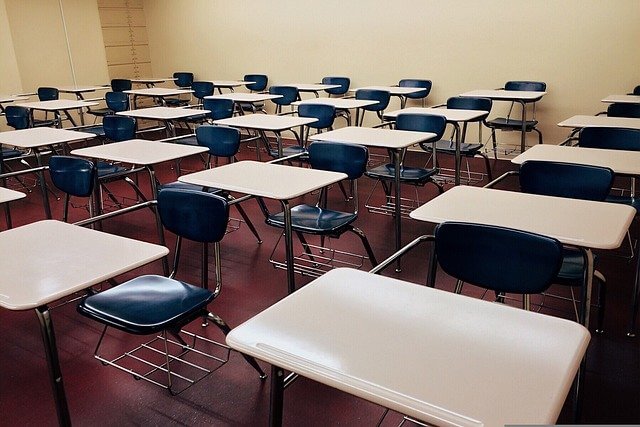
Representatives of the West Virginia Professional Charter School Board say communities that are having to consider shutting down local public schools are asking whether an alternative might be to convert them into charter schools.
Charter schools receive financial support from the state’s public education system and are given greater operational latitude in exchange for the possibility of losing their right to operate if they fail. There are six charter schools in West Virginia now, although two of those are virtual. Two more are set to open in fall 2025.
Public school systems in West Virginia have faced recent hard decisions about closing schools up against declining population and strained finances.
Last week, in a state school board meeting, Superintendent Michele Blatt provided a dire forecast that downward trends in West Virginia school enrollment will likely mean similar closure decisions in the near future.
As of October, she said, the state has 241,024 students — down 4,023 from the last school year.
Blatt said there are 629 public schools in West Virginia — down 8 from last school year.
If the trajectory continues, “We’re looking at a possible 26 school closures for this school year due to the enrollment and the funding that we’re facing.”
So, up against those trends, representatives of some school systems have reached out to the West Virginia Professional Charter School Board, which is a separate organization made up of members appointed by the governor to approve and oversee standards for charter schools.

“Individuals from Randolph County, from Wetzel County and at least one other county have contacted me over the last month or six weeks to learn about the possibility of traditional public schools converting into public charter schools,” said James Paul, executive director of the West Virginia Professional Charter School Board during a Wednesday morning meeting.
“I would say nothing is imminent at this stage, but I just wanted to share with you that residents in West Virginia are reaching out to me and are learning about what the process would look like for a school to convert into charter status. These are generally areas where public schools are being consolidated or at at risk of being consolidated, and people in these communities are looking for ways to reconstitute existing public schools into charters rather than seeing them be closed.”
He said state law allows for this process, which would start with establishing a founding governing board for the school, seeking authorization for the charter and making a plan for the facility.
“And perhaps most importantly, the founding board needs a plan to reimagine the school in such a way that it can be financially viable as a charter school. You know, converting a school to a charter does not necessarily, by itself, solve a public school’s financial challenges, which is something that at least the schools that have reached out to me are all dealing with,” Paul said.

A charter schools board member, Dewayne Duncan, also said he had recently been approached casually about an alternative to convert public schools at risk of closure to charter school status. He said schools that might want to pursue such a transition would benefit from guidance.
“It’s like an uncharted course, no pun intended,” Duncan said. “It’s a different way of opening a charter school.”
Duncan said he would still be concerned about whether financial pressures could be alleviated, even under a new school structure.
“I like the idea of it. I think it could be very successful. It’s a real option for communities that want to keep their local school, and I see value in that,” Duncan said. “The difference is that they can explore and reinvent their school, which is really nice. They can reimagine it, if you will.”

The charter schools board chairman, Adam Kissel, noted that the deadline to apply for opening in fall 2025 has passed already — so any school up against a closure would have to work around that somehow.
But Kissel said an advantage of such a situation is that a converted charter school presumably would already have a building available. “It already has the teachers. It already has a lot of the other things in place,” he said.
Another board member, Karen Bailey-Chapman, said the possibility is exciting.
“It’s, again, that out-of-the-box thinking, which is what this whole program was intended to be,” she said, “to reimagine how we educate and how we do school administration.”