

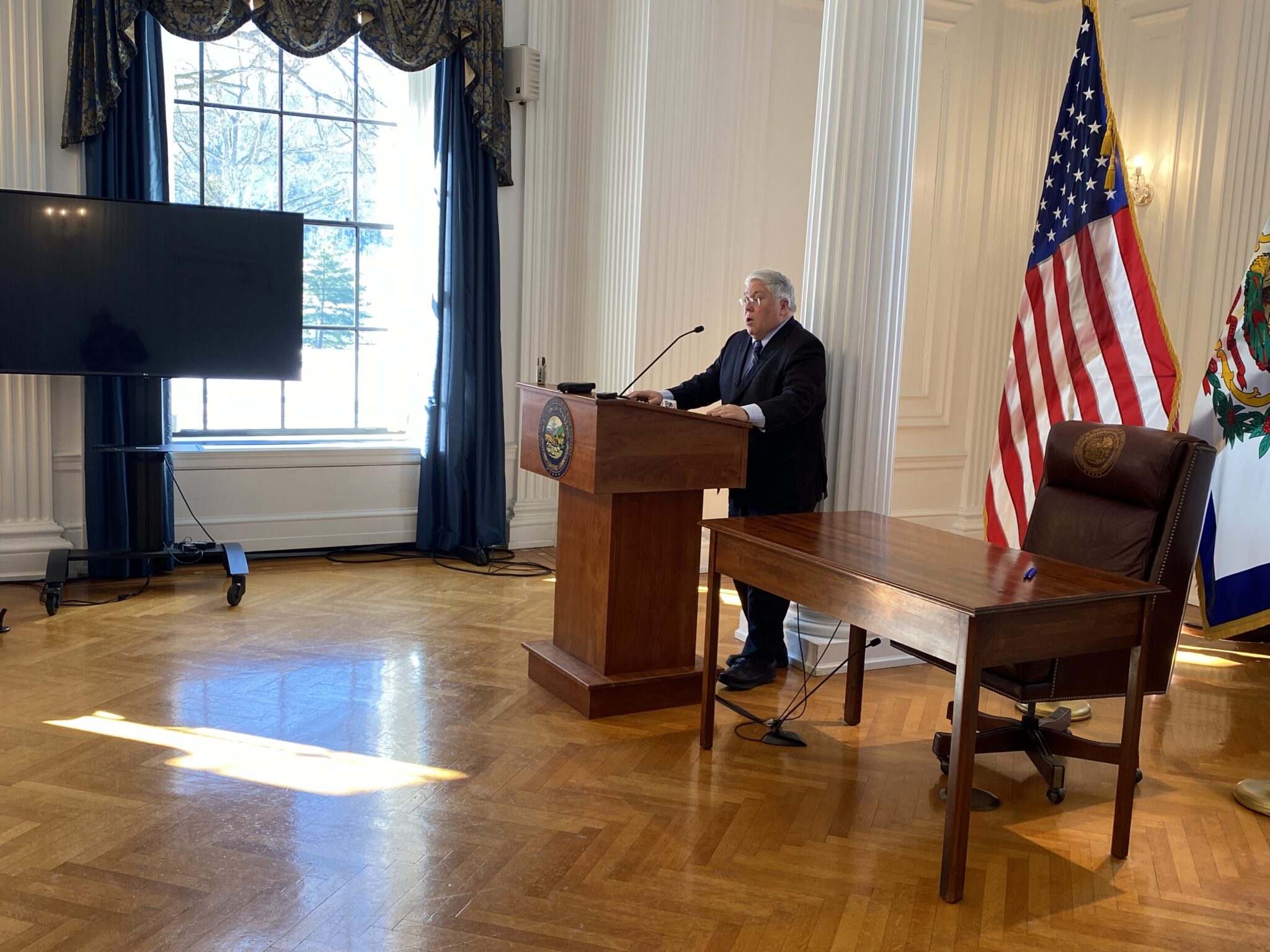
West Virginia’s new governor, Patrick Morrisey, said it’s important for his administration to get a jump on policies like ordering a cessation in diversity initiatives associated with state government.
Morrisey outlined several executive orders on Tuesday, the day after he was sworn into office, and then expanded on his thinking during an appearance on MetroNews’ “Talkline.”
HOPPY KERCHEVAL: Morrisey’s week one overreach
One of the orders is titled “ordering the cessation of DEI.” The acronym stands for diversity, equity and inclusion. It’s a set of policies in business, government and academia aimed at creating a more inclusive and equitable environment.
Social conservatives have taken aim at the policies as a kind of reverse discrimination. That’s where Morrisey lands.

“I look at it as an effort to promote or push policies that are trying to benefit specific groups of people, usually on the basis of race or the color of your skin, sex or ethnicity or national origin, and I think that that’s completely inconsistent with the Equal Protection Clause,” he said on “Talkline.”
Morrisey said the executive order would serve as a marker so state government representatives will know what to expect. For state government organizations that have diversity, equity and inclusion policies in place already, Morrisey described the start of a process to remove the initiatives.
“There was no policy in place beforehand, which means departments and agencies and entities in state government or entities getting funding from state government might not be thinking about it or pushing back on it when it comes in. So you want to have a policy in place so that people can follow it,” he said.
He continued, “We’re going to give folks some opportunity to come into compliance.”
Dozens of states like Florida, under Gov. Ron DeSantis, have pursued state policies to chill DEI funding, practices and promotion.
Ninety-two percent of West Virginia’s population is White and almost 4% of residents are Black, according to the U.S. Census.
Shaun Harper, a professor at the University of Southern California and chief research scientist for the USC Race and Equity Center, said positions like Morrisey’s are misguided and ultimately costly.
“Governor Morrisey’s reckless mischaracterization of DEI makes shockingly clear that he doesn’t even understand what it is he’s banning. This executive order places West Virginians at unnecessary risk of suffering even greater levels of divisiveness and inequities,” said Harper, a professor of public policy, education, and business.
“Lawsuits for discrimination, harassment, and abuse in public educational institutions and workplaces over the next few years will cost the state lots of money, perhaps millions. It will someday become clear to Morrisey that sustaining and strengthening DEI policies and programs ultimately would’ve been a much more responsible use of taxpayers’ dollars.”
One of the most likely — yet perhaps most complicated — places to take on DEI policies is at West Virginia’s colleges and universities. Those institutions do get state funding, but they also receive donations, grant dollars and federal funding.
West Virginia University has a Division of Diversity, Equity and Inclusion, which “exists because WVU is always striving to create the safe, diverse, welcoming community we all deserve.”
There are also diversity, equity and inclusion efforts and events in specific parts of WVU like the Honors College and the John Chambers College of Business & Economics.
WVU’s athletic department has an initiative that says “West Virginia University recognizes that, as a microcosm of society, sport is not exempt from the perils of inequality, bias and discrimination. Understanding that sport can be a platform for positive change, we take responsibility of our unique opportunity to unify people of all social identities.”
April Kaull, executive director of communications at WVU, said the university is assessing its programs and what the effects of the executive order will be.
The university is under some obligations that could be in conflict with the governor’s order.
“Some existing accreditation and professional licensure standards include DEI requirements. We’re currently reviewing the Executive Order with members of our campus community. We’ll have a better understanding once the review is completed,” Kaull said.
“Most of the work in this area is by a focused group of employees for federal compliance of the Americans with Disability Act and Title IX. We do not use any state dollars to comply with federal DEI requirements.”
Morrisey, on “Talkline,” described time — but not unlimited time — to examine compliance with the executive order.
The executive order calls for secretaries and department heads to start reviewing activities or programs “that advocate or encourage preferential treatment of persons based on theories of DEI” and submit a report within 30 days. Within 90 days, state officials are directed to “address and eliminate” diversity policies.
“I’m viewing this as an executive order for all of the departments and agencies and any of the entities that get state funds, and today is not the day to single anyone out. Everyone has the chance to come into compliance,” Morrisey said.
“So I want to make sure everyone knows that DEI has absolutely no place in West Virginia state government and any entity that receives state funds. I want to be crystal clear about that.”