

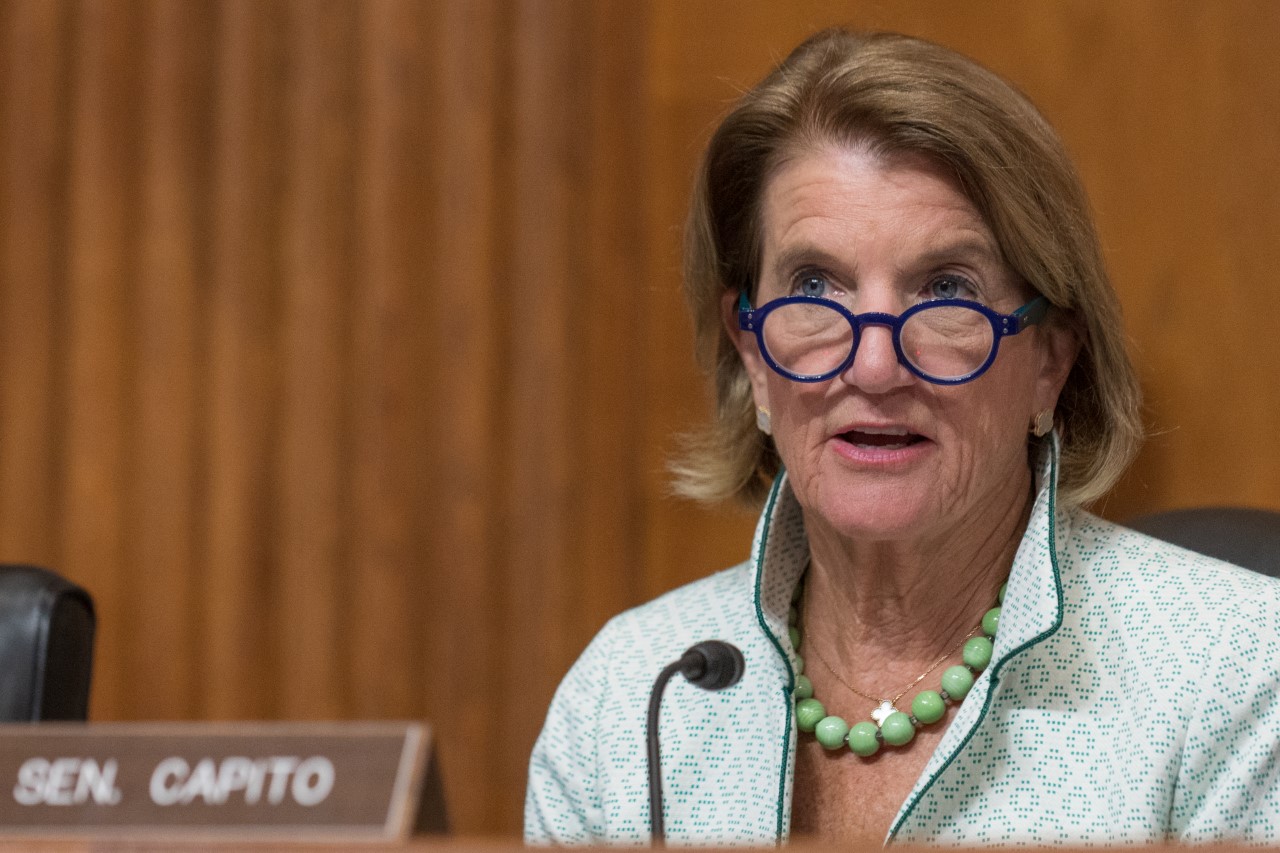
Senator Shelley Moore Capito is unconvinced that an executive order issued by returning President Donald Trump to end United States birthright citizenship will stand up in court.
Trump issued the executive order on the first day of his second term. Attorneys general from 22 states sued the next day to block the move.
At issue is the right to citizenship granted to anyone born in the U.S., regardless of their parents’ nationality or immigration status.
The U.S. Constitution’s 14th Amendment passed following the Civil War that ended slavery in the country and also established citizenship for freed Black Americans, as well as all people born or naturalized in the United States.
Section 1 of the amendment is worded to say: “All persons born or naturalized in the United States, and subject to the jurisdiction thereof, are citizens of the United States and of the State wherein they reside.”
Trump signed 26 executive orders on Inauguration Day, and Capito said some of them seemed intended as messages.
“Can he really rescind birthright citizenship? Probably not until it goes all the way through the courts,” Capito, R-W.Va., said on MetroNews’ “Talkline.”
“Can he really rename the Gulf of Mexico? I keep asking people, ‘Can he really do that?’ I don’t really know. So I think some of it is messaging and some of it is substantive.”

Paul Saluja, an immigration attorney from Charleston, spoke about birthright citizenship and Trump’s executive order on WMOV Radio.
“They’re trying to state that mothers unlawfully present in the United States, if the father’s not a U.S. citizen or lawful permanent resident then the child, although born in the United States, would not have automatic citizenship,” Saluja said.
“And that one is one that raised a lot of eyebrows.”