

West Virginia officials are trying to better understand a freeze on federal funds potentially affecting programs that promote early childhood education, provide college aid, respond to natural disasters and produce medical research.
“Really, no one knows,” Monongalia County Commissioner Tom Bloom said on “Talk of the Town” on WAJR Radio.
“Before everyone jumps off the rooftops and says the sky’s falling, let’s find out what exactly it means.”
Federal agencies “must temporarily pause all activities related to obligation or disbursement of all Federal financial assistance,” White House Office of Management and Budget acting director Matthew Vaeth said in a memorandum. The memo was set to take effect at 5 p.m. today.
Late today, a federal judge temporarily blocked the freeze on aid until Feb. 3, which is Monday. The judge scheduled a Monday morning hearing for arguments. The stay only affects the disbursement of government funds that already have been authorized, not money that was being sought.
The West Virginia Nonprofit Association described being “deeply troubled” by the federal funding pause, saying it “raises significant concerns about its potential impact on the entire nonprofit sector and the communities we serve.”
The organizations within the statewide association rely heavily on federal funding to provide essential services such as workforce development, housing assistance, healthcare, education, and food security.
“Even a temporary disruption in funding could have far-reaching consequences, jeopardizing critical programs and affecting the well-being of our state’s most critical communities,” said Rosemary Ketchum, executive director of the West Virginia Nonprofit Association.
Such a halt would have widespread effects, said Rebecca Thiess, manager at The Pew Charitable Trusts, an independent non-profit, non-governmental organization that operates nationally.
The federal government gave $1 trillion in grants to states in fiscal year 2022, the most recent year U.S. Census grants data is available. That was a record high, representing 36.4% of states’ total revenue, Thiess said.
“Federal grant funding helps states pay for public services, such as health care, education, transportation, and infrastructure. States are currently facing tighter budgets than in recent years due to the expiration of federal pandemic aid and stagnating tax collections, among other challenges,” Thiess said.
The memorandum that kicked off the concern said federal spending should reflect the priorities of the incoming Trump administration:
“Financial assistance should be dedicated to advancing Administration priorities, focusing taxpayer dollars to advance a stronger and safer America, eliminating the financial burden of inflation for citizens, unleashing American energy and manufacturing, ending ‘wokeness’ and the weaponization of government, promoting efficiency in government, and Making America Healthy Again.
“The use of Federal resources to advance Marxist equity, transgenderism, and green new deal social engineering policies is a waste of taxpayer dollars that does not improve the day-to-day lives of those we serve.”
Entities that receive federal loans and grants were trying to interpret the effects of the order.
The White House, in a briefing led by new Press Secretary Karoline Leavitt sought to provide some reassurance, saying assistance going directly to individuals would not be affected.
“This is not a blanket pause on federal assistance and grant programs from the Trump administration,” Leavitt said in her first press briefing.
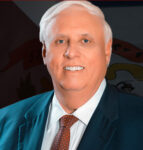
Senator Jim Justice, R-W.Va., told NBC News that he trusts the president and halting federal spending for an assessment makes sense to him.
“At the end of the day, he’s got to freeze everything in order to get his arms around it. Just give him a little time. He’s a good man, a really good man. And we’re going to have to reset America. If we don’t reset America, look where we’re going,” Justice told NBC.
Senator Shelley Moore Capito’s office is “trying to fully understand the scope and process regarding the memo put out by OMB regarding freezing of federal funds.
“We have heard from West Virginians who are concerned about this and Senator Capito shares that concern, given she has advocated and been responsible for securing many of these funds,” said Kelley Moore, communications director for Capito, a Republican from West Virginia.
Gov. Patrick Morrisey also said his administration is trying to understand the effects of the federal directive.

“We’re going to try unpack that and talk with the Trump administration about that. I read about some of that this morning, and we’re going to learn and we’re going to consult with them,” Morrisey said in a briefing today, responding to a question from reporter Caity Coyne of West Virginia Watch.
Morrisey continued by saying he supports Trump’s willingness to deal with spending issues.
“The federal government and, quite frankly, the state government has operated way beyond its means,” said Morrisey, a Republican.
West Virginia Democratic Party Chairman, Mike Pushkin posted on social media that he is very concerned about the funding freeze effects on those who need support the most.
“This latest power grab from the new administration is causing massive amounts of uncertainty amongst those agencies that do our most important work,” posted Pushkin, who is also a state delegate.
West Virginia’s higher education system understood that the pause does not apply to Title IV aid to students, including Pell and direct loans. “Beyond that, we are awaiting guidance from federal agencies,” said Jessica Tice, senior director of communications for the Higher Education Policy Commission.
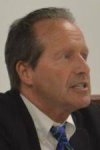
Bloom, the Monongalia County Commissioner, said local officials are scrambling to assess what the order will mean locally. Bloom speculated that there could be projects in various phases that could be affected.
Bloom said citizens would benefit from “a clarification of which programs that have been put on hold that have already been started and funded — and which programs we were about to fund that are not going to happen.”
Bloom expressed concern about initiatives underway at the National Energy Technology Laboratory and a wide range of energy-related projects at West Virginia University.
“We have a lot of programs at the university and medical-related ones where we have federally funded projects,” Bloom said, “and we don’t know what that means.”