


CHARLESTON, W.Va. –The West Virginia Department of Human Services will now have a monitor for an improvement period in order to address the improper placement of foster children in hotels and 4-H camps.

Kanawha County Judge Maryclaire Akers appointed Cindy Largent-Hill, the Director of the Division of Children Service’s for the Supreme Court of Appeals, to serve as the monitor that will look at the department and see what they can do to improve the temporary lodging of children in state’s custody at a hearing held Friday in Charleston.
Meanwhile, U.S. District Judge Joseph Goodwin issued a 19-page order Friday dismissing a 2019 lawsuit against the state over how it runs the foster care system. The plaintiffs in the case told West Virginia Watch they were shocked with the judge’s decision and would appeal as quickly as possible.
The Akers hearing was a result of an administrative order that was issued by Akers for the DoHS’s Cabinet Secretary Alex Mayer to come before the court to discuss why this is happening and to hopefully come up with a solution.
This order and hearing came after Akers was made aware, three days after the fact, that a 12-year-old boy had attempted suicide while he was living in a hotel after his foster placement didn’t work out.
Before Akers officially appointed Largent-Hill, she gave Mayer and his counsel time to discuss whether they wanted her to be appointed.
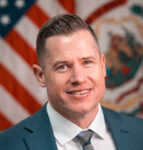
Mayer was happy to agree with Akers and have Largent-Hill work with the department.
“Cindy and I and Keith Hoover have already had conversations about this exact issue and how we were going to partner to fix that, and I appreciate the opportunity to work with Cindy and bring her in even closer to be in this collaborative effort with us,” Mayer said.
Akers said that this was the one solution that she could think would help the best right now because it needs to stop.
“But what we can’t have are continued failures of that magnitude,” she said.
Before she made the suggestion and the department agreed to have Largent-Hill has a monitor, Akers asked questions of both Mayer and Lorie Bragg, the Interim Deputy Commissioner for Policies and Programs for the DoHS.
She asked why children were being put into hotels or 4-H camps.
Mayer says it’s because the rise in substance exposure in infants and adolescents has increasingly gotten worse over the decades and the system is not equipped to handle that.
“So, of me trying to get placements for children, we are having to utilize hotels in order to buy time to have conversations with facilities to talk to them about what additional supports can I offer you because the current structure or the way that the system was designed wasn’t able to support what that agency might need,” he said.

Bragg confirmed that most of the time when a child is put into a hotel or 4-H camp, it’s because they have mental health issues or behavioral issues that need more time and care.
“Typically, yes those children that are ending up in hotel are those kids with more severe needs,” she said. “It’s difficult to find other placement for them.”
Akers also asked if putting them in hotel rooms was the first thing that they look to do.
Bragg said that the hotel or 4-H camps were a last resort, that they try other options first.
“So, the worker as exhausted kinship relative, they have ruled out any possible placement, they have made foster care referrals, they’ve made emergency shelter referrals, so all of that has occurred prior to ending up at a hotel,” she said.
She also said that a child protective service worker can go through the school that the child is enrolled in to see if they know of anyone the child can be placed with.
And Akers asked Mayer if the end goal of this was to have the proper placements for these children.
He said yes.
“100% your honor, that’s why I started those conversations long before this order, with residential care providers, level ones, level twos here in the state,” Mayer said.
After Mayer and the department agreed to have the monitor, Akers read the terms that she drafted.
Largent-Hill would be given everything the department had on placement of the children, and she would be there to collect data, review reports, and meet with the DoHS and any of the stakeholders in order to find out what can be done in order to fix this issue. Akers also said that Largent-Hill will have to present reports to the court with suggestions on how to improve the temporary placement of these children.
Largent-Hill will serve in this role for a one-year period.
Akers said the one-year period is so there is enough time to try and fix the issue.
“I just like that, at least we understand that we have some definite time,” she said.