

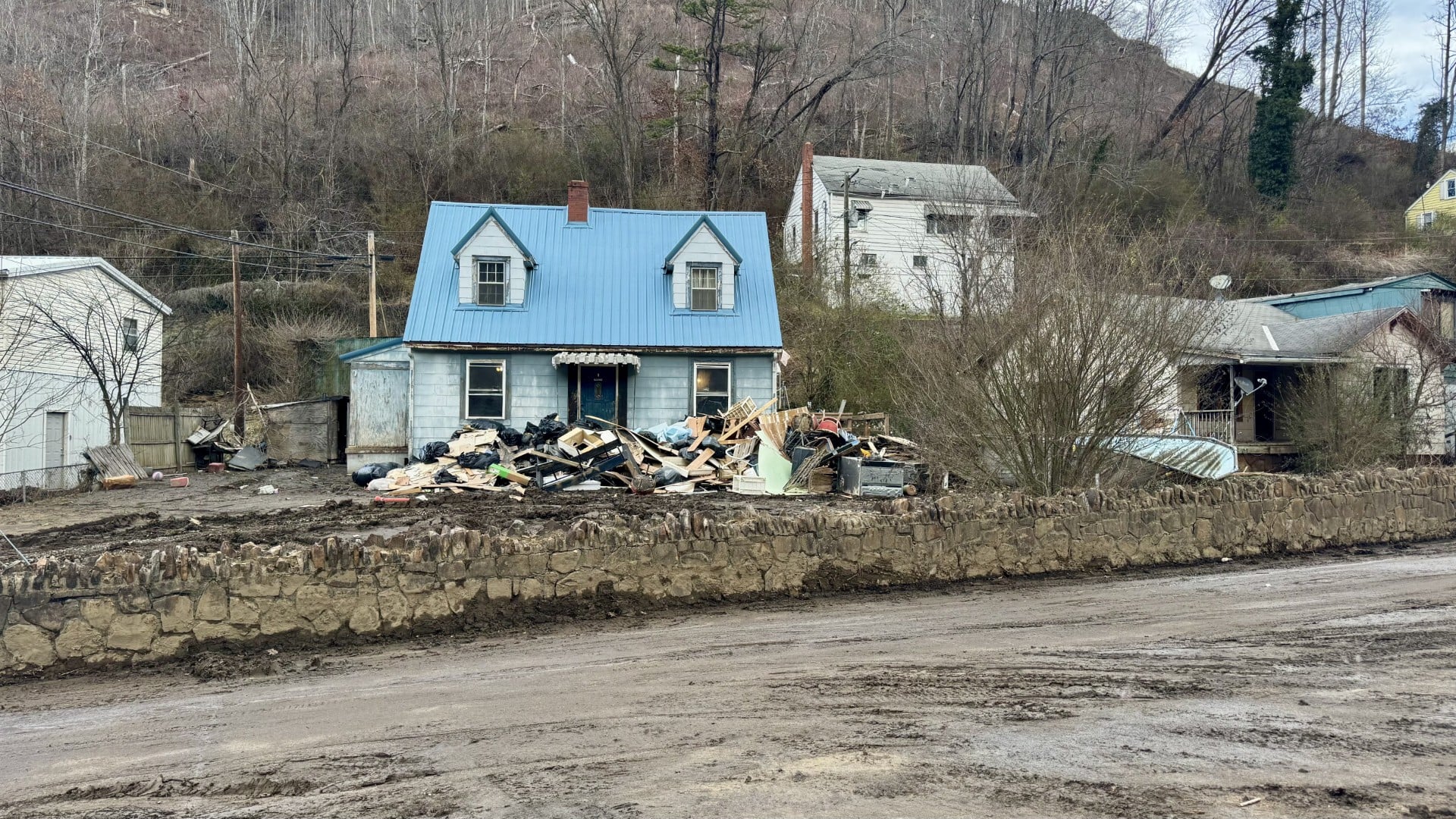
WELCH, W.Va. — The Feb. 15 flood will become another long-talked-about milestone high water event.

Prior to that day, longtime residents of McDowell County measured high water events by the years of 1977, 2001 and 2002. Each time it’s happened and the cleanup was finally over, the conversation always turned to mitigation and “..never happening again.”
But it always happened again, eventually.
McDowell County Commissioner Michael Brooks is frustrated. He believes one of the biggest issues is a lack of proper stream maintenance in the county.
“There needs to be a massive effort throughout McDowell County and southern West Virginia to dredge and clean our streams. They’re completely full and many of our streams are nearly at road level, those that weren’t after this are now. That is a major, major issue,” said Brooks in an appearance on MetroNews “Talkline” which was live in Welch Thursday.
Brooks isn’t alone. Many have talked about the need to scour out the bottom of waterways like Elkhorn Creek and the upper stretches of the Tug Fork River along with tributaries which overflowed and caused major damage and destruction. Brooks said it doesn’t even take a major flood to push water into a roadway in many cases.
But there are always debates and roadblocks to dredging.
Money is always a factor when considering the cost of the work. Some often argue the cost of rebuilding is far less than the cost of mitigation.
But the bigger obstacle to dredging is environmental protection. The U.S. Fish and Wildlife Service and other federal agencies typically throw up roadblocks to dredging to protect endangered species and the destruction of their habitat. The area’s watershed is home to several rare types of crayfish and the Candy Darter, all of which are considered species on the brink.
Brooks said his concern is McDowell County’s human population is on the brink.
“We can restock crawdads and we can restock fish, but when people leave these communities they never come back. That is unfortunately what we have faced here in McDowell County. When the population goes from 30 to 40 thousand people down to 18 thousand or so, people are tired,” he explained.
Brooks added after every flood the county has endured the population took a hit. People continue to leave his county in droves, many of them run off by an inability to protect their homes from rising water and an unwillingness to risk having to endure it again.
“In my opinion, respectfully, there’s a lot of people making these decisions that affect the lives of people like our folks here in southern West Virginia who live in a subdivision somewhere and never have those issues. We need some kind of a panel of folks who have lived this continually throughout their lives to demonstrate the significance,” said Brooks.