

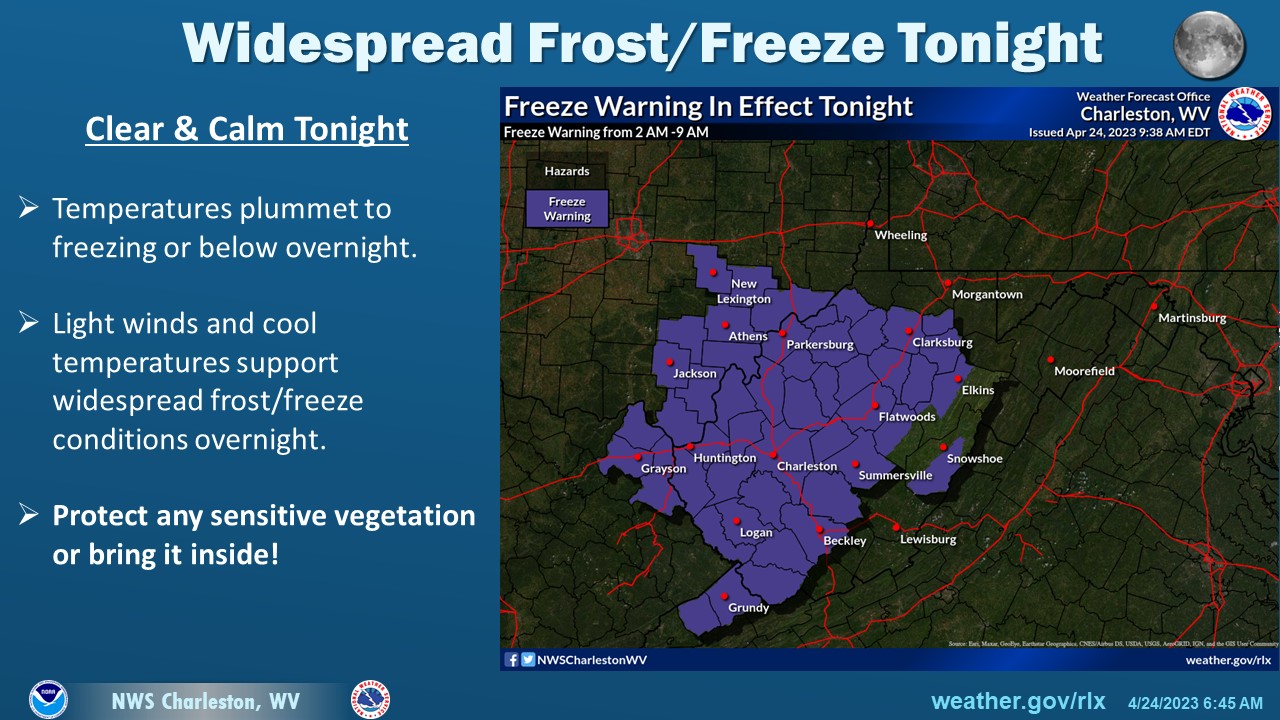
MARTINSBURG, W.Va. — Wednesday morning temperatures in Martinsburg dipped into the low 20s while Tuesday’s 28-degree low was 11 degrees below normal.
Orchardists were setting up tools – as one farmer asked for prayers — “325 acres of apples, peaches, plums, cherries, and strawberries all in bloom. First freeze of the season, here we go! We have the tools ready….wind machines, frost dragons, row covers, praise and worship music, and all my great employees by my side.”
Agriculture Commissioner Kent Leonhardt said the freeze is going to be tough for farmers.
“Orchardists have the right to be scared, sometimes those heaters they put out work, some do not, but even if you have some (heaters) that does not cover everything,” Leonhardt told the Panhandle News Network.
As of last week, the counties in the eastern most Eastern Panhandle were in a severe drought, neighboring counties in moderate drought, and all but the lower fifth of the state in abnormally dry conditions according to the US Drought Monitor even with some welcomed rain showers:
“So we are heading into the growing season in a deficit compared to last year, so why is that important? Because if a drought hit us again it could end up being even more severe.” said Leonhardt.
He talked about some of the ways farmers and producers kept their crops going and their live stock fed and watered during last season’s historic drought:
“We had a lot of programs working last year that helped farmers get through the drought, many many thousands have taken advantage from it.” said Leonhardt.
It’s important to support state farmers, Leonhardt said.
“The closer our food it from where it is grown to where it is consumed the safer it is going to be. It is very important on a national security level that we keep out agricultural community strong.” said Leonhardt.
The rollout of the new state ban on certain food dyes presents an opportunity for more fresh, West Virginia-grown produce to make it into school cafeterias and other institutions that serve food, Leonhard said.
“The food banks have put a proposal to the legislature for some additional funding for feeding those that are food insecure because you know we lost some funding from the federal government recently. The need is still out there but the funds are not going to flow as readily. The dollars would have to be used on buying West Virginia produced products to help maintain the agriculture community and improve the lives of the citizens of West Virginia, making them eat healthier foods. And it’s also the same opportunity in institutions like the schools, but it’s going to cost a little bit more,” Leonhardt said. “A lot of the time what we’re feeding in the institutions is what is the least expensive. The least expensive isn’t always the most healthy.”
Commissioner Leonhardt was a guest on Wednesday’s Panhandle Live.