

In sizing up the first 100 days of his administration, Gov. Patrick Morrisey said special sessions are still ahead — particularly to address the finances of the Public Employees Insurance Agency — and warned that the state still needs to cautiously watch its own financial well-being.
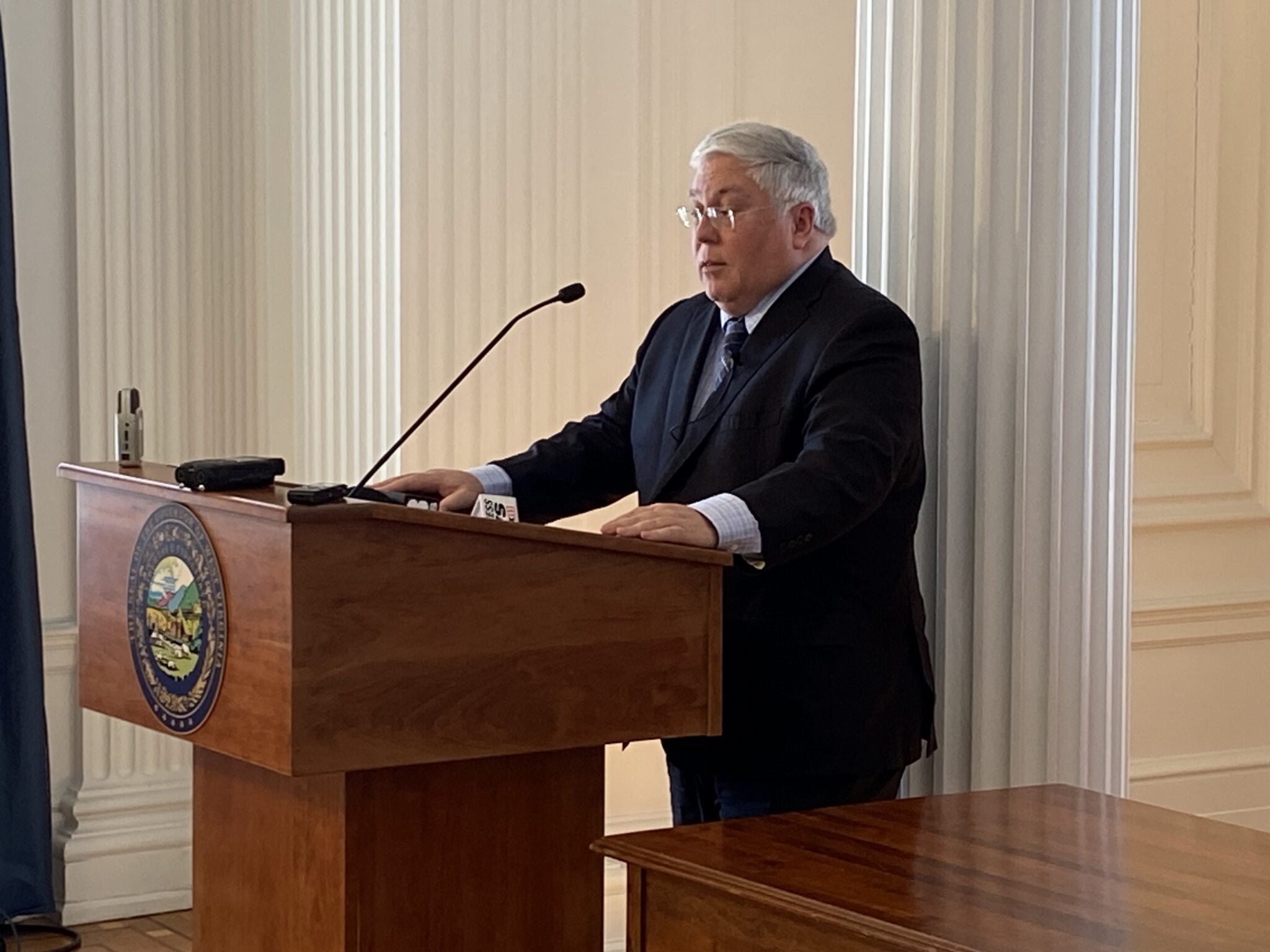
Morrisey appeared at Independence Hall in Wheeling for a discussion lasting about an hour and focused on his administration’s first 100 days. He stood in front of a placard labeled “First 100 Days.”
West Virginia just concluded its regular legislative session, and the governor described it as successful.

But he again alluded to the likelihood of one or more special sessions to come.
“So we’ve had a lot of success over the last 100 days, but we’re just getting started. I know that there’s a lot of tough work to do in the months ahead. We’ve talked about the importance of bringing the Legislature back together. We have to tackle issues like PEIA. That’s important.”
Special sessions: PEIA, school funding formula
Rising expenses for PEIA are tied to steadily increasing costs of medical care and pharmaceuticals. The five-year outlook for the Public Employees Insurance Agency shows increased overall expense of about 12% year over year over year over year. Over time, that adds up to a 60% cost increase.
“I thought that that would be best for a special session, to be honest, because you can bring everyone. You could focus it. It’s a complicated issue. We want to get it right,” Morrisey said today.
“That was kicked down the road for many, many years. I don’t intend to kick it down the road. We have to bring everyone together, all the stakeholders, listen, learn, and then you’ll be seeing some activity, and I will call a special session after we can make a little bit of progress in the next few months.”
Morrisey also alluded to the possibility of a special session focus on the school aid formula, which is generally tied to the student population. As that population has dwindled in some parts of the state, counties have felt financial pressure to close or consolidate schools that are loved by their communities.
“We know that the school aid formula deserves close review,” Morrisey said. “It hasn’t been modified in a long, long, long time.
He summarized, “So PEIA, school formula, and then we want to take steps to simplify the tax code and do some of the tax reforms that haven’t been done in a long time as well. So we’re going to be looking at that. So a huge agenda going deeper into the year, but we have to start somewhere.”
Governor says $400 million gap goes on
Shortly after his administration took office, Morrisey described a conclusion that the state had a $400 million funding gap based on a range of ongoing expenses like Medicaid, PEIA and more. This year, the administration described filling that gap through some strategic cuts, use of some remaining surplus and using excess lottery revenue.
“And ultimately, while we made some changes at the end, I believe we signed a fiscally conservative budget, not an austere budget, but an opportunity for us to grow, and it also provides us with the flexibility to address the changing conditions across our state and our country,” he said today.
“We know that there have been major fluctuations in the stock market, right? We know that on the federal side, they’re looking at changes to Medicaid and a number of other key areas. There will likely be changes to the federal tax code. All of that redounds back to West Virginia and changes the map in terms of what next year’s budget and the future budgets look like. We have to make sure we have that flexibility.
So Morrisey said the state needs to continue to be fiscally cautious.
“It won’t be an easy road into the future. We know that next year we’re already looking at close to another $400 million deficit again.”
He said the need for fiscal restraint differs from just a couple of years ago when the state was bringing in revenue at levels significantly higher than estimates at a time when federal pandemic relief dollars were flowing heavily.
The governor said caution, careful planning and a business-friendly structural environment could lead to economic growth.
“And we have to approach it from that perspective because you don’t have the federal money pouring in the way you did. That was spent, right? That was an aggressive level of spending that hasn’t been matched in West Virginia in the past. They just took the money and spent it,” Morrisey said.
“We have to be more targeted because that money’s not coming from the feds any more.”
Workforce participation
Morrisey also touched on West Virginia’s workforce participation rate.
The labor force participation rate measures the percentage of the working-age population that is either employed or actively seeking employment.
West Virginia has traditionally performed poorly on this metric, in part because of its older demographics and also because of its relatively high number of disabled people.
In March 2025, West Virginia’s labor force participation rate was 54.3% — the lowest among all states and the District of Columbia. The national labor force participation rate in March was 62.5%.
“For West Virginia to really succeed the way we all badly want it to, we have to address workforce participation. And so we have a task force we’re putting together internally to look at ways to grow workforce participation,” Morrisey said.
“We’re bringing in a number of our cabinet officials, and we’re also looking at different ways we can really target and get more people to come in to work in some of the industries that need workers. I think that’s critical.”