


West Virginia received welcome news last week with provisional data showing that overdose deaths in the state declined by 43.5% in the last year.
Close observers credited a range of reasons for the decline. But among the top reasons cited has been increasing availability of naloxone, an opioid antagonist that blocks the effects of opioids like heroin, fentanyl and prescription pain medications.

“There are numerous possible reasons for this, and success has a thousand fathers. I strongly believe that the availability of naloxone is among the reasons for the decline,” said Erin DeLullo, a Jefferson County resident who is host of The Poisoning podcast and newsletter, which focus on the fentanyl and opioid epidemic.
However, significant funding sources for opioid treatment resources like naloxone are in question. Federal grants that can help states like West Virginia pay for life-saving naloxone are from the Substance Abuse and Mental Health Services Administration, often shortened to SAMHSA, and the State Opioid Response (or SOR) that it runs.
In late March, the U.S. Department of Health and Human Services announced a major restructuring under the guidance of the Department of Government Efficiency, or DOGE. The newly-created Administration for a Healthy America is envisioned to combine multiple agencies, including the Substance Abuse and Mental Health Services Administration.
“Transferring SAMHSA to AHA will increase operational efficiency and assure programs are carried out because it will break down artificial divisions between similar programs,” according to the announcement.
Simultaneously, the Substance Abuse and Mental Health Services Administration has been in line for major spending and staffing cuts.
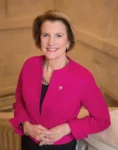
Senator Shelley Moore Capito, R-W.Va., is leading a U.S. Senate Appropriations subcommittee meeting at 10 a.m. Tuesday where Health and Human Services Secretary Robert F. Kennedy Jr. will be the presenter.
During a briefing with West Virginia reporters last week, Capito said she would ask Kennedy about the agency’s intention toward the grants supporting the fight against the opioid crisis.
“And this will be one of the questions that I will ask, and it’s a good question,” Capito said. “Now’s not the time to take our foot off the pedal. If West Virginia was down 43 percent that isn’t a rounding error; that’s significant.
“And what do I attribute it to? I attribute it to the SAMHSA grants, to the treatment, to the transitional housing units that we’ve put together, to some of the job training that goes along with that.”
Capito went on to attribute the progress against drug overdose deaths to Trump administration policies aimed at reducing the amount of fentanyl entering the country.
“But at the same time, we need to fund drug courts, we need to fund treatment, we need to fund accessibility, we need to fund the mental health that goes along with it,” Capito said.
“And I think the secretary will in the long run; he is reorganizing, and I think that part of what we’re going to see is this be a part of an overall reorganization, where maybe the names change as to what the funding is called, but I still think that the recognition in Washington today is that the money is better effectively spent if it’s sent to the states for them to make their own individual decisions.”
From fiscal 2018 through fiscal 2023, West Virginia received $248 million in SOR funds. For fiscal 2023 to 2024, it received $45.9 million.
That money has gone to support a variety of responses to the drug epidemic, but a major one has been overdose reversal medication distribution and education initiatives.

“We have, over the past decade, through the work in the Bureau for Behavioral health and Medicaid and the Office of Drug Control Policy and Public Health been throwing everything at the wall to try what’s sticking here in West Virginia, and see what would work,” said Dr. Matthew Christiansen, former state health officer.
“Now that some things are working, we need to look really critically about all of those programs, evaluate the programs to make sure that we’re spending the dollars where they’re having the biggest impact.”
But Christiansen expressed concern about future funding during an appearance on MetroNews Talkline.
“You all know very well about the federal budget cuts and concerns with funding for some of these types of programs in the addiction field, and so what I am really concerned about is that there’s some across the board cuts that are not really strategic and we end up cutting some things that work without fully evaluating what’s behind the decline,” he said.