

WASHINGTON, D.C. — West Virginia Second District Congressman Riley Moore says there will be additional reconciliation bills that will build off of the One Big Beautiful Bill that was signed into law by President Donald Trump on July 4.
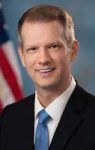
Moore, who supported the bill from the start, said the new law increases spending but at a slower rate than the Biden administration. He predicted Monday on MetroNews “Talkline” future bills will do better.
“That’s a really big dent in that and the Speaker of the House, Mike Johnson, has also said we’re going to do another two reconciliation bills to continue bend that curve on mandatory spending to get us back to fiscal sanity in this country,” Moore said.
According to the White House, the Debt-to-GDP falls to 94% by 2034 under the new law — compared to 117% under the Biden administration. Total deficit in 2034 is cut nearly in half.
Moore said it remains unclear which direction the two future bills will go but there are a lot of options.
“It’s still under discussion right now…but there’s plenty of places in which we could certainly approve upon thus,” Moore said.
West Virginia Center on Budget and Policy Kelly Allen said running programs the new law calls for like the Medicaid work requirements could cost states millions.
“Kentucky estimated that it would cost about $250 million to implement the bureaucracy required to make this program work, so this is going to raise a lot of costs for West Virginia because a lot of people are going to fall through the cracks,” Allen said on “Talkline” Monday.

She said the issue is that the vast majority of people will be in compliance (either working or eligible for an exemption) but many will lose coverage regardless- either because the documentation is difficult to gather, it’s confusing, or state officials make an error.
Moore said He doesn’t believe the requirements are heavy-handed. He said SNAP has had work requirements since the 1970s.
“They can either have work requirements, can volunteer, they can be looking for a job or they can be in school. We are talking about 20 hours a week and I think that’s pretty reasonable for the taxpayers of this country and it certainly hasn’t deterred them from the SNAP program either,” Moore said.
The new law does set income limits for the no taxes on overtime and Social Security but Moore said most West Virginians won’t be impacted.
Allen said the who bill is a rush job especially making the tax cuts permanent which had a deadline for six months from now.
“By rushing this through, I think it created a lot of pressure to make deep, unpopular cuts that weren’t required,” she said.
Allen maintains the new law will raise food and health care costs for many families, increase poverty and hunger in West Virginia and across the country while still driving up the deficit.
Moore said the tax cuts will put more money back into the economy.
“As there’s more money in people’s pockets, we are going to see more spending, more growth, more disposable income for people and which at the end of the day what everybody wants,” Moore said. “They want to be able to choose how to conduct their lives and how to spend their hard-earned dollars.”
Moore also touted the law’s $175 billion spending on border security during his “Talkline” appearance. He said that will mean 10,000 new ICE personnel, another 5,000 customs officers, 3,000 border agents, another 700 miles of border wall, 625 miles secondary wall, 900 miles of river border and a focus on the northern border where fentanyl is entering the U.S.