


The first step West Virginia needs to take on costs of the Public Employees Insurance Agency is identify the problem, House Speaker Roger Hanshaw says. And the main issue, he says, is a broad trend of medical cost inflation.

“We have a medical inflation problem nationally, and that that’s what we’re grappling with. We aren’t grappling with a, per se, broken plan. We aren’t grappling with underfunding. We’re grappling with medical inflation nationally,” Hanshaw, R-Clay, said this week on MetroNews Talkline.
“It’s not an easy issue for us to tackle, because we want to be a good employer,” he said, referring to the public employees who receive benefits through the state health insurance agency.
That doesn’t sound promising for a proposed special session focusing on changes to PEIA, which could come as soon as early September.
“Whether we act on that in any way this summer remains to be seen,” Hanshaw said from the annual West Virginia Chamber of Commerce Business Summit at The Greenbrier Resort.

Gov. Patrick Morrisey has a four-point proposal for changes to the Public Employees Insurance agency and a bill to reflect that — but not clear support from lawmakers, according to four sources familiar with discussions.
Morrisey has regularly talked about the likelihood of a special session that could include changes to PEIA, which is anticipated to experience cost growth of about $50 million a year over the next few years.
“The can’s been kicked down the road for so long, and I want to make sure that we’re living within our means financially,” Morrisey said on “Panhandle Live” on WEPM Radio.
State officials regularly set special session dates to align with already-scheduled interim meetings because lawmakers would already be at the Capitol anyway. The next round of interims is Sept. 7-9 in Charleston.
“We’re working on it. But what I’ve told everyone is we’ve got to get enough people in the Legislature, enough people to yes,” Morrisey said.
“We have to get the coalition of the willing together to have enough votes, and that’s what we’re working on now. I feel very good about it.”
Lawmakers have been discussing the possibility of changes to PEIA because they could be asked to make decisions in a little more than a week if the governor truly summons them in and presents a bill. Several have been asked questions about the insurance proposals during appearances on WVRC radio programs.

Delegate Matthew Rohrbach, R-Cabell, has been one of the top leaders in the House of Delegates on PEIA policies. Rohrbach, the deputy speaker, noted in a WMOV Radio interview that the legislature made major changes to PEIA’s framework just two years ago — including an explicit requirement for fiscal responsibility.
On the current proposal, Rohrbach said, “We’ve obviously talked and we’re still refining what the final proposal will be. As of yet, there’s a lot of questions. I’ll leave it at that. We have a tremendous number of people with serious questions. What we can’t do is make it harder for us to hire and retain employees.”
Senator Rollan Roberts, chairman of the Workforce Committee, said it’s still not clear when lawmakers will address PEIA issues. But he said political risk is part of the equation as elections approach next spring.
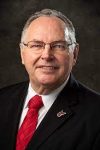
“I’m still of the opinion that we probably will have a special session,” Roberts, R-Raleigh, said on “Radio Roundtable” on Beckley’s WJLS AM.
“What that will look like will be a little bit probably — oh, we’ve got re elections going on, you know, the midterm elections. And so there’s some question marks as to who will stand on what side and and what risks are taken politically.”
The policy question will probably be posed in September, Roberts suggested, “or it may not happen at all.” He noted that October interim meetings are off-site from the Capitol and after that it’s within striking distance of the annual regular legislative session.
” I think the later, the harder it’s going to be,” he said. “I think September was the key time.”
He continued by saying if changes aren’t made right away, then it could be a very long time.
“I don’t know that you’re going to get any, any legislation of meaningful change through the legislature this coming session,” he said. “I think if we don’t make the changes probably in September, then probably nothing’s going to happen until the following year.”
Roberts said he believes some changes need to be made to the health insurance structure because of the annual increasing costs, “but I think probably it’ll be narrowed down to a few tweaks and and savings and adjustments.”
The governor has four main points to his PEIA package, and some lawmakers are skeptical for two reasons: 1) A couple of the changes conceivably could be accomplished administratively — strictly by executive branch action and 2) The remaining proposals could result in a public backlash and do not have clear legislative support.
The proposals are:
— Remove coverage eligibility for spouses who are offered health insurance through their own employer.
— A new plan for new employees. PEIA has had an 80-20 cost split, meaning that the employer (the government) pays 80 percent and the employee pays 20. For new hires, this ratio would shift to a 75-25 split.
— The establishment of a PEIA fraud unit.
— Greater leverage over pharmacy benefit managers and negotiating, especially with specialty drugs like GLP1s such as Ozempic.
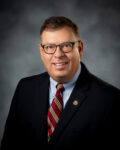
“I’m just not sure they’re the right direction we need to go regarding our PEIA,” Senator Mike Oliverio, R-Monongalia, said of the four-point proposal on “Talk of the Town on WAJR Radio.
Oliverio expressed concern that some of the proposals would diminish state government’s ability to recruit and retain qualified workers. And he said forcing some people off the program could diminish the state’s leverage for driving down healthcare costs.
“We’re trying to create an environment where we attract people into public employment,” Oliverio said. “We’re no different than any other large employer where we have great difficulty hiring people.”

Senator Joey Garcia, D-Marion, said he has had no communications with the Governor’s Office about the proposed changes. But, he said, “It’s certainly not a sure thing. I don’t know whether at the end of the day the governor will get the votes in special session, whether that be in September or otherwise.”
Garcia questioned the wisdom of removing coverage eligibility for spouses who have access to other coverage because it’s a benefit that could encourage good employees in public sector roles. Similarly, he thought increasing the cost share for new employees could make public sector work less attractive.
“It’s making the paycheck worth less and less to these public employees,” Garcia said on WAJR’s “Talk of the Town.”
He questioned why PEIA doesn’t already have a fraud unit if one is necessary — and whether the executive branch could go ahead and establish such a unit administratively, without legislative action.
On drug price negotiations, Garcia asked if that actually means the executive branch taking a more active role in deciding what medications will be be covered and which won’t.
“Part of the problem is, a lot of these issues are not really fleshed out and there’s not been that level of transparency,” Garcia said, “and maybe that’s just because there’s not an agreement on it yet.”

Delegate Kayla Young, D-Kanawha, shares that skepticism.
“I think this is trying to be sold to people as a fix to PEIA. I don’t know that this is much of a fix,” Young said on “The Dave Allen Show” on WCHS Radio.
Young said she’s open to proposals to reduce fraud and to push pharmaceutical costs down, but “I would say both of those pieces probably don’t require legislation.”
She was critical of the proposals to eliminate coverage for spouses with alternative coverage and establishing a less generous cost share for new public employees.
“What’s it doing for people who are on PEIA now?” Young said. “This is doing nothing to help those people at all. This is just other changes. I don’t know who this is for, other than saving the state money.”
Bottom line, count Young among those who has serious doubts about lawmakers taking up the insurance issue in the near future.
“If I had to bet right now,” she said, “I’d say I don’t think it happens in September.”