


A written agreement between West Virginia and the U.S. Department of Energy lays out the broad outline of what’s expected if the state is selected to move forward with a nuclear energy initiative.
The 7-page memorandum of understanding outlines a strategic partnership between the Department of Energy and the State of West Virginia to create a Nuclear Lifecycle Innovation Campus.
The document doesn’t provide many specifics — like where a nuclear hub might be, any private or academic partnerships or the kinds of activities envisioned for West Virginia — but it does lay out a framework to move ahead.
“It frames the general expectations for both parties and the respective roles of the state and the federal. branch on such locations,” said state Delegate Bob Fehrenbacher, R-Wood, who has read the memorandum.

Earlier this month, Gov. Patrick Morrisey announced that West Virginia has now joined five other states as a finalist for the possibility of landing a Nuclear Lifecycle Innovation Campus.
The announcement does not necessarily mean West Virginia has been given the ultimate go-ahead, but the state has a strong shot.
“It’s another significant step forward,” Morrisey said.
The agreement aims to establish a comprehensive industrial ecosystem that supports the entire nuclear fuel cycle, ranging from advanced reactor development to waste management.
The other finalists include Idaho, Louisiana, Oklahoma, Tennessee and Utah. Each of those states has provided an outline of what it intends to do, often connecting the federal initiative with existing nuclear structures or programs within the state.
For example, Tennessee, has put both its proposal and its signed memorandum on a public website. Similarly, Idaho has publicly posted its response to the U.S. Department of Energy’s request for information.
MetroNews obtained West Virginia’s memorandum of understanding following an information request to the governor’s office.
“I would say it creates a big picture because this document is only like seven pages long, and for the details to be fleshed out not only on this particular topic but others would mean it would be a perhaps inordinately long, complex document,” Fehrenbacher said.
“And so I see this MOU as being a high-level guide with specific details to be fleshed out in in future conversations and negotiations.”
In the memorandum, West Virginia agrees to take on several key responsibilities to support the establishment and operation of the Nuclear Lifecycle Innovation Campus.
One element would bring lands within West Virginia where the nuclear hub is located to the Department of Energy’s jurisdiction and allow sufficient control as needed to meet the objectives of the project.
Another aspect means issuing all necessary state permits and approvals within its authority, specifically including utility infrastructure such as electricity and water.
And it means advocating on DOE’s behalf before state and local authorities to secure permits, rights-of-way, leases, and certificates on an expedited and prioritized basis.
The agreement also means ensuring state and local regulatory bodies exercise authority to facilitate the nuclear hubs, and deferring to the Department of Energy or Nuclear Regulatory Commission if regulatory conflicts arise.
Authorities agree to seek necessary authorizations and appropriations from the West Virginia Legislature.
West Virginia would establish dedicated workforce initiatives in collaboration with higher education institutions to fulfill the nuclear hub’s long-term staffing requirements.
The memorandum calls for ensuring all source, byproduct and special nuclear material activities comply with applicable Department of Energy safety standards and authorizations.
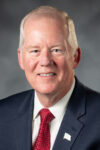
Fehrenbacher, in an interview, noted that the memorandum explicitly defines a joint responsibility for the U.S. Department of Energy and the State of West Virginia to work collaboratively with local communities, including counties, municipalities and other governmental entities, to coordinate development activities and ensure robust community engagement and transparency.
The regulatory framework to be established under a supplemental Host Agreement is specifically designed to operate in a way that builds and supports public trust and confidence in nuclear hub activities and operations.
“And I would say that it’s not like one of these facilities would therefore pop up in some location, but there would be active government, both at a state and a federal level, dialogue before you know a siting commitments took place,” Fehrenbacher said.
By collaborating on the nuclear hubs, West Virginia officials and their federal counterparts hope to create high-paying jobs, attract significant private investment and solidify the state’s position as a national energy leader.
Fehrenbacher took note of employment growth at Oak Ridge National Laboratory, a federally funded research and development center in Tennessee. That state has tied its bid for the Nuclear Lifecycle Innovation Campus to Oak Ridge’s longstanding resources.
“Oak Ridge National Lab started up in 1943, so it has grown over that time frame to having about 7,000 direct employees, and in an economic impact study conducted in 2023 said that there were about 43,000 direct, indirect and induced jobs associated with that facility, and that the economic impact was substantial: It was about $7 billion and it generated over $100 million in state and local taxes.
“So I see the possibility if this would go forward that — not necessarily that we’d ever get to that same level of employment or economic impact — but even a fraction of that would be significant and would be very, I think, attractive,” Fehrenbacher said. “And I believe that the facility would be managed in a way to be, you know, safe and secure.”
During legislative interim meetings last week, Fehrenbacher asked for an overview of the nuclear hubs, saying, “I think it’s a great announcement.”

Nick Preservati, director of the state Office of Energy, said the initiative could have a range of benefits while cautioning “It’s not an absolute guarantee that we’re going to get any kind of award or grant, but it’s everything.
“It affects everything from research and education, increasing workforce, increasing jobs in manufacturing, co-locating, manufacturing with generation, all kinds of aspects there.”
Preservati continued by saying, “We’re looking at it to increase generation, research. It could impact every aspect of the West Virginia economy.
“We’re not there on a final project or design or anything like that, but there’s tremendous opportunity here in the mere fact that West Virginia is being mentioned in the same breaths of Idaho, with Idaho National Labs and a nuclear lab there, Oak Ridge National Lab in Tennessee. I think it just portends and shows that West Virginia is now being considered a major energy state across the board.”