


A government shutdown would significantly affect West Virginia through disruption to major federal employers, effects on social services and reduced operation of national parks and forests.
The federal government remained on track to shut down just after midnight.
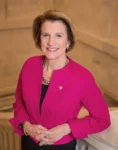
“I say every single time, it’s a misery march. It’s a march to nowhere. Once you close the government, what do you have to do reopen it? I mean, that’s just, how do you do that?” Senator Shelley Moore Capito, R-W.Va., said on MetroNews Talkline.
Congress is supposed to allocate funding to 438 government agencies before Oct. 1, the start of the fiscal year. The budget process has not been completed by then so the Republican majorities in Congress have been focusing on a stopgap continuing resolution to get to Nov. 21.
Democrats insist they cannot support the GOP legislation until Republicans agree to health care policy changes, reversing recent cuts to Medicaid and other health programs. And Democrats want a deal to extend enhanced Affordable Care Act insurance subsidies that will otherwise expire on Dec. 31.
Democrats are also looking for greater restrictions on how the Trump administration can spend money, attempting to curtail the administration’s moves to freeze, shift and cancel funding Congress approves.
So the conflict means a shutdown is at hand.
Many 26,200 of the federal employees in West Virginia would remain on the job but would have to work without pay. Although workers who are furloughed or required to work during a shutdown are almost always paid after the shutdown ends, missed critical paychecks are always a concern in shutdown situations.
Capito acknowledged that many West Virginians work for the federal government and depend on their paychecks. The senator said she and others are working to settle the conflict quickly, that the government will reopen and she has affected families in mind.
“I mean, probably at least half the federal workforce is going to be furloughed starting at midnight tonight, which disrupts services in all kinds of areas,” Capito said.
She continued, “We will reopen the government at some point. And so. And rest assured that I have them in my mind.”
Some of the biggest federal employers in West Virginia include:
FBI’s Criminal Justice Information Services Division (Clarksburg): This facility is the FBI’s largest division, employing over 2,500 federal workers.
Bureau of Fiscal Service, Department of Treasury (Parkersburg): This office, often referred to locally as the Bureau of Public Debt, employs about 2,200 people.
Bureau of Prisons, Department of Justice (statewide): With bout 1,000 employees at seven federal correctional institutions, penitentiaries and prison camps, this is one of West Virginia’s largest federal employers.
Coast Guard, Department of Homeland Security (Eastern Panhandle): The Coast Guard has more than 400 employees at facilities in Martinsburg and Falling Waters.
NASA Independent Verification & Validation Center (IV&V) (Fairmont): NASA employs about 200 full-time federal workers and contractors here.
Federal Aviation Administration (FAA) (Statewide): The FAA employs about 120 people across West Virginia.
The effects of a shutdown would also extend into areas like healthcare and financial assistance:
Although Medicare and Medicaid should continue during a shutdown, agencies may be difficult to contact for assistance or updates.
Food assistance programs could be affected.
Funding for WIC, the food assistance program for women, infants and children, would run out of remaining funding quickly, and the program may be unable to provide food for children and parents in need. Supplemental Nutrition Assistance Program (SNAP) benefits might also be affected in the case of a prolonged shutdown.
Pell Grants and Federal Direct Student Loans should continue until existing funding is depleted. Prolonged shutdowns could cause funding shortages for colleges and universities.
West Virginia’s vast national parks and forests won’t be able to function as normal.
National recreation areas, such as the Harpers Ferry National Historical Park and the New River Gorge National River, will remain open for visitors but services will not be available.
Visitor centers will be closed, trash may not be collected, and road/trail maintenance may not occur, particularly if weather conditions get challenging.
The Green Bank Observatory in Pocahontas County is expected to remain open because its funding is supported by both the National Science Foundation and other sources.
Other aspects of society:
Federal courts in West Virginia should have enough funding to operate for a while before the shutdown affects them.
Federal loans to small businesses will be affected because the U.S. Small Business Administration will not accept, review or approve new business loans.
The Federal Housing Administration will stop approving applications for housing loans, creating significant delays for development, rehabilitation and refinancing of properties.
Some government benefits should be largely unaffected:
U.S. Postal Service mail delivery should operate normally.
Social Security and most Medicare/Medicaid payments should continue.
Veterans Health Administration facilities and Veterans Benefits Administration services should continue without serious effects.
Federal Emergency Management Agency staff should still respond to emergencies, but all long-term disaster relief projects will be delayed because of lack of funding.
“The problem is going to be how long and and what — what the damage is going to be here,” Capito said.