


Congress reached an agreement to reopen the federal government, but a conflict still unresolved is what to do about subsidies for the Affordable Care Act.
Part of the bargain to pass stopgap funding for the federal government through early next year included the promise of a Senate floor vote in December on legislation to extend the expiring ACA tax credits.
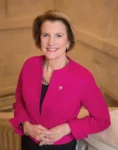
“We will have votes, and we will have broad and big discussion in December,” Senator Shelley Moore Capito, R-W.Va., said in a briefing this past week with West Virginia reporters. “We’re hearing from a lot of constituents on this.”
The subsidies expire Dec. 31. The open enrollment period already began Nov. 1.
The average consumer is likely to see out-of-pocket payments more than double, according to a recent analysis from KFF, a health research group.
West Virginia is expected to be hit hard, possibly seeing some of the largest rate increases in the country. About 50,000 to 60,000 West Virginians would see higher prices without an extension of subsidies.
“Well, I’m listening to all ideas,” Capito said. “I realize that there are tens of thousands of West Virginians that are impacted by this.”
Congress has several options. The most straightforward would be to let the subsidies expire or to extend them, even for a period of a year or two.
An alternative would be to extend the subsidies but with some changes, like income caps or provisions intended to suppress possibilities of fraud.
But some Republican senators like Rick Scott of Florida and Bill Cassidy of Louisiana have floated possibilities amounting to savings plans that people would use to pay for healthcare. In Senator Scott’s case, those are being called “Trump Health Freedom Accounts.”
Critics have said such plans would nudge people to enroll in lower-quality, high-deductible plans that don’t provide adequate coverage.

President Trump, in all caps, posted this last week:
“THE ONLY HEALTHCARE I WILL SUPPORT OR APPROVE IS SENDING THE MONEY DIRECTLY BACK TO THE PEOPLE, WITH NOTHING GOING TO THE BIG, FAT, RICH INSURANCE COMPANIES. . . . THE PEOPLE WILL BE ALLOWED TO NEGOTIATE AND BUY THEIR OWN, MUCH BETTER, INSURANCE. POWER TO THE PEOPLE!”
The president’s post concluded: “Congress, do not waste your time and energy on anything else. This is the only way to have great Healthcare in America!!! GET IT DONE, NOW. President DJT”
Asked about what direction she favors, Senator Capito said she is open to the health savings accounts possibility.
She said “the more direct way is through a medical savings account, health savings account, so that the money would flow to you as the patient or the consumer to be able to make your own choices and decide where you want to purchase insurance and for how much.
“And I think the more accountability we have for people that are actually using the plan. I’m comfortable with that idea, rather than giving it to the the insurance companies.”
But she acknowledged a structural change like that would take time to institute.
“There is a question as to whether we would need to transition this, because we’re getting down to the wire here, and in order to formulate such a plan as I was discussing might take a little bit longer than the end of December,” Capito said.
The enhanced benefits were originally expanded through the end of 2022 as part of the American Rescue Plan, a covid-era relief package.
West Virginia’s Senator Joe Manchin, at the time a key vote, agreed to a three-year extension as part of the Inflation Reduction Act of 2022. Initially, Manchin expressed reluctance to extend the enhanced subsidies, citing concerns about inflation. He also suggested he wanted the financial aid to be subject to stricter means-testing.
That has led to the current decision point.
Since the increase, the ACA marketplace saw a significant surge in enrollment. Enrollment was 10 million to 11 million people four years ago, and now it is more than 24 million.

“Every day of continued uncertainty around the extension of ACA subsidies exacerbates the affordability crisis and results in more households making impossible decisions to go without health coverage in 2026,” said Kelly Allen, executive director of the West Virginia Center on Budget & Policy think tank.
“If Congress wanted to debate the country’s health care system or rein in corporate insurance company profits, they should have prioritized this issue earlier this year or in the course of debate over the One Big Beautiful Bill — which gave hundreds of billions of dollars to profitable corporations.”