


CHARLESTON, W.Va. — The director of the state Public Employees Insurance Agency told state lawmakers Monday the PEIA Finance Board made no changes to the original proposal for next fiscal year’s health insurance plan for state workers.
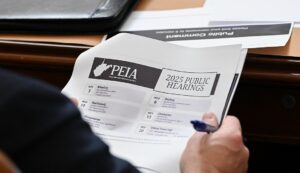
Director Brent Wolfingbarger testified during monthly interim committee meetings taking place at the state capitol.
He said the finance board stuck with the original proposal for an aggregate 3 percent increase in premium costs for workers beginning next fiscal year. The changes also include a $200 monthly spousal surcharge increase.
The increases will take effect July 1, 2026.
Wolfingbarger said most of the public comments made at meetings held across where on the spousal surcharge increase. He said they heard comments about scaling the surcharge based on how much an employee makes instead of straight across the board.
Senate Finance Committee Chairman Jason Barrett, R-Berkeley, asked Wolfingbarger if the scaling should be based on state employee income or household income.
“It would based rate now on only the employee’s salary. It would require a policy change, a statutory change by the legislature for us to take a look at whole family income,” Wolfingbarger said.

Barrett said he’s concerned that the more the spousal surcharge goes up those spouses that are healthier are going to drop off the plan.
“Is it possible then that the actual trend moving forward for the spousal surcharge, because we are going to see the more healthy folks drop off, that that increase could be a larger rate than the premium increases are going to be?” Barrett asked.
“That is absolutely a concern,” Wolfingbarger said.
If nothing changes with PEIA, premiums for state workers are projected to increase by 3.3 percent in fiscal year 28, 6.3 percent in the 2029 budget year and 7.1 percent in the 2030 budget year. The increases will be more for non-state workers.
Wolfingbarger also told lawmakers Monday PEIA “strongly needs” a fraud unit.
“To get documents related to medical history, subpoena power, to work with county prosecutors on the criminal side and the state Attorney General in civil cases,” Wolfingbarger said.
He said he would also support getting up to three times of the amount stolen in recovery. Right now PEIA only receives a dollar for dollar recovery.
Wolfingbarger said developing a PEIA fraud unit would require legislative action.