

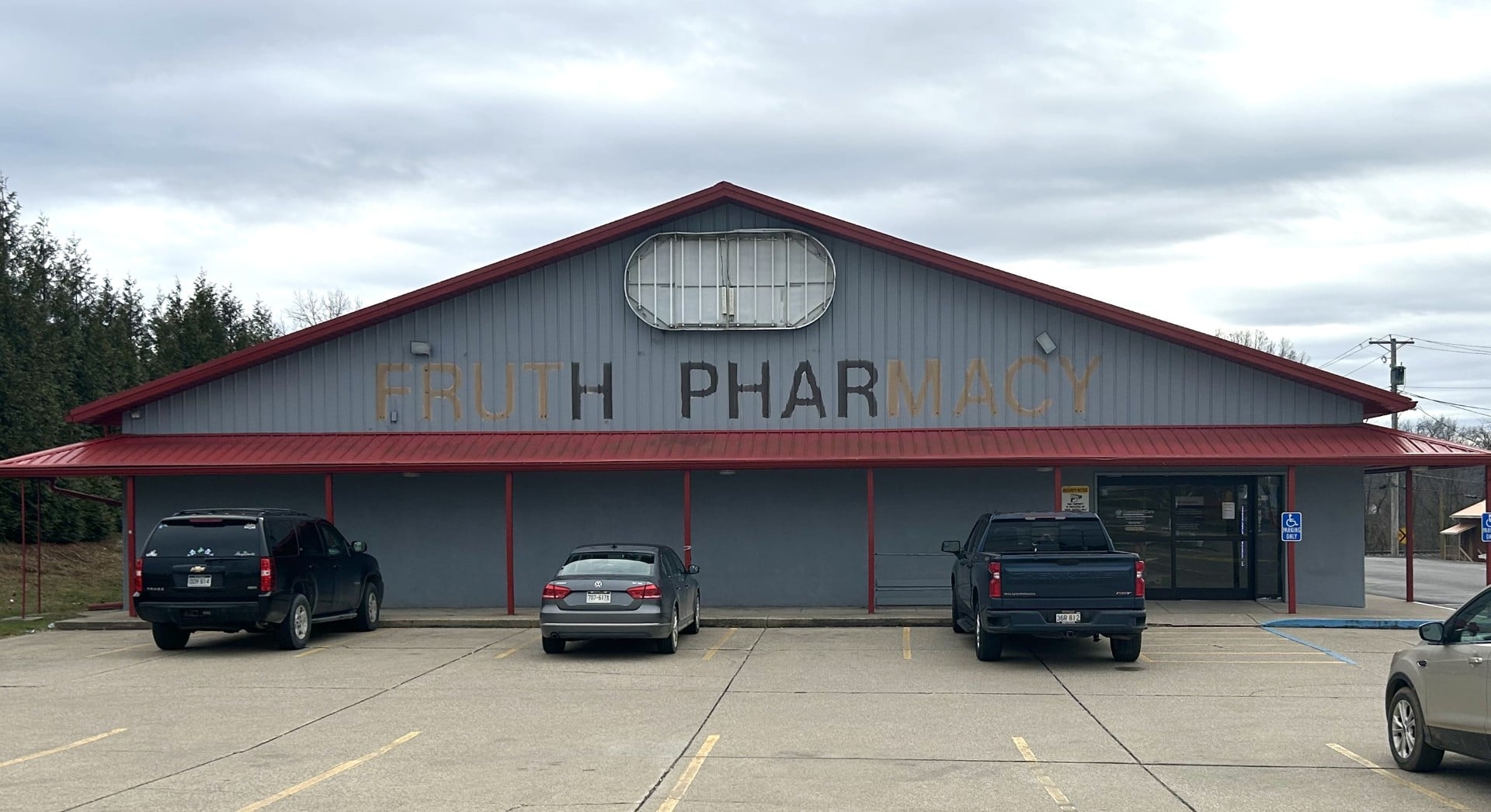
CHARLESTON, W.Va. — After over 70 years in business, every Fruth store in West Virginia and Ohio has shut its doors.
Fruth announced the sale of its pharmacy practices to Walgreens in November. By December 3, all pharmacies were closed and the front-end stores officially shut down on Wednesday.
The local chain began when Jack Fruth opened the first store in Point Pleasant in 1952. At its peak, Fruth had dozens of locations, with most being in West Virginia.

Owner Lynne Fruth, the daughter of Jack Fruth and most recent company owner, released a statement when she announced the sale to Walgreens. She says pharmacy benefit managers are to blame for Fruth’s demise.
PBMs virtually manage the drug supply chain, serving as the middleman between drug manufacturers, pharmacies, and insurance providers.
“Pharmacies have been under attack by greedy PBMs (Pharmacy Benefit Managers) for many years. By reimbursing pharmacies less money than a medication costs, PBMs have caused the closure of thousands of pharmacies across America,” the statement read.
“The continued closings of pharmacies must be a wakeup call for lawmakers to hold PBMs accountable before all pharmacies disappear.”
State attorney general J.B. McCuskey says Fruth was a staple in West Virginia, and companies like it are facing an up-hill battle.
“The Fruths are just great West Virginia business owners, and the system is making it almost impossible to own an individual pharmacy,” McCuskey said.

Stacy Taylor has served as a pharmacist for Fruth for over 30 years. During her time with the company, Taylor worked at the Hurricane and Winfield locations as a staff pharmacist, helped nearly every West Virginia location as a floater, and was the pharmacist in charge at the Prestera Center within CAMC General Hospital.
She says the closure is not easy on her.
“It’s difficult. It’s literally all I’ve known,” Taylor told MetroNews.
“They gave me my first opportunity, and they were always so good to me. It just felt like ‘small town.’ That’s what I was used to, that’s what I grew up in, and I just wanted to stick to that,” she continued.
Taylor, the Winfield native, began at the Fruth in her hometown upon finishing pharmacy school. She says serving her community was something she took pride in.
“I wanted to serve people I knew. My teachers would come in there, my friends I went to high school with, grandparents and my pastor.”
While Fruth — like most other chains — had a corporate office and headquarters, Taylor says the company was more like a family.
“Everything was personal,” she said. “It wasn’t on this huge corporate level where you don’t even see these people or they’re micromanaging from another state. It was just down the road and I felt that. They knew my name. They knew what things I liked to do. They knew that I had kids.”
Taylor is one of the many pharmacists in the state concerned that Fruth’s closure will create more pharmacy deserts. A pharmacy desert is a town or community without a single pharmacy. West Virginia, with its rural nature and aging population, already had a problem with deserts before Fruth sold to Walgreens.
Taylor says that Fruth used to deliver medication and other items that were needed for elderly or immobile patients that could not get out. She says many will now rely on mail order prescriptions.
“I can tell you, it is confusing. It’s not personal at all. You get these coming from out of state and it’s just a really, really sad state of pharmacy and where things are headed,” Taylor said.
While Fruth’s run in West Virginia has come to an end, Taylor says the company gave her relationships she’ll never take for granted.
“All the relationships I’ve formed over all these years, we still consider ourselves ‘Fruth family,’ even though a lot of us have gone on to different roles and different opportunities have come about, we still maintain that small group, hometown feel,” she said.