


Legislation that makes changes to how local schools are funded three years from now is moving in the state Senate during the final week of the regular session, but senators are moving toward earlier improvements to special education funding.
The Senate Education Committee discussed and advanced the bill today. It will also be reviewed by the Senate Finance Committee.
In December, the state school board approved consolidations and closures of more than a dozen schools across six counties. The state board recently agreed to two more closures in Wayne County. The state also experienced a wave of school consolidations last year.
A major aspect of financial pressure on local school systems is the cost of special education because some students need extra help like one-on-one instruction or nurses.
HB 5453 is a significant revision of the current public school funding formula to make it simpler, more transparent and more aligned with student needs — especially special education — while moving away from the current step‑based, multi‑schedule formula.
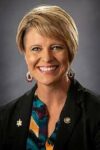
“The intent of the bill is to make the funding formula more streamlined. So it takes out a lot of the steps and just basically says ‘We’re going to fund you based on enrollment and your student numbers; here’s a block of money: You do with it what you feel,” said Senate Education Chairwoman Amy Nichole Grady, R-Mason.
Under the most recent version of the bill, the current school funding aid formula would be used for the coming three academic years, until 2029.
Starting with 2029-2030, all county school boards would be funded by block grants of $6,100 per enrolled student. County boards that have fewer than 1,200 enrolled pupils per county would be funded at the minimum level of 1,200 students.
The bill establishes three tiers for additional funding for special needs students. And there are more categories of supplemental funding for areas like transportation, vocational and technical education centers, alternative learning centers and pilot programs.
Under a change approved by the Senate Education Committee, changes for tiers two and three for the special education funding would take place earlier.
“That was thought to be something that would take place starting the next school year, 27-28, because we’ve already passed the budget,” Grady said.
“If you’re asking my opinion of that, I would love to start it this year, 26-27, but I am also just one person. So we have to see if there is support to do that.”

Senator Joey Garcia, D-Marion, proposed an amendment to move up the additional funding for special education to the coming fiscal year. He said he could not vote to pass a general revenue budget bill last week because it did not provide financial help for public schools.
Of the public schools, he said, “They are hurting right now, and there are schools that are consolidating right now. I’ve said it recently, I’ve got six schools in Marion County that are on the chopping block here next fall. And this is another opportunity for me to give them some relief, for all of us to give them some relief,” he said.
He concluded, “I think it’s important that we fund our public education system, and I’m going to look at every opportunity that I can to make sure that happens.”
His proposed amendment was defeated narrowly, 6-5.
The main reason for other senators objecting seemed to be that lawmakers passed the general revenue budget late last week. That complicates spending decisions beyond what was reflected in that budget bill.
“The budget is up for enrollment right now, so we add $15 million to this does it kill the bill?” asked Senator Eric Tarr, R-Putnam.

In an interview prior to the floor session in the House of Delegates today, House Education Chairman Joe Statler said he favors providing additional support for special education sooner rather than later.
“I think we’ve got to get special ed funding, and I think we have to have it next year because these counties are bleeding every day,” said Statler, R-Monongalia.
“There’s not enough state and federal funding coming in for what they’re putting out. And some counties — I know for instance my own county, Monongalia County — it’s about $13 million that they are behind, and I believe Berkeley was about $18 million. So it’s several million dollars.”
Statler concluded, “Any relief is better than no relief.”
Even though the budget has already gone to the governor, Statler suggested supplemental funding remains possible.
But, he said, “We actually need it in a formula at some point in time because you can’t keep going year to year to year with supplemental funding. We have to find a way to permanently fix the problem.”
Residency for county superintendents
In separate action, the House of Delegates today passed legislation to give counties more latitude when they hire a superintendent.
Until now, local school boards have had to hire superintendents who live in the county or a contiguous county. SB694 removes the county residency requirement from state law, although local boards could maintain their own similar requirements if they choose.
The House of Delegates passed the bill on a 72-24 vote. The bill passed the Senate on Feb. 10 and it was not changed after that, so today’s vote completed the legislation. It now goes to the governor.