

MORGANTOWN, W.Va. — Gov. Patrick Morrisey will be making more decisions this week on bills passed by state lawmakers in the final days of the session.

Morrisey signed three dozens bills into law last Thursday, most of them were supplemental appropriation bills.
Decisions have yet to made on some of the most talked about bills approved in the sessions final 48 hours.
One of the those in the bill that cuts income taxes by 5 percent. Senate Bill 392 arrived on Morrisey’s desk last Wednesday.
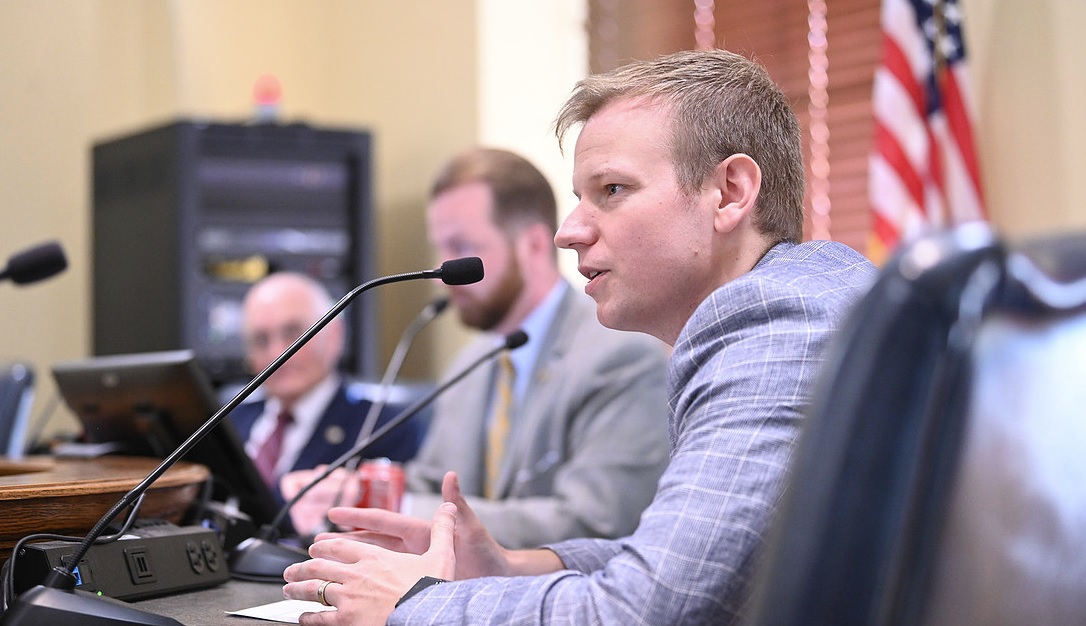
Del. John Williams, D-Monongalia, said the tax cut will mean little to state workers who will have to pay more for health insurance because of PEIA premium increase set to hit July 1.
“West Virginia teachers and public employees are spending between $30 and $160 more a month, and then we’re going to sell these tax cuts that only give them $60 a year back,” Williams said. “Our people aren’t dumb; they know what’s going on,” he said recently on WAJR’s “Talk of the Town.”

Williams pointed out the timing of initiatives in the House—the cut to the personal income tax was retroactive to Jan. 1, and the failed effort to reform the school funding formula was on a three-year implementation schedule. The program that did get the large cash infusion was the vehicle families have used to exit public education in recent years, according to Williams.
“The legislature, again without my support, gave a record $300 million to the Hope Scholarship, and it just goes to show how misaligned our priorities are,” Williams said.
School districts across the state are experiencing declining enrollment. For the first time in the history of Marion County Schools, they’ll be below 7,000 students with 21 buildings to operate. Marion County is just one of a long list of public school districts that are closing buildings or cutting staff, or in some cases closing buildings and cutting staff.
“We are laying folks off, and we are worried and talking about school consolidations all across West Virginia,” Williams said. “I think the taxpayer would find that shocking.”
Williams was hopeful some kitchen table issues could have been addressed, like controlling utility costs, improving the child welfare system, finding a funding solution for PEIA, or fixing the public school funding formula.
“I think the supermajority is starting to figure out that governing is really hard,” Williams said. “It’s easy to campaign on a quick fix like a tax cut, but in reality they want to see results, and they’re not—they’re seeing their schoolhouse doors shut.”
The economic development efforts have brought some economic activity to the state, but the jobs and population growth has not followed. Williams suggested a shift to more policies that will support working families and public education.
“This race to the bottom to try to bring businesses here with tax cuts hasn’t done anything except for degrade our public schools and the ability of average West Virginians to be on a level playing field,” Williams said.