

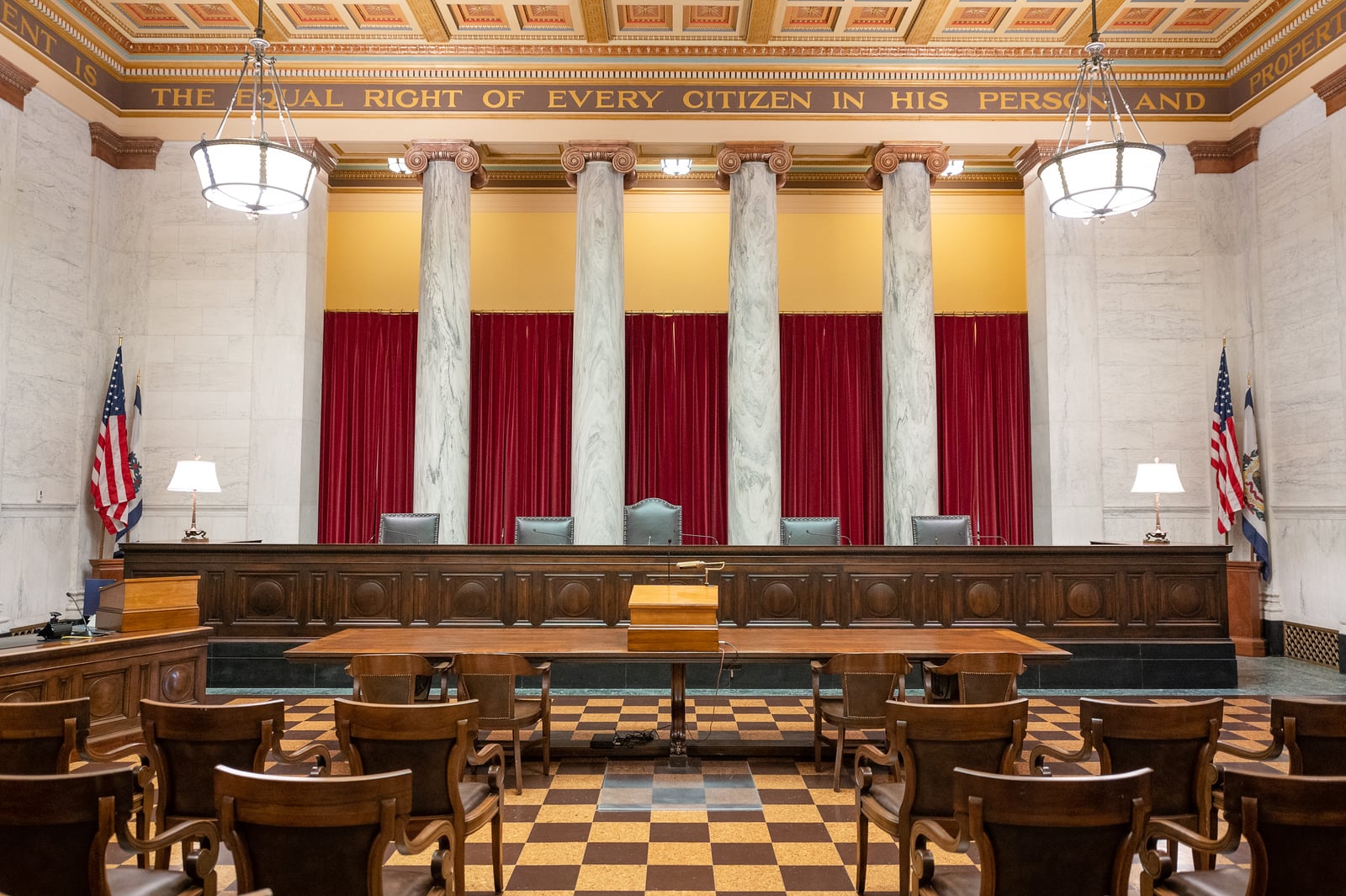
Lawyers for the state Board of Education have fired the first shot in a state Supreme Court appeal of a vaccine exemptions case.
The conflict focuses on whether West Virginia’s religious freedoms law passed in 2023 directly affects the longstanding mandatory vaccinations law for the public school system.
“The Vaccine Law works: West Virginia’s school children have the highest vaccination rate in the country and the State experiences few outbreaks of vaccine-preventable diseases as a result,” wrote the lawyers for the state school board.
“The Legislature has repeatedly considered adding religious exemptions to the Vaccine Law. It hasn’t. Recent events reveal the Legislature’s wisdom. Measles proliferates in South Carolina, Utah, and Texas, claiming the lives of at least two children. A disease once deemed eliminated in the United States has reawakened. But not in the Mountain State. This case threatens to change that.”
Attorneys for the Board of Education last week filed a 51-page written brief to ask the justices of the Supreme Court for oral arguments in the case, pushing back on six ways it believes a lower court erred.
“This Court should reverse the lower court, remand this case, and direct the lower court to enter an order in Appellants’ favor denying the permanent injunction,” wrote lawyers for the state school board.
The Supreme Court has not yet set a date for oral arguments. That is likely to happen after a series of additional steps to build the appeal record.
By May 11, attorneys for the families seeking religious exemptions to West Virginia’s mandatory school vaccination law are supposed to file their own brief.
And by June 1, the lawyers for the state Board of Education will have one more opportunity to reply in writing.
In the meantime, individual outside groups who believe they have stakes in the case will be submitting their own briefs.
These are steps in an appeal of a Raleigh County circuit judge’s recent ruling in a case with statewide implications about religious exemptions to West Virginia’s school vaccination requirements.
The circuit judge in Raleigh County, Michael Froble, late last year ruled in favor of families who want the public school system to accept religious exemptions processed by the state health department.
The West Virginia Supreme Court has already placed a stay on lower court activity surrounding the vaccine exemptions case, meaning that Judge Froble’s ruling is on hold while the appeal goes forward.
West Virginia’s compulsory vaccination law means students entering school for the first time must show proof of immunization against diphtheria, pertussis, tetanus, polio, measles, mumps, rubella, varicella, and hepatitis B unless properly medically exempted.
Gov. Patrick Morrisey issued an executive order earlier last year linking the Equal Protection for Religion Act with the vaccine law, which has no explicit religious exceptions.
The religious protections law gives citizens the right to sue if they believe their deeply held beliefs are being suppressed. But the law includes additional factors to weigh, including whether a compelling state interest exists to uphold a policy under the least restrictive means.
The Morrisey administration directed families to apply for exemptions through the state health department, but West Virginia school systems did not accept them.
The lawyers for the state school board contend that the circuit judge in Raleigh County erred in six ways, including grafting an extratextual religious exemption onto the separate vaccine law.
The lawyers go farther by saying the circuit judge “rewrote the Vaccine Law” by going farther than the Legislature ever intended. To do so, wrote the lawyers for the state board, the circuit judge “erroneously read” the Equal Protection for Religion Act “to apply universally such that it grafts religious exemptions onto all statutes.”
The lawyers continued, “The effect of that error is drastic. Litigants could weaponize EPRA against the State, using it as a tool to legislate through litigation. The Circuit Court’s error does not stop at the Vaccine Law. Any number of statutes, from tax laws to seatbelt laws, face existential threats under the Circuit Court’s reading.
“This Court should reject that broad reading and apply EPRA as written.”