

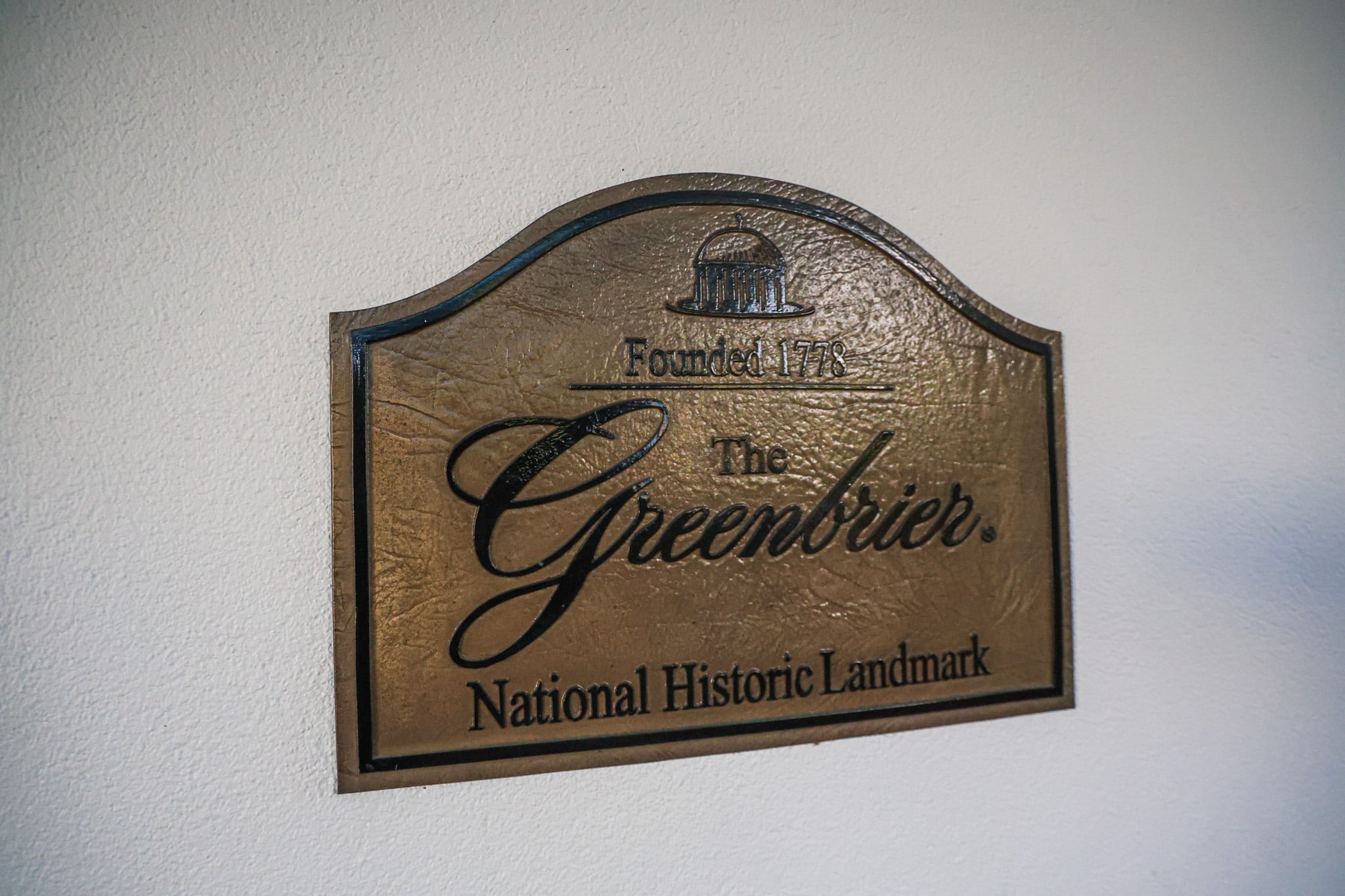
Lawyers for the owners of The Greenbrier and lawyers for an Omni hotels affiliate agree on at least one matter: They don’t want the state tax department to directly intervene in a federal court dispute over control of the historic West Virginia resort.
West Virginia’s tax division says they’re wrong, though.
Lawyers say the tax department is merely trying to maintain the state’s interest in millions of dollars in liens on unpaid taxes at The Greenbrier.
“Despite acknowledging that the Tax Division holds valid tax liens against property implicated by this action and that the Tax Division possesses statutory rights entitled to priority protection, Plaintiff and Defendants oppose the Tax Division’s intervention on procedural grounds,” wrote lawyers for the state in a new filing.
“Those objections lack merit.”
The lawyers for the state continued by adding up what’s at stake.
“In fact, the Tax Division holds nine liens against the Greenbrier Hotel Corporation for consumers sales and use tax in the total amount of $3,982,038.51 and one lien for personal income tax withholding in the amount of $455,070.11, for a total lien amount of $4,437,108.62,” the lawyers wrote.
This is all taking place in a federal court dispute between Senator Jim Justice and his family business versus White Sulphur Springs Holdings, an affiliate of Omni Hotels and Resorts.
White Sulphur Springs Holdings filed the lawsuit to try to have a receiver placed over The Greenbrier in the role of third-party oversight of the resort.
A few months ago, White Sulphur Springs Holdings bought about $300 million in first-lien debt from Carter Bank & Trust, longtime lender for the Justices. The holding company also seeks to push the Justices out of any role at The Greenbrier.
Lawyers for White Sulphur Springs Holdings contend the current owners are not adequately maintaining The Greenbrier, that the Justices are diverting revenue to other branches of their business network and that their collateral is at risk. The Justices dispute all of that.
Much of the federal case is on pause while the Justices pursue a financing agreement of up to $500 million with the New York firm Kennedy Lewis.
Meanwhile, the court continues to consider some issues like whether the West Virginia tax division should be allowed to participate.
The tax division says it does not intend to take a position on whether a receiver should be appointed. But if that happens, the tax division wants a direct way to watch out for the tax liens.
“The fact that the Tax Division does not take a position on the merits of the underlying dispute does not mean it lacks a substantial stake in the outcome,” wrote lawyers for the state.
“To the contrary, this action seeks extraordinary equitable relief that could ultimately result in the receivership, sale, transfer, or other disposition of property against which the Tax Division has recorded tax liens in the total amount of $4,437,108.62.”
Lawyers for the Justices and for White Sulphur Springs Holdings entered filings opposing the move, arguing that intervention is procedurally unnecessary because the Tax Division’s statutory priority is already protected by law and can be managed through standard claims processing.
They suggest the tax division could participate as an interested non-party, which would permit the state to receive notice and file objections, particularly in receivership proceedings, without becoming a formal party to the lawsuit.
The tax division countered that formal intervention is important because it would bring greater rights to participate in the case, rather than participation at the court’s discretion.
For example, lawyers for the tax division pointed out that an amended complaint filed by White Sulphur Springs Holdings already omitted at least one tax lien worth more than $589,000, illustrating the risk of state interests being overlooked if they are not at the table.
Steve Ruby, a Charleston attorney who regularly represents the Justices, has said the tax matter is under control. West Virginia businesses that cannot pay their full tax liability can request a payment plan through the state.
“The Greenbrier is under an agreement with the state regarding its tax obligations. It is in full compliance with its obligations under that agreement and will complete all the agreement’s requirements in short order,” Ruby said in late May.