

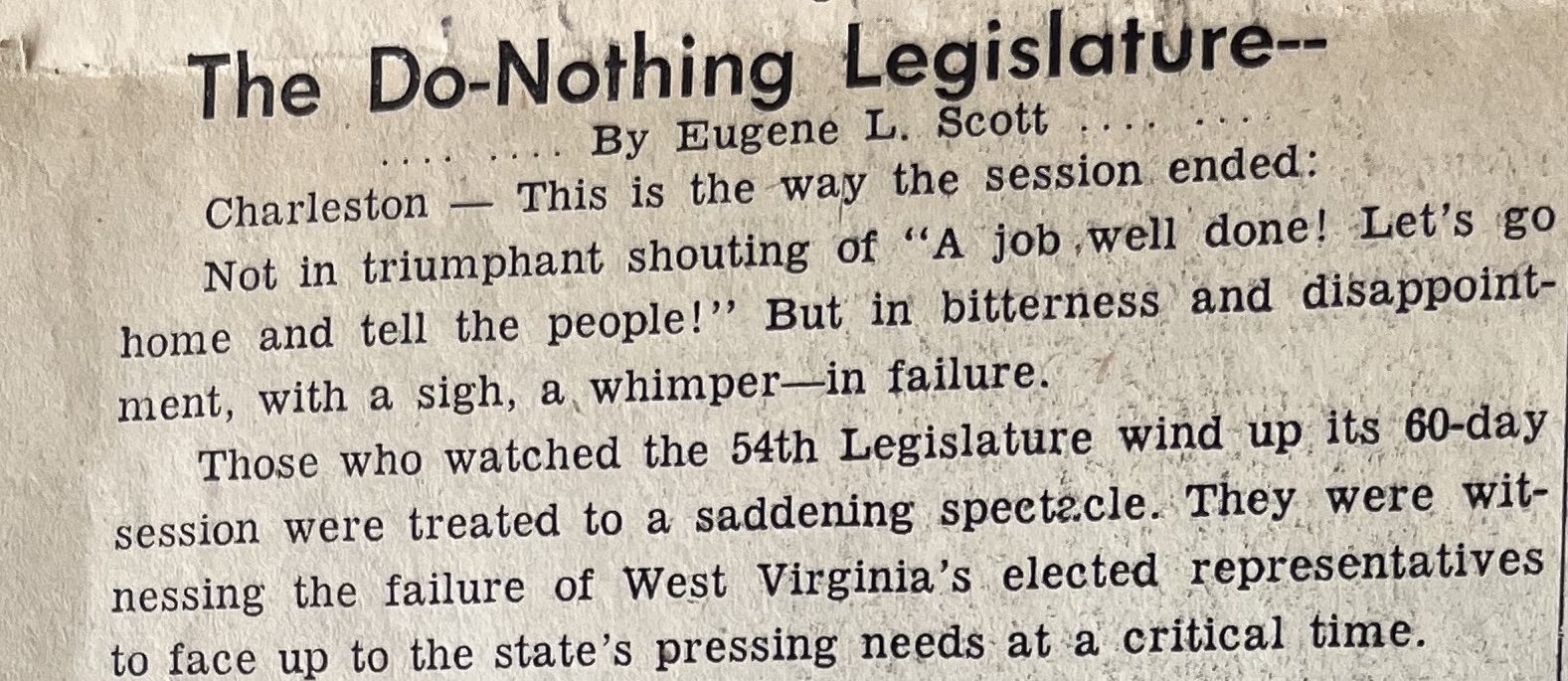
I was recently reading a commentary recapping the annual 60-day legislative session. The author was not impressed and did not hold back.
He described the session as concluding in “bitterness and disappointment, with a sigh, a whimper – in failure.”
“Those who watched the legislature wrap up its 60-day session were treated to a saddening spectacle. They were witnessing the failure of West Virginia’s elected representatives to face up to the state’s pressing needs at a critical time.”
The columnist wasn’t done.
“In the final days, those who endeavored to get West Virginia out of its political and economic rut were overcome by a feeling of dejection and helplessness.”
“The leadership required to meet a challenging situation just wasn’t there,” concluded the author.
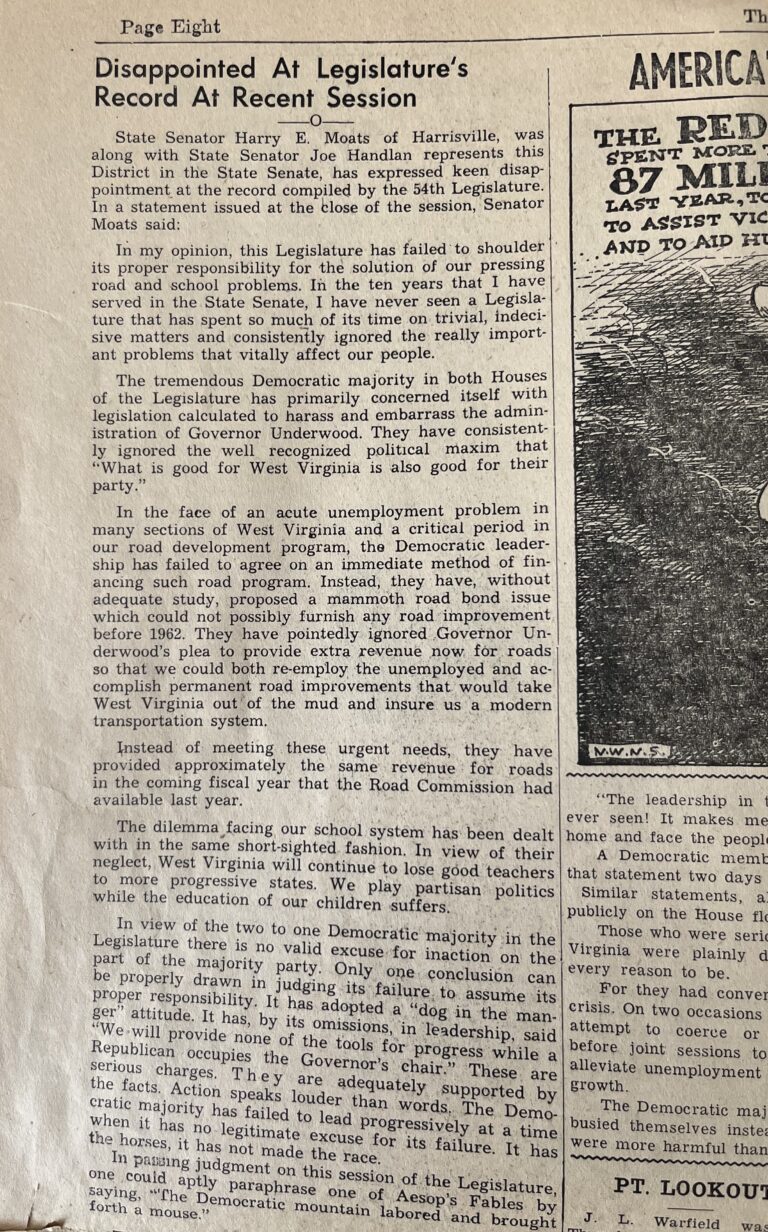
In another scathing critique, the legislature was criticized by two state representatives for failing to meet the urgent needs of road and education infrastructure.
“The dilemma facing our school system has been dealt with in the same short-sighted fashion. In view of their neglect, West Virginia will continue to lose good teachers to more progressive states. We play partisan politics while the education of our children suffers,” wrote the author.
Those words were published in the Pleasants County Leader on March 20, 1959.
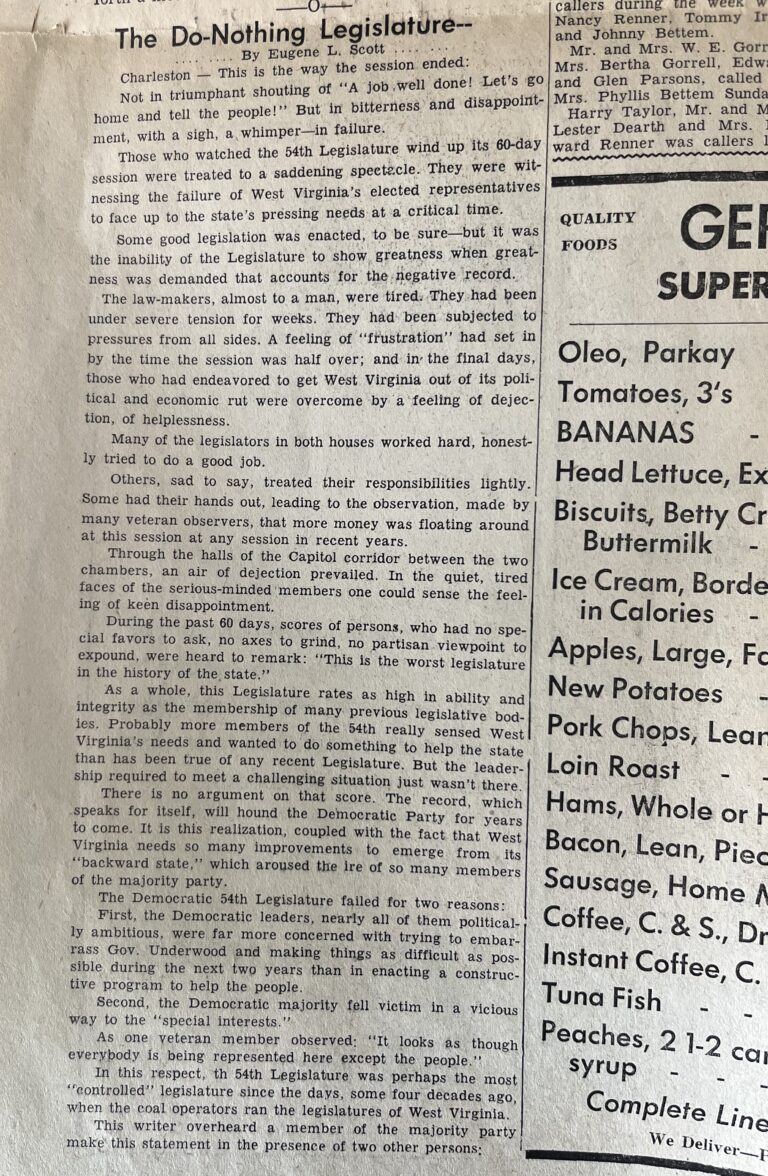
The column written by Eugene L. Scott took the 54th legislature to task for, in his opinion, failing to take action to “alleviate unemployment and pave the way for future economic growth.”
He lamented the Democratic majority in the legislature’s inability to work with Republican Governor Cecil Underwood, accusing the Democrats of busing themselves “with a lot of petty measures that were more harmful than helpful to the people.”
The second piece, published in the same edition of the Pleasants County Leader, State Senators Harry E. Moats and Joe Handlan accused the legislature of spending time on “trivial and indecisive matters” while “ignoring the really important problems that vitally affect our people.”
The articles were fascinating for a couple of reasons. For one, West Virginia is still dealing with many of the same issues.
With a few tweaks to dates and references to majority parties, the critiques read as though they were published in 2026. Sufficient funding for roads and schools, teachers leaving for better opportunities, and legislators unable or unwilling to work with the governor are all still relevant topics nearly 70 years later.
Secondly, it was interesting to see how reporters and other lawmakers viewed the session in their time. In his column, Scott pointed out that multiple people described the 54th Legislature as “The worst legislature in the history of the state.”
Media and politicians are susceptible to using superlative terms without giving much thought to historical context. It was a reminder of just how prone politicians and media are to quickly describe something as the “best” or “worst” ever without much historical context.
It was as true in 1959 as it is in 2026.
In some ways, the glimpse into the past was reassuring to learn that our modern challenges and arguments are nothing new. Conversely, it was depressing to learn that in many respects, we are no closer to finding solutions to those challenges than we were 70 years ago.