

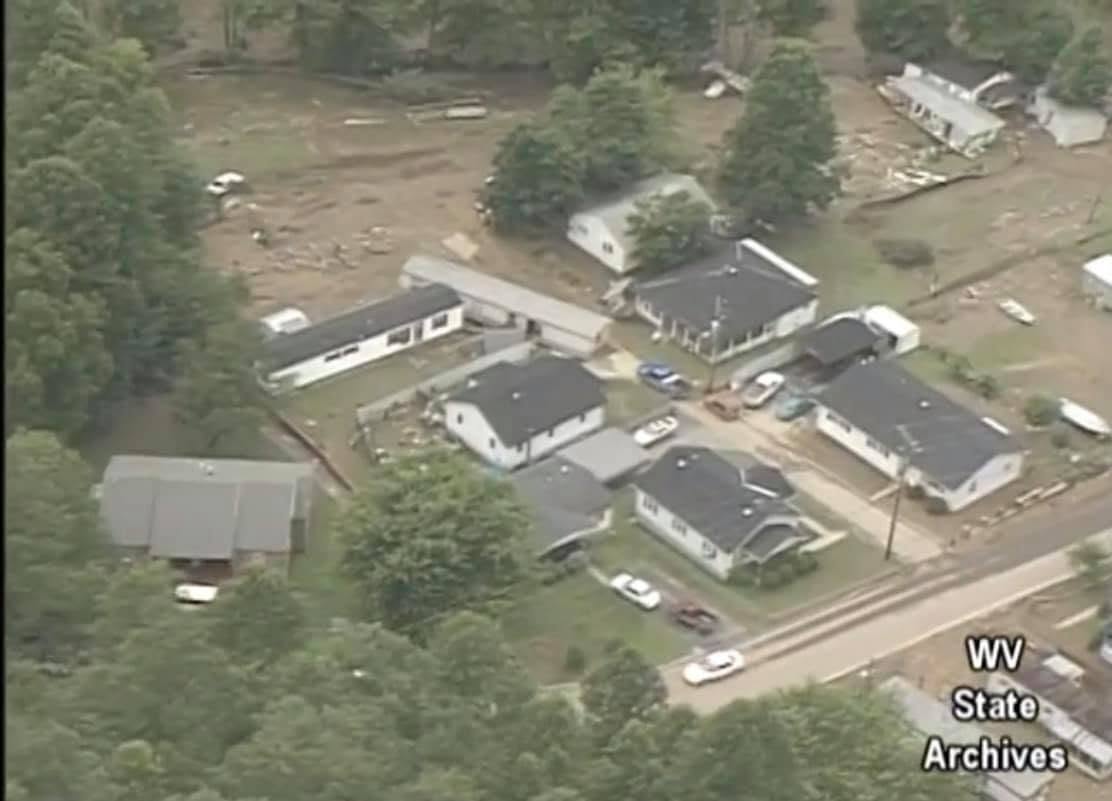
Sunday, July 8, 2001 was a dark day for many in the southern West Virginia coalfields. Rainfall poured that night and dumped 5 to 8 inches of rain in parts of Raleigh, Wyoming, and McDowell Counties. The steep hillsides of the region provided nowhere for the water to drain and it rose up into homes and businesses across the three county area.
Entire towns in Wyoming County were flooded like Mullens and Oceana. Along U.S. Route 52 in McDowell County Elkhorn Creek came out of its banks. The communities off Kimball, Landgraff, Eckman, Welch, Keystone, and Norfolk were all under water. Homes were knocked off their foundation and hundreds were homeless.
Wyoming County Emergency Services Director Dean Meadows said rescue teams scrambled to rescue people off rooftops and stranded in trees and hillsides using boats. One woman was found dead against a fence along the banks of the Guyandotte River in Wyoming County. National Weather Service Meteorologist Tom Mazza said the rain came at two-inches an hour for several hours.
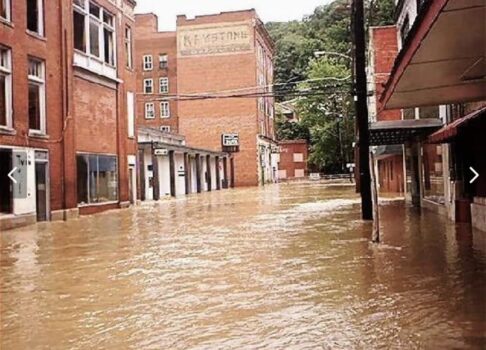
The Guyandotte and Tug Fork Rivers crested at record high levels. According to the National Weather Service, The Guyandotte River was at 18 feet, — 5 feet above flood stage and above the 1977 record of 17.76 feet. The Tug Fork was at 17.5 feet in southern West Virginia, 7.5 feet over its banks and more than 4 feet above the previous high.
“Some areas we had a rainfall that some people are saying was as high as nine inches in a very short period of time. Clearly runoff and how that’s affecting it is a major issue,” said Governor Bob Wise who toured much of the area in a National Guard helicopter.
“I’ve seen complete devastation, as bad as any I’ve ever seen in any flooding in West Virginia. We’ve got major parts of the state in southern West Virginia that are cut off and communities are cut off. The helicopter I’ve been flying in we’ve had to stop twice so the helicopter can rescue somebody off a rooftop or take somebody to the hospital,” Wise said in a conversation with MetroNews the day of the disaster.
It would be months before the cleanup was finished and years before the area was rebuilt. It’s estimated in Wyoming County 300 homes were destroyed and 1,200 substantially damaged. In McDowell County about 170 homes were destroyed and more than 2,000 homes and businesses were impacted in some way.
FEMA bought out many of the flooded properties and those residents never rebuilt. They either moved to higher ground or left the area for good.
For McDowell County the misery wasn’t over. Within 10 months a storm with equal power would strike again and this time delivered the same destructive flooding to the entire county.