


FAYETTEVILLE, W.Va. — A Wayne County man received the maximum five-year sentence for an October 2025 fatal hit-and-run on the West Virginia Turnpike.
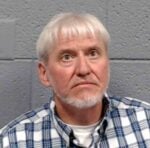
Anthony Hay, 61, pleaded guilty in August to aggravated vehicular homicide, a felony, in the death of Jack Walter, of Middlesex, North Carolina. He received his sentence inside a packed courtroom Fayette County on Thursday.
Hay was driving a commercial box truck on the Turnpike on October 3 last year when he drifted off the highway and struck Walter. Hay didn’t stop after the wreck. Walter had been on the side of the road after his vehicle had broken down.
Fayette County Prosecuting Attorney Anthony Ciliberti, Jr. told MetroNews both Walter and Hay’s families were on hand in Fayetteville for sentencing.

“The most troubling part about this case, from my perspective, is the fact that the defendant (Hay) clearly knew he was involved in an accident,” Ciliberti said. “The reason I say that (is) the truck that the defendant (Hay) was driving had a dash camera. You can actually see, in the dash camera video, the actual collision take place.”
State police began investigating the collision after Walter’s death, reaching out to commercial carriers to try and determine the truck involved in the hit-and-run. Ciliberti said eventually, the evidence pointed to Hay. He said they received dash cam videos to confirm the suspect was the Wayne County man.
“You can tell that the truck received quite a jolt,” Ciliberti said. “It struck a stationary vehicle that was parked on the shoulder of the Turnpike, and at the same time, struck Mr. Walter.”
Ciliberti said that Hay continued driving for about 15 miles after striking Walter. Taking the last exit before the Chelyan tollbooth on the Turnpike, Ciliberti said, Hay parked his truck underneath an underpass and walked around the front of the vehicle. Ciliberti said dash cam video documented the entire thing.
“He immediately goes to the front right part of the vehicle, and you can see him pushing and pulling, like he’s trying to manipulate the fender that was damaged,” Ciliberti said. “You can see him, he has some kind of a rag, and he appears to be wiping the front part of the vehicle off.”
What Hay did next was telling, Ciliberti said. Rather than getting back on the Turnpike and continuing on to his destination in Kanawha County, Ciliberti said, Hay stayed off the Turnpike and drive into Charleston on a two-lane highway. Ciliberti said that Hay had never gone that way to his job site.
“He had a GPS tracker on his vehicle, and every day up to the accident, and the days after, he always took the Turnpike, pretty much from Raleigh County to Charleston,” Ciliberti said. “Except the day of the accident.”
Ciliberti said that Hay denied the incident when speaking to law enforcement. Officers said that Hay claimed the collision was from a deer strike.
Hay didn’t stop at just that, Ciliberti said, noting that the truck driver went on to muddy the evidence.
“He had actually gone out, found some dead deer lying on the side of the road, took a picture of these dead deer — he did this after the accident — and then he changed the date of the photograph to match the date of the fatal accident,” Ciliberti said.
When officers examined Hay’s phone, Ciliberti said they determined that the photos were taken on a different day than was first reported.
Ciliberti said officers called Hay out on that, and in response he stopped the interview.
As for what contributed to Hay drifting off the highway, Ciliberti said, that question hasn’t necessarily been answered. Ciliberti said that Hay had been driving in the right-hand lane and drifted across the “fog line” into the shoulder several times before the fatal wreck happened. He said Hay’s phone was examined, and an analyst couldn’t find any indication that the phone was involved in the distracted driving.
Ciliberti said that the sentence that Hay faced entering Thursday’s hearing, which was 1-to-5 years in prison, followed a new statute recently passed by the state legislature. He said that he’d like to see the imprisonment sentence for such an offense increased beyond five years.
Ciliberti said it was tragic that the case relied upon the loss of a human life to warrant a harsher penalty for Hay.
“He took a number of steps to try to cover up what he did,” Ciliberti said. “The other sad thing about this, he showed absolutely no remorse. He had the opportunity to speak to the family; he chose not to speak at all. It was his opportunity to apologize, and he didn’t even avail himself.”