

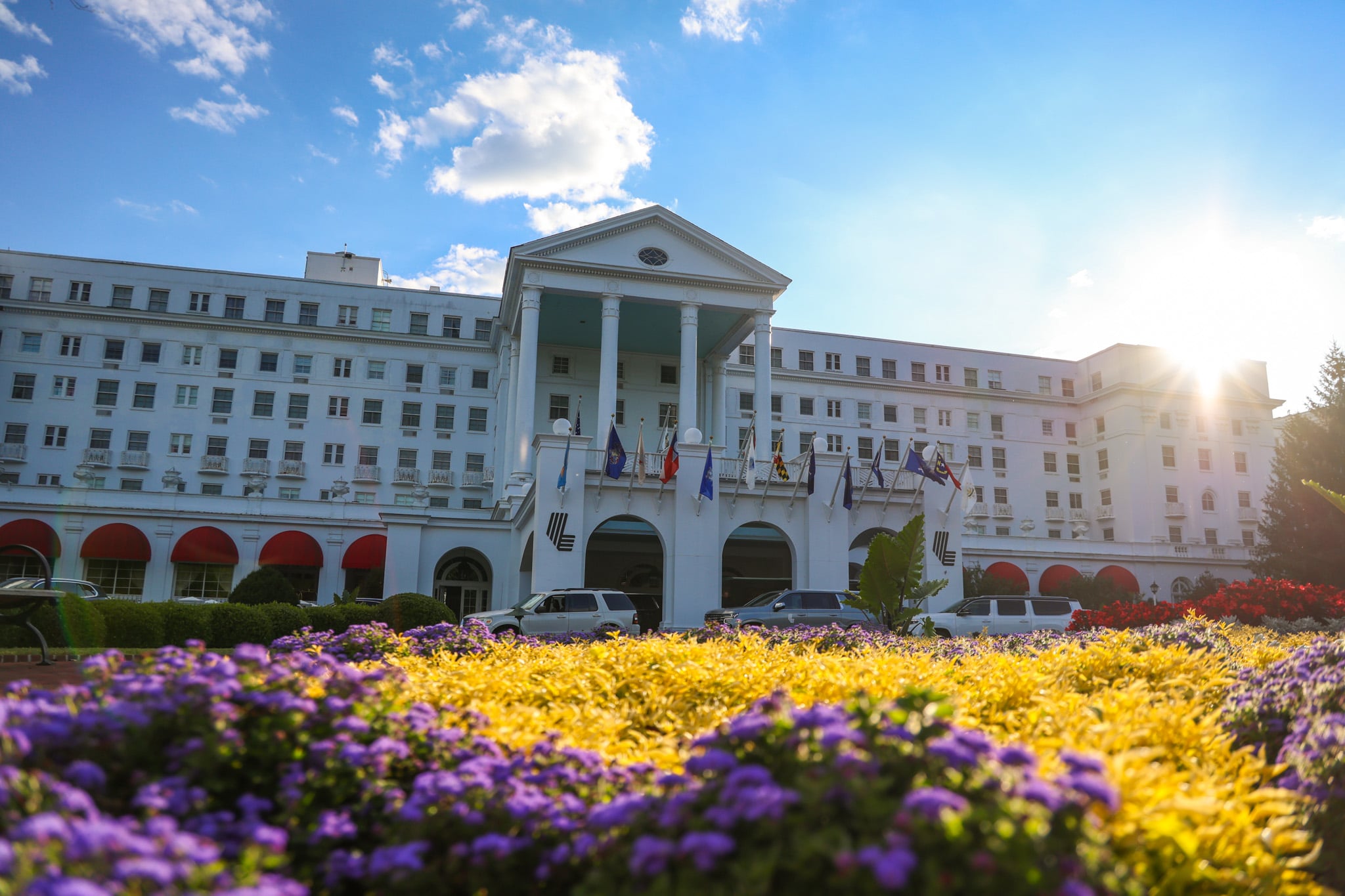
The lawyers for the owners of The Greenbrier Hotel are accusing a rival hotel company of intentionally misrepresenting the status of financial negotiations in a deceptive attempt to seize the historic resort property.
“Plaintiff continues to misrepresent the facts because it has no genuine interest in being repaid; its goal, rather, is to take The Greenbrier,” wrote the lawyers for the hotel owned by Senator Jim Justice and his family in a new court federal court filing.
The lawyers for The Greenbrier were responding to a legal filing from the previous day by the Omni Hotels affiliate White Sulphur Springs Holdings, which questioned whether a $500 million financing deal is actually on track.
Lawyers for White Sulphur Springs Holdings had indicated no title company, escrow agent or the new lender, Kennedy Lewis, has reached out regarding payoff amounts or closing checklists.
The lawyers for The Greenbrier’s owners maintain they have successfully secured financing to fully repay loans to the owners of the Omni Hotels & Resorts chain in a high-stakes battle for the historic West Virginia resort.
In a new filing in an ongoing conflict in U.S. District Court for the Southern District of West Virginia, lawyers for the Justice family say they’ve offered a multimillion-dollar settlement to resolve all outstanding litigation.
The Greenbrier lawyers gave a timeline account of asking representatives of White Sulphur Springs Holdings for a payoff amount to demonstrate the level of communication. It included emails between Charleston attorney Steve Ruby and lawyers for White Sulphur Springs Holdings, which named a figure of $387 million.
The lawyers for The Greenbrier wrote in their response that “In sum, Defendants’ refinancing transaction remains on track to close, much to Plaintiff’s dismay. Plaintiff’s Response is a last-ditch effort to derail that refinancing, contrary to Plaintiff’s disingenuous claim that all it wants is to be repaid.”
The fight in federal court unfolded after White Sulphur Springs Holdings bought about $300 million in first-lien debt on The Greenbrier and associated properties.
Lawyers for White Sulphur Springs Holdings are asking the court to name a third-party receiver to oversee The Greenbrier and push out the Justices, saying their collateral is at risk.
The Justices, in turn, have been pursuing a $500 million loan through the New York-based Kennedy Lewis Investment Management. Lawyers for the Justices said the financing deal could pay off White Sulphur Springs Holdings and other entities owed money while also providing enough to invest in long-needed hotel improvements.
Aspects of the fight are coming to a climax this week.
Lawyers for The Greenbrier asked a federal judge for a delay in court proceedings for time to pin down the big refinancing deal. The request for more time filed on May 22 was for 60 days.
U.S. District Judge Frank Volk then granted the delay “with the expectation that closing will occur on or before July 16, 2026.”
Volk indicated that if there’s a push to delay beyond that, the court’s patience could grow thin.
“If Defendants seek further extensions for either (1) more extended negotiations with, or financing due diligence by, the financing partner, or (2) to allow additional forays with other lenders, the balance of prejudice will likely shift rather abruptly,” Volk wrote.
This past Friday, lawyers for The Greenbrier filed a status report saying the financing deal closure could require more time because of ongoing discussions with White Sulphur Springs Holdings and also a review by the state Lottery Commission about how the resort’s casino license would be affected by a major financial deal.
The casino license review was one of the factors that led White Sulphur Springs Holdings to question the status of the financing possibility. The Greenbrier lawyers did not address that matter.
West Virginia MetroNews obtained a letter sent July 10 from acting Lottery Director David Bradley to Ruby, the Justice attorney, through a Freedom of Information Act request. That letter does call into question how the casino license would be affected by the Justice finances.
Bradley emphasized that the current owners must submit missing financial and personnel documentation before the state can approve any changes to their gaming license.
A significant portion of the correspondence focused on the resort’s enormous debt, including millions in unpaid taxes and state-imposed liens. The Lottery Commission warned that the proposed $500 million loan must be used to completely settle outstanding liabilities to prove the owners’ financial stability.
Citing elements of state code that indicate casino owners must meet certain character standards to be license, Bradley wrote that “It would be difficult to conclude that the licensee possesses ‘financial integrity’ or ‘adequate capital’ if the proposed transaction does not address all outstanding debt-both to private creditors and to the State of West Virginia.”
Bradley continued, “After all, if the agreement allows you to take on a new loan-and new debt-without eliminating all existing debt, then it will only compound the problem instead of resolving it. Accordingly, it would be extremely difficult for me to stand by any agreement which does not account for all outstanding liabilities. I believe it would be irresponsible to take any other position.”
Based on the current status of the license renewal request, Bradley wrote, it is unlikely that the matter will be presented to the Lottery Commission until the regularly scheduled meeting in August at the earliest.
Bradley concluded by saying, “I look forward to receiving the remainder of your documents. Based on public assertions, I am cautiously optimistic that the agreement will satisfy your obligations and alleviate my concerns.”