

CHARLESTON, W.Va. — State delegates have many questions about why West Virginia’s clothing voucher program was closed after one week of registration this year.
Concern over the TANF — Temporary Assistance for Needy Families — program elevated in May when Gov. Patrick Morrisey indicated there was a $40 million structural gap in funding it. The TANF program provides vouchers for children who need clothing and typically opens for registration on July 1.
The state Department of Human Services delayed the application period 20 days this year. Then, last week, the Morrisey administration announced the program had run out of money and applications were shut off after only one week of registration. According to Morrisey’s Communications Director Lars Dalseide, the demand was “extraordinarily high, and the available funding was exhausted before the application period ended.”
The perceived lack of transparency from the administration has drawn the ire of State Treasurer Larry Pack, who combatted the claim that the TANF program’s budget had gone dry. He said around $110 million was allocated by the legislature for the program, and that funding didn’t disappear 31 days into the fiscal year.

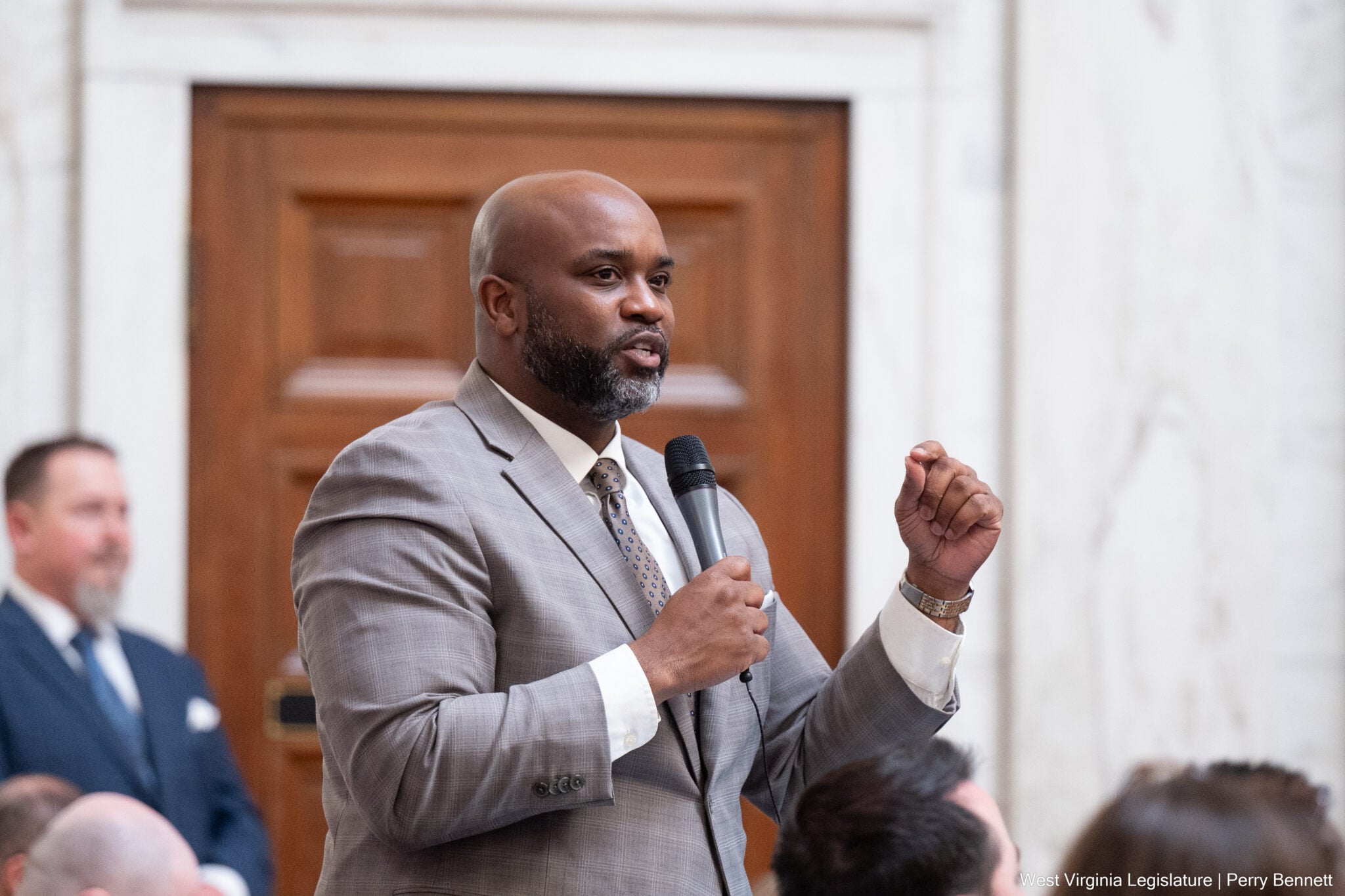
Del. Hollis Lewis, D-Kanawha, said he’s frustrated with the decision to shut down registration. He said around 52,000 people in the state rely on the program, which is a “significant portion” of West Virginians.
“It’s pretty upsetting,” Lewis said on MetroNews “Midday” recently. “I would say ‘angry’ doesn’t describe it. A lot of the kids who are faced with these situations; they didn’t ask to be faced with these situations. This is not something that they placed themselves in.”
Kayla Young, another Kanawha County delegate, shared Treasurer Pack’s skepticism over the claim that TANF’s funding ran out after just one week. She said she was perplexed by the administration’s decision. She emphasized that it’s not as if families’ need for the program has gone down.

“It feels fishy,” Young said during an appearance on MetroNews “Talkline” last week. “I don’t want to say there’s foul play, but it’s very weird. The program opened 20 days late; it’s a little over $11 million (this year). It used to be about $17 million. I’m not sure why the dollar amount went down, I think it went down a year ago.”
Young said delegates can ask for more information surrounding the circumstances of TANF. She noted that the health committee has already asked for more details, and delegates can request information during interim meetings.
Del. Sean Hornbuckle, D-Cabell, called for the legislature to reexamine the TANF system. He said that TANF funds were readjusted during COVID, which he said was necessary at the time, and it’s been that case since. He said lawmakers may need to revisit what the threshold is for those eligible to receive the vouchers.

Hornbuckle accused the legislature, in its current makeup, hasn’t adequately addressed one-time moneys. He said West Virginians have needs, but there have been some missteps.
“We can’t put this at the people’s feet, because the people that were in charge didn’t do what needed to be done,” Hornbuckle said on MetroNews “Midday.” “And so, guess what? We’ve got to go into the piggy bank, and we’ve got to do one-time funding to make sure that our families are able to get off on the right foot.”
COMMENTARY — School Clothing Program Has Cost Morrisey Some Trust
Del. Josh Holstein, R-Boone, said he hasn’t spoken to Morrisey about the TANF cuts yet, but plans to do so soon. While Holstein also serves as state Republican Party chairman, he shared his opinion as a state delegate.

“If we need more resources for (TANF), then the Legislature just needs to increase it our line-item,” Holstein said. “Or when we’re in special session, we need to have a special session to increase it. It’s a relatively low cost, but very important, program. We’ve got a lot of kids in the state that rely on that.”
Holstein said he doesn’t think the program can simply be cast aside.
While conversations around TANF oftentimes characterize the families as “poor or indigent,” Lewis said, that’s not always the case. He said the TANF cutoff affects a wide range of families and suggested that the governor’s office doesn’t have the perspective to understand TANF’s importance to many West Virginians.
Lewis said he relied upon a school voucher program as he grew up. He underscored the importance of being able to go to school with dignity, having the ability to afford essential items through vouchers. If those needs aren’t met, Lewis said that opens children up for bullying and low self-esteem.
“I was one of those kids who took advantage of this program, so I know what it means,” Lewis said. “This is not what we want to do for the people. We have to ensure that, politics aside, we’ve got enough things that we’re politicizing and we’re going to go back-and-forth. This ain’t one of them.”
The vouchers are $200 each, but Lewis said that figure could probably be increased in the current climate. He said a lack of good clothing can really inhibit kids from adequately learning and participating in education.
Hornbuckle agreed with Lewis’ sentiment, sharing that science has shown the benefit of good self-esteem in youth.
“When kids feel better about themselves, they perform better in the classroom,” Hornbuckle said. “They’re more attentive. There are good results there. We’re in a state right now that people just need a little extra help.”
Hornbuckle said the administration should not fall upon excuses but rather admit when the ball has been dropped and fix it.
Many lawmakers are scratching their head over the start-and-stop actions by the Morrisey administration with TANF funding. Lewis said the legislature has appropriated the money, and it’s created confusion — when the 20-day delay occurred in early July and when registration was prematurely closed.
“The money’s there,” Lewis said. “When we talked about this administration bragging on tax surpluses, we allocated $300 million to the Hope voucher program and various other things. So, the money’s there. This isn’t a matter of funding. This is a matter of pure priority and perspective.”
Young agreed that the money was already approved, noting that TANF money comes from federal funding. She said going forward, lawmakers will have to put “tighter strings” on how the funding is allocated because of things like this.
“It’s not even state funding,” Young said. “It’s a large pot of money; it’s a large grant. They can use it as they see fit. It’s very perplexing and I don’t know how that many people applied for the program and it ran out so quickly.”