

HUNTINGTON, W.Va. — The Marshall University community has spent the summer talking about artificial intelligence.

The AI meetings involved students, faculty and staff and this week the Marshall Board of Governors had a meeting on the issue.
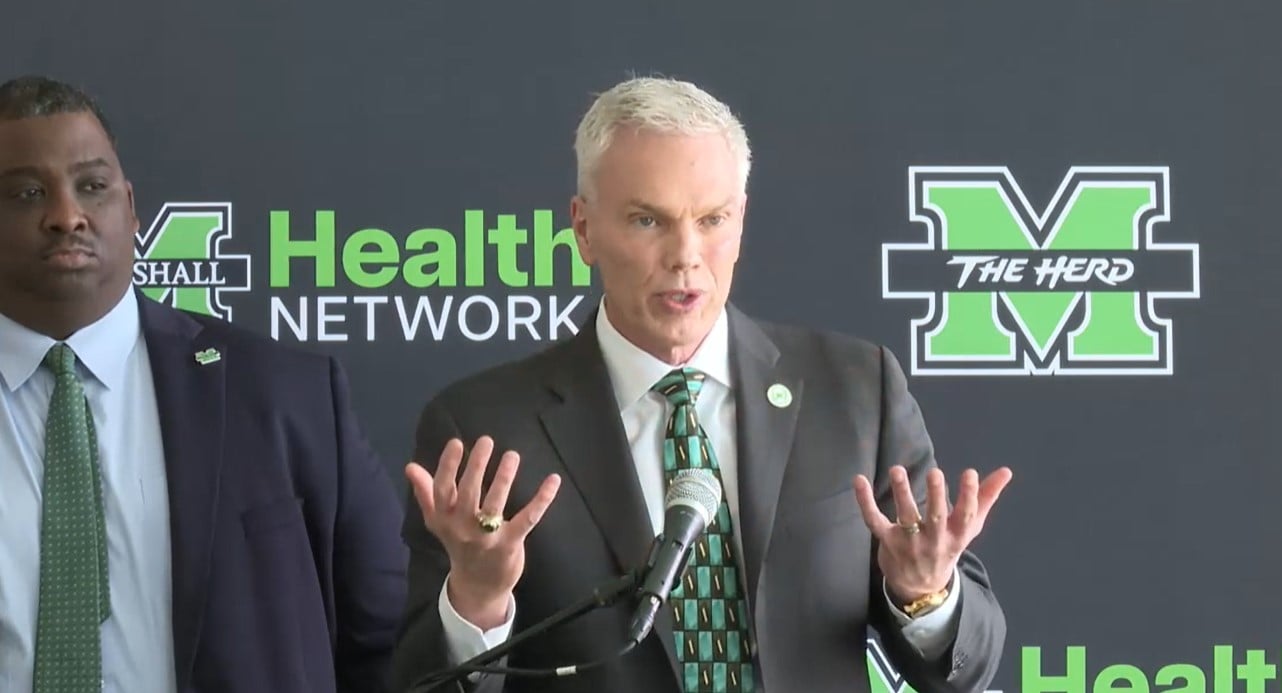
Marshall President Brad Smith said admittedly there’s currently inconsistency on campus in how AI is used. He said that must change.
“Right now we have to get a policy that says, ‘Here’s the foundation that everyone at Marshall will experience. Here’s a set of options if you want to choose between those and here’s what you can independently do in your classroom or your department’ but we have to have some foundation for everybody,” Smith told BOG members at the board’s regular meeting earlier this week.
Smith said AI can provide a number of advantages including what he calls “precision instruction.” Smith said many times professors have to teach toward the middle in a traditional setting.
“Students that aren’t quite ready you’re trying not to outpace them. The ones that are really gifted or further along, you have to slow down for the others so this (AI) gives you the ability to really start thinking about an N-of-1 teaching approach if we can figure it out,” Smith said.
The N-of-1 teaching approach treats each student as a unique case.
Smith said this summer’s meetings also produced some concerns including there’s already a lot taking place on campus.
“Our faculty and staff are working hard and if it’s one additional thing instead of ‘How do I do my job better and more efficiently?’ it’s going to be a challenge, so we have to be thoughtful about redesigning the work,” Smith said.
Coming out of the summer discussion there were agreements on several issues, according to Smith: work on a university-wide set of AI priorities, invest in AI literacy for students, faculty and staff and redesign processes, don’t just automate what Marshall is already doing.
Smith said he was encouraged coming away from the several month long discussion with students and others that there is a trust on campus that Marshall is going to get this right.
“They have confidence in Marshall’s people and our relationship-centered culture. We are a people-first, student-first university,” Smith said. “They have strong confidence in the leadership, department chairs, student government, the heads of classified and non-classified staff and the deans.”
The discussions at Marshall this summer also involved former Southern New Hampshire University President Dr. Paul LeBlanc who took that school from just a few thousand students on campus to nearly 200,000 online students.