

Lawmakers grilled West Virginia’s new secretary for human services for more than an hour over disruptions to the state’s clothing voucher program for needy families.
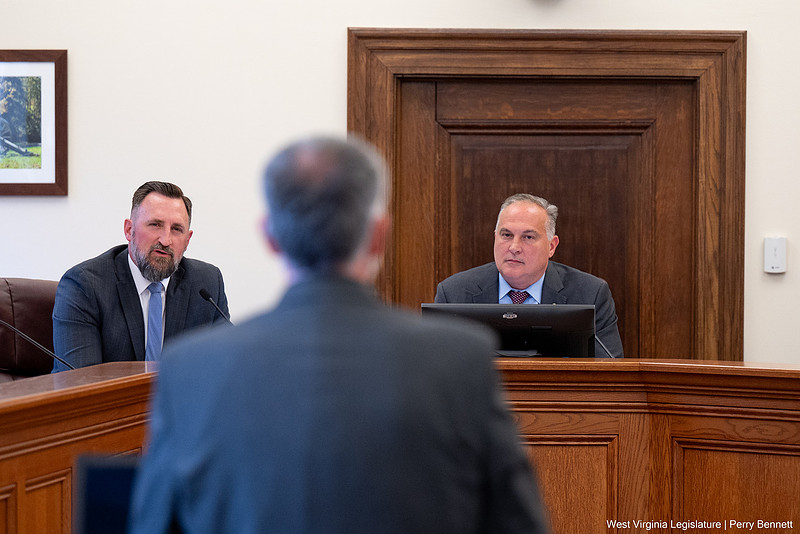
 Carl Ayers, who was named secretary for the Department of Human Services on July 20, testified for just short of an hour and a half before the Legislative Oversight Commission on Health and Human Resources Accountability during interim meetings.
The clothing voucher program’s start was delayed for three weeks this year while the Morrisey administration examined its concerns of a financial gap in the state’s share of funding for Temporary Assistance for Needy Families.
The application window for the program was then closed after one week because officials projected that the program would hit an $11.4 million budget cap if they left it open longer. However, the state’s computer database is so poor, state officials are now saying they don’t yet have a definitive figure on how many people applied or how many people were approved.
“Whenever the program was opened up, it was opened up for a period roughly of 30 days, or until the funding was exhausted, and so due to the overwhelming response from the community, it was projected that funding would be exhausted after the seven days. So that’s why the program was closed down after the seven days,” Ayers told lawmakers.
He later added, “We had projected based on the number of applications that had come in that we had projected the spend was going to exceed $11.4 million based on the overwhelming response from the community.”
But he told lawmakers several times that he still does not have final application numbers. He promised to provide firm numbers later once the program is fully closed out and reconciled.
“I will remind everyone once again that the program is in flight, so there are not final numbers,” he said. “I can’t sit here today and tell you all we served 57,000, which is what we served last year, and we’ve served X this year because the program is still underway. So we are still working through applications.”
Last week, Gov. Patrick Morrisey opened a new front on the matter by expressing concern that clothing voucher recipients were cashing out benefits loaded onto EBT cards and then purchasing items like beer and cigarettes.
West Virginia began loading school clothing allowance benefits onto EBT cards in 2022. Before that, it was a paper voucher program. The administration has said about 50% of the school clothing allowance benefits are being withdrawn as cash and then it’s not sure how the money is spent.
“Once they are pulled into cash, I have no way to account for how the benefit was spent. I can’t tell you was it spent on this, was it spent on anything else,” Ayers said.
He later added, “We hope that it was spent on clothes, but there’s no way to account for that piece of it.”
Asked by Senate Health Chairman Brian Helton to name some places where EBT cards had been cashed out, Ayers rattled off “Wanda’s Bar, Venus Lounge, Turf Motel Lounge, Tobacco A and N and Tobacco B A, Stogie Smoke Shops, Rock Spear, C J’s Tobacco and Cannabis, Daddy Lou’s Pub and Pantry, Smoker Friendly, True Leaf, which is a cannabis dispensary, Hot Spot, Max’s Place, and Mamie’s, which are all gaming parlors of some sort.”
Asked later to clarify whether those represented withdrawals from automated teller machines at the store locations, Ayers said yes.
“No, they would be ATM withdrawals because you cannot use it at a point of sale device, so it would be an ATM withdrawal.”

Helton, R-Raleigh, said taxpayers want accountability.
“We can’t have situations where we have kids at risk who need these clothes, and that money’s intended for them. Yet we’re going to let that be cashed out at the Venus Lounge, at CJ’s Liquor Store, at Wanda’s Bar, at a hotel somewhere, and this kid needs those clothes,” Helton said.
Helton said he wants to see change, asking Ayers to “come back to us in the future and show us how you can demonstrate that these dollars are going directly for these children, as intended with these clothing vouchers.”

Senator Eric Tarr, R-Putnam, said some of the comments stigmatize poor families. He said he’s had friends who have lived over bars or strip clubs. Tarr said that when he was a boy, he had to walk down the street to a bar to ask for a loaf of bread.
“To say because they’re spent here, these families, that where it’s spent is so short-sighted and is so elitist, and I speak from that from an area that I can,” Tarr said.
Other lawmakers were frustrated by the delay in launching the clothing vouchers program, the closure after one week and the conclusion that families must be cashing out the cards for inappropriate purchases.

“You said a tip came in or somebody had a concern about cash assistance. The state has promoted that for the past four years. They promoted getting cash out and showed people how,” said House Health Chairman Evan Worrell, R-Cabell.
“So I’m trying to understand if the governor just became aware of this last week, when it’s been in the program for four years, or if they knew about it.”

Senator Vince Deeds, R-Greenbrier, repeatedly asked why the problem surfaced only now and where the complaint came from.
“What I’m not hearing today is really why was this complaint filed right at the beginning of July, and why was it delayed so long, and where did this complaint come from?” Deeds asked.
Deeds said real harm fell on low-income families and children over the series of issues with the clothing vouchers right as school is about to start for another year.
“This is one of those issues that we will not back off on… The Legislature does not carry the weight on this. It’s the governor’s office that carries the weight on this, 100 percent. It came from his decision, his office, and now we have to live with it. Our citizens have to live with it,” he said.

After that part of the meeting concluded, the governor weighed in.
“I support providing school clothing allotments to the neediest West Virginians. However, if we are going to have such a benefit, we should be able to show that the actual monies spent are for SCHOOL CLOTHING!! The current school clothing benefit does not do that— and that’s the problem that we need to fix,” Morrisey wrote on social media.