

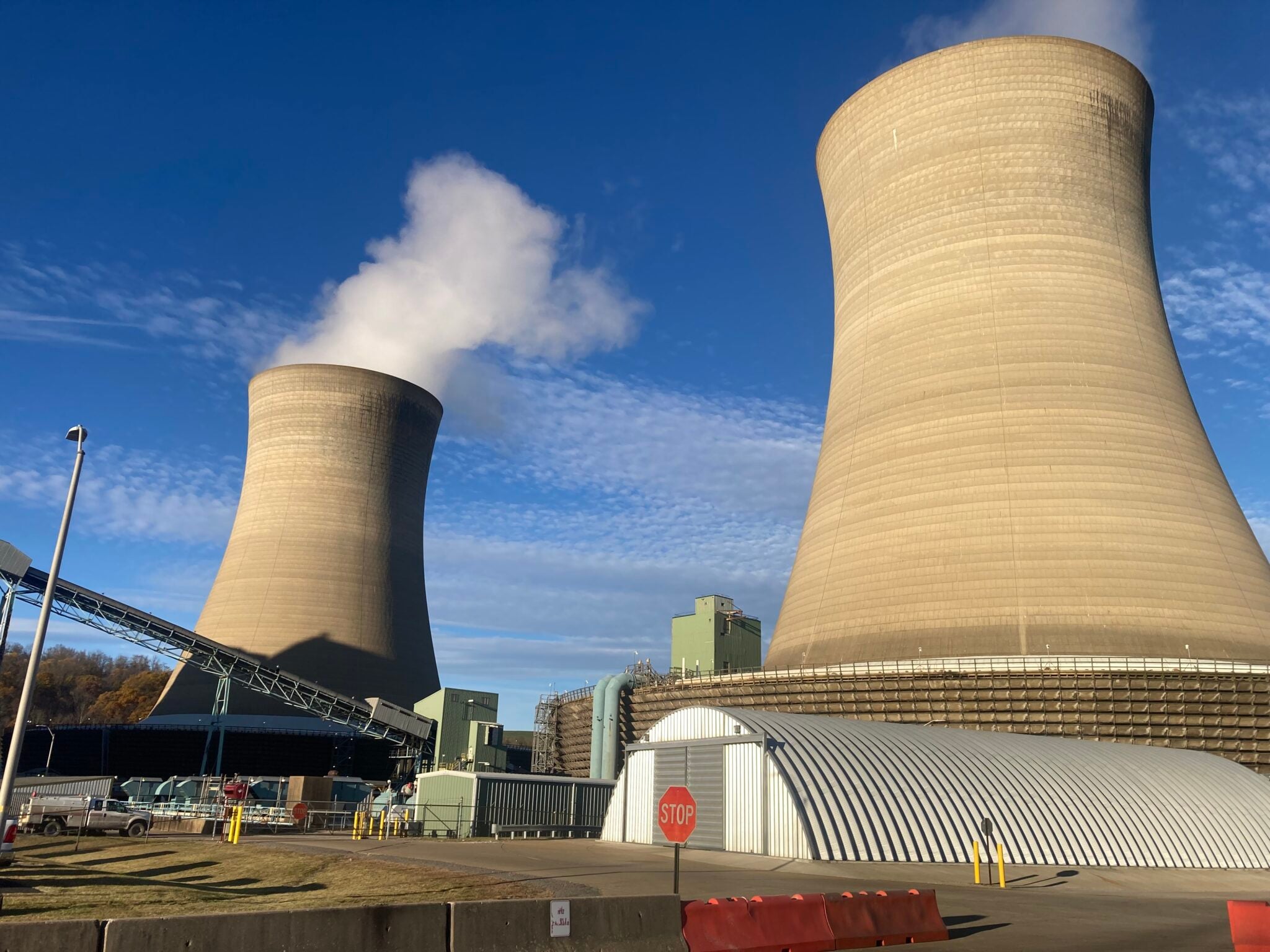
CHARLESTON, W.Va. — Coal-fired power plants aren’t going anywhere.
That’s what administration and industry officials told a group of state lawmakers Tuesday at the state capitol.
Members of the Joint Standing Committee on Energy and Public Works heard testimony about capacity markets and power plant maintenance.

Capacity markets are power generation auctions where regions or states that cannot produce enough electricity make purchases to meet future needs. In Pennsylvania, utilities are not allowed to own generation capacity, and in Virginia, where fossil fuels are being pushed aside, they have to participate. Deputy Secretary of Commerce Nick Preservati told lawmakers that the system has benefited West Virginia and ratepayers—electricity rates from April of 2025 to 2026 actually decreased.
“For that year our rates actually went down from a year ago in residential,” Preservati said. “They’re going up less than inflation in a lot of instances when other states are going up 18 to 20 percent, so you’re seeing skyrocketing prices in these other states but not West Virginia.”
Appalachian Power Director of Government Affairs Sammy Gray said looking at future demand, Appalachian Power is planning to maintain its generation capacity as long as possible. Gray said they plan to use coal and natural gas to meet increasing future needs.

“We understand there are rate pressures, and we’re committed to keeping our coal plants open and going as long as we can,” Gray said. “Hopefully 2040 and beyond with all the energy we think we’re going to need for our customer base and the going need in West Virginia.”
Appalachian Power has invested $254.8 million to maintain three generation facilities in their portfolio. The company has also applied for an Energy Dominance Finance low-interest loan from the U.S. Department totaling $116.2 million. The financing arrangement will allow the company to complete maintenance work while saving ratepayers $22.5 million in interest expense.
“We received $87.7 million in grants that do not have to be paid back, so 34 percent of those projects have been funded by the federal government and will not go to ratepayers’ bills,” Gray said.

Abby Reale, senior advisor for government and external affairs for FirstEnergy, said they made repairs and improvements across their system, including the Fort Martin Power Station and the Harrison Power Station. FirstEnergy has leveraged federal grant programs like the Restoring Reliability Grant program to complete turbine overhauls, a dry bottom ash removal system, water treatment systems at Fort Martin, environmental upgrades, and control system upgrades.
“We have spent over $500 million over the last five years, so about $100 million a year,” Reale said. “That is to maintain the plants in a safe and reliable way.”
FirstEnergy is evaluating what will be needed to extend the service life of their power plants, which is underway as part of phase I. Preliminary work is being done to quantify what needs to be changed, improved, or rebuilt in 2027.
“As soon as that is done, we will begin phase II during 2027 outages, when we will go through the plant to look at what will be required for that detail,” Reale said.