

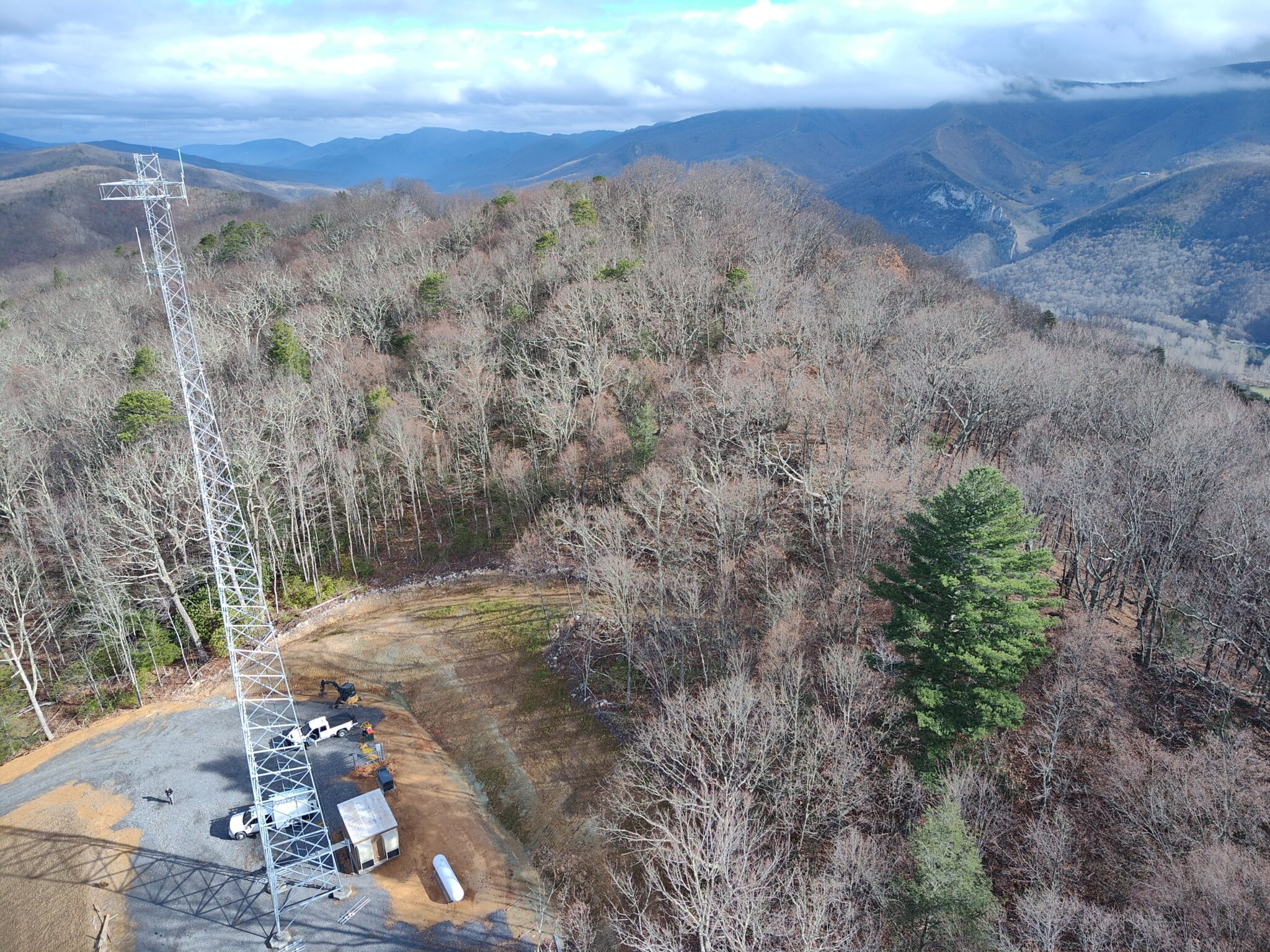
FRANKLIN, W.Va. — A two-year study commissioned by the federal government confirmed what emergency leaders in Pendleton and Pocahontas counties have been saying for years about severe gaps in emergency radio communication.
“The study does reveal to reach a solution with this and to find real-world results, it does require federal recognition and funding to help both Pendleton and Pocahontas and possibly some other counties to find a solution to the problem,” said Rick Gillespie, emergency services director for Pendleton County.
Emergency officials in the two remote counties sought and received the assistance of U.S. Senator Shelley Moore Capito to commission the study.
The wide gaps in emergency communication exist because the counties are limited in the amount of power they can run through certain communication towers because of the Quiet Zones in place around the National Radio Astronomy Observatory in Green Bank and the Sugar Grove Research Station. Researchers drove thousands of miles over the course of the two year examination of the region’s airwaves to determine the level of reception received. Gillespie said the findings were sobering.
“Their study revealed Pendleton has 47 percent mobile coverage and 49 percent portable radio coverage countywide, while Pocahontas County showed a 71-percent mobile coverage and only a 13-percent portable coverage,” he explained.
The nationally accepted average for coverage in an emergency band is 95 percent. Gillespie articulated the dangers of such spotty communications when lives are on the line.
“If they’re handling an armed person call or are making a traffic stop that turns bad and they’re in a dead zone, it’s obvious how bad that can go. If they can’t get that call out that they are in trouble or they need backup, it could potentially turn fatal in a hurry,” Gillespie said.
The same goes for fire and EMS emergencies.
Based on its analysis, the study recommended Pendleton County continue its ongoing implementation of a VHF radio system for initial notification of personnel and for back-up communications to the WV SIRN System or Statewide Interoperable Radio Network. The study recommended an expansion of Pocahontas County’s VHF System. State and county officials have requested federal officials relax their current restrictions imposed on several UHF-Band WV SIRN System towers in counties throughout the Quiet Zone. The study also identified a holistic approach to identifying tower locations which can result in improved coverage with fewer towers and overall lower costs, which would translate directly into lower construction and long-term maintenance costs for the counties
“They illustrated in the study we could potentially be permitted to turn up the power, so to speak, at some of our towers that are greatly limited by them adopting a new modeling software. It would not interfere with them,” Gillespie said.
The new software for the NRAO would not solve all of the problems, but it would solve several by being low cost and easy to change.
“We recognize and respect the important scientific mission of the National Radio Quiet Zone, but scientific advancement and public safety should not come at the expense of one another. We must work together to find solutions that protect that mission while ensuring our citizens can call for help and our responders can communicate when every second matters.” Gillespie concluded.
Look for the two counties to seek state and federal dollars to help shore up the network and make necessary changes recommended by the study. Gillespie said the timeline is unknown, but needs to be swift.
“We’re pleading to do this as quickly as things like this can happen because we’re a ticking time bomb with a potential fatal incident occurring because of bad communications,” he said.