

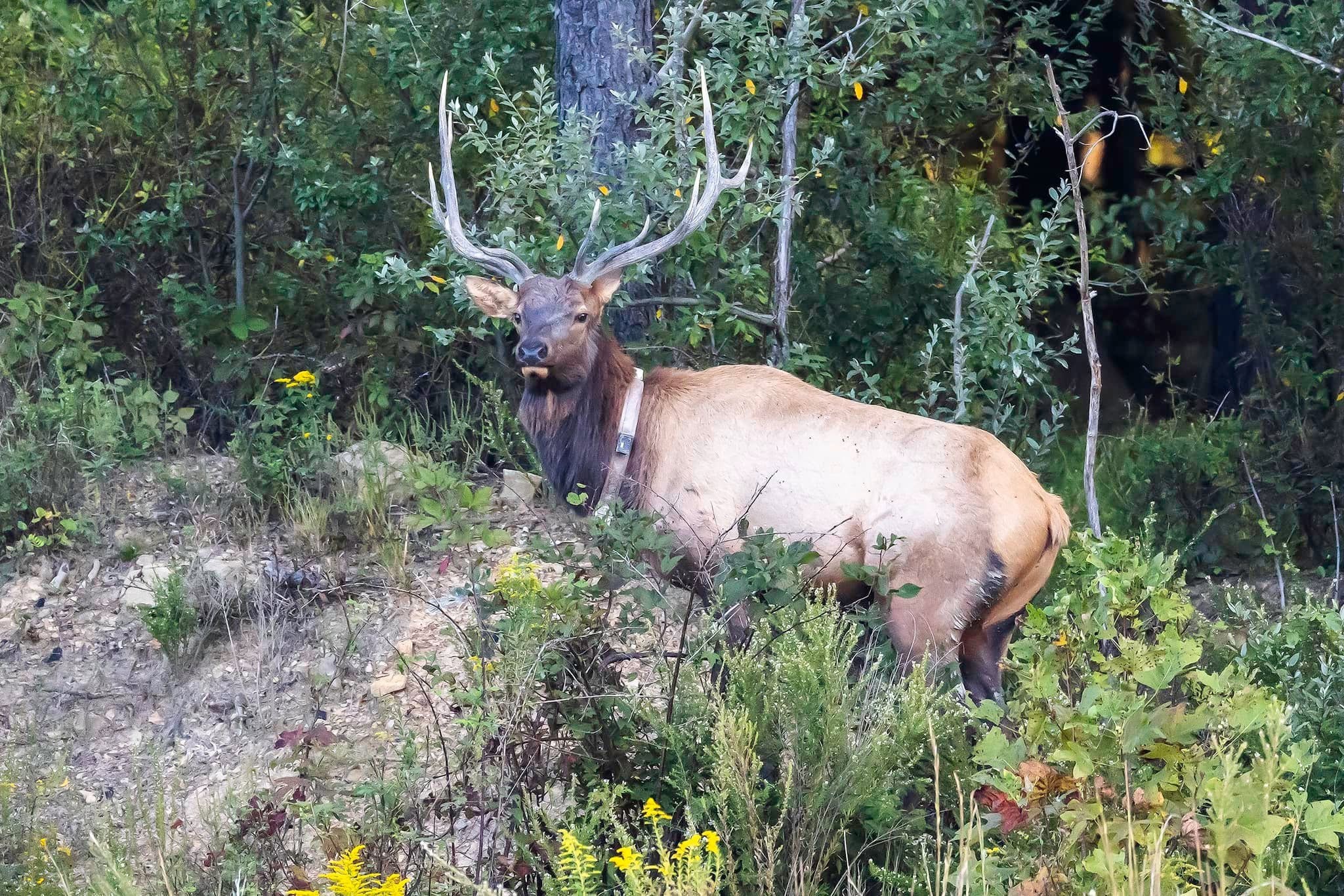
LOGAN, W.Va. — Free roaming elk in West Virginia continue to multiply and interest in the program remains high. The West Virginia Division of Natural Resources and West Virginia State Parks are banking on those two facts to help drive interest in the elk viewing tours now underway and happening in the coming weekends at Chief Logan State Park Lodge in Logan County.
“This is an opportunity for anyone to go out there and see the elk in their natural habitat,” said Paul Redford.
Guests meet at the Chief Logan Lodge for either a morning or evening trip and ride the van to the Tomblin Wildlife Management Area a few miles south of the park. The area now features a viewing tower specifically designed to observe elk. The tower can be accessed by steps to give a birds eye 360-degree view of the area all the way to the horizon.
“It’s a great opportunity to go out there and see and possibly hear some of the elk that are thriving,” said Redford. “You can take a look at the expanse of the area and see just how well suited that land is for the elk.”
The trips are on Saturday and Sunday and book quickly. They’re done during this time of year to hopefully enable guests to hear the bulls’ bugles echoing through the deep hollows of the region. Bugling happens during mating season which only involves a a narrow of length of time.
It’s possible to do a self tour. The WMA is a public property. The viewing tower is within driving distance of Corridor G. If you want to venture out onto the property, you can’t use a vehicle due to gated access, but anyone is welcome to hike throughout the 35,000 acre expanse.
The West Virginia DNR opened up the Tomblin WMA and reintroduced elk into the state starting in 2016. The original animals came from the Land Between the Lakes National Recreation Area in Cadiz, Kentucky. There were two more shipments of elk from the LBL facility and one large transfer of elk from the state of Arizona to get the herd started. The original elk management plan involved transplanting many more animals from other sources. Since then movement of live elk due to the potential for disease spread has fallen out of favor. The situation has slowed growth of the West Virginia herd, which is now well over 100 animals. Many of the elk now on the landscape were born in West Virginia.
The DNR Elk Project pays close attention to the animals with annual wellness checks and tracks most of them with GPS location collars. Data shows most of the elk have stayed on the Tomblin WMA where they were either born or introduced. Officials say some will roam off the property for brief periods of time, but have always eventually returned. The history of elk in West Virginia and biological facts are included in the tour as well as at the visitor center at the base of the elk viewing tower.
Learn more about the program and book a tour here.