

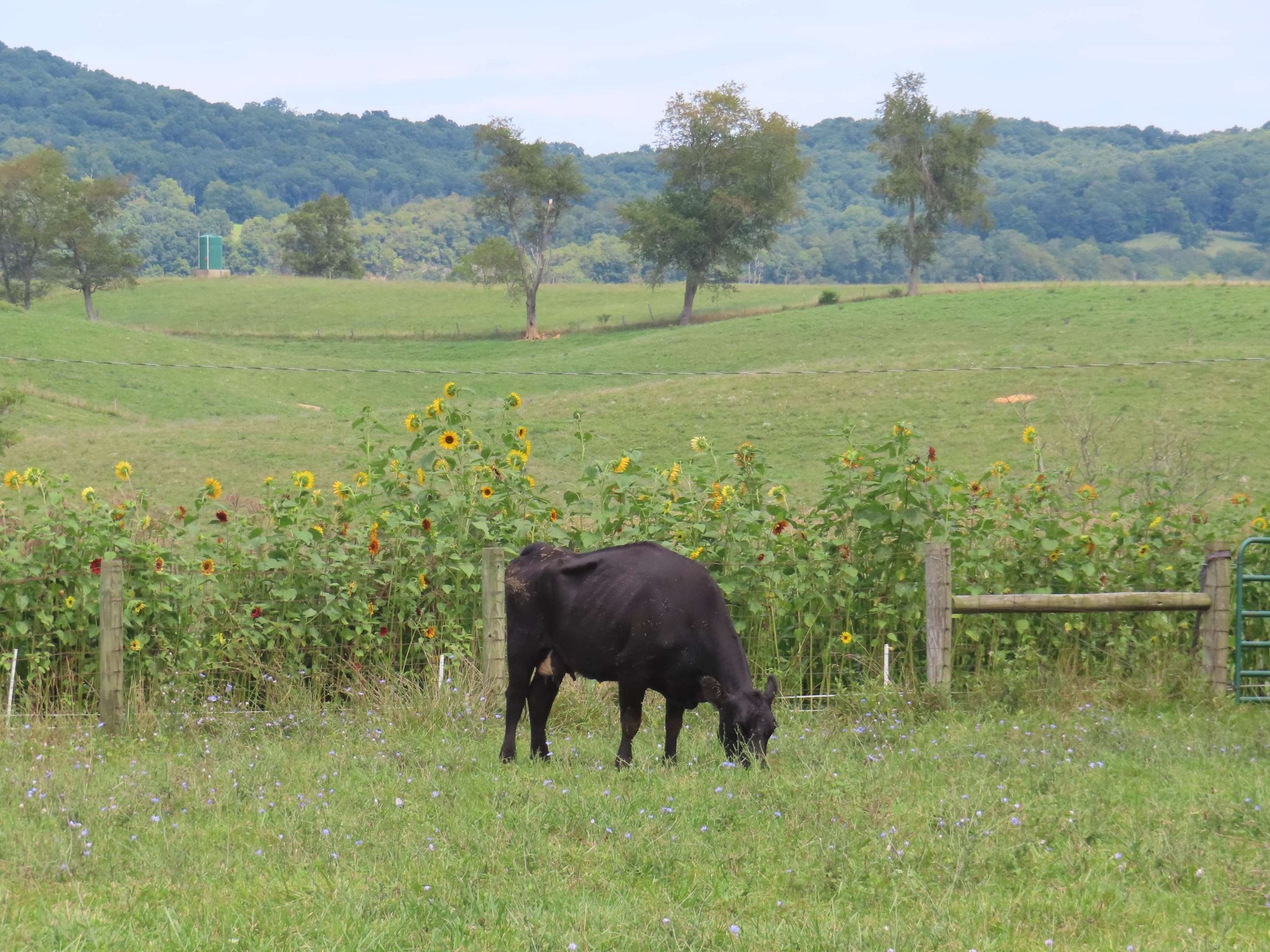
CHARLESTON, W.Va. — As economic projects planned in the Mountain State trek ahead, concerns about their impacts to farmland continue to mount.
The Valley North Transmission Line and the Mid-Atlantic Resiliency Link (MARL), along with numerous data center developments across the Mountain State, have drawn significant attention. The 260-mile, 765-kilovolt Valley North Transmission Line is planned to stretch from Putnam County to Maryland, passing through 20 West Virginia counties. The 107.5-mile, 500-kilovolt high-voltage MARL would travel from Dunkard Township, Pa. through four West Virginia counties on its way to Gore, Va.
State Agriculture Commissioner Kent Leonhardt recently called for West Virginia to make sure farmland is protected. He said that the transmission lines are proposed to go through many farms across the Mountain State.
“I heard from a lot of farmers that were actually concerned about where’s the route going?” Leonhardt told MetroNews. “Is this going to impact my farmland? What’s happening?”
Leonhardt said that West Virginia is approaching an important crossroads. The direction that the state takes will have a significant impact on the future, he said.
“Every state in the union is losing farmland,” Leonhardt said. “West Virginia is losing farmland at a lower rate than most of the other states, so we’re doing very well. I wanted to make sure that we stayed on that same path.”
He pointed out that West Virginia’s farm sales have increased since he became commissioner. Leonhardt wants that trend to continue.
Leonhardt said developers have to be transparent with landowners on how the projects will impact their properties. He said that the projects must “minimize the disruption” to agricultural work. He also called for landowners, who would be impacted, to be compensated properly by the developers.
“This is not specifically linked to any one project,” Leonhardt said. “I just want to make sure that we’re thoughtful in the way we do things.”
Leonhardt’s comments were well-received by several landowners, including Barbour County farmer Danny Wagner.
“We were just thrilled that someone from the Board of Public Works was willing to stand up for us, and fight for us, and help us in this fight to stop the power grid from pushing through our land,” Wagner said.
Wagner said that the 200-foot easement, proposed to go through private land, has created significant concern. He said that the height of the towers, 150 feet high, are also an issue. The power handed to the transmission line developers is difficult to understand, he said.
“Just the fact that, as a private property owner, that someone can say to us, ‘we’re going to push through your property, we are going to go through the middle of your farm, or we’re going to go through the middle of your property’ is just a situation that is difficult for us to understand and to gather,” Wagner said.
Valley Link, a joint venture among AEP subsidiary Transource Energy, FirstEnergy Transmission, and Virginia-based Dominion Energy, is developing the Valley North project. They held 23 open houses over the summer on its proposed transmission line, gathering comments as it developed a route. The second round of open houses, now that the developers have settled on a proposed route, is set to begin next month.
Wagner expressed concern that Valley Link didn’t select Barbour County for a meeting on the second batch of open houses. He said that during a summer meeting in Philippi, people showed up and made their voices heard. Now, he said, they won’t have another chance.
“We don’t have a meeting in Barbour County, nor does Calhoun,” Wagner said. “Those two small counties are going to be impacted for certain. And yet, we have to travel to Buckhannon — over to Upshur County — or we have to travel to Tucker to voice our opinion.”
Wagner said the community has held plenty of informal meetings, to continue gathering and sharing information. He said they plan to attend the November legislative committee meetings. He added that they’ll call upon elected officials to stand up for landowners.
“What I would like to see is all 16 counties, the delegates from all 16 counties, get together and sign onto a resolution,” Wagner said. “And also, the state senators from the 16 counties that are impacted by this 260-mile grid.”
All in all, Leonhardt said there’s a balance to be struck going forward. He said West Virginians can’t take a great food supply for granted; they need to support agriculture for the important role it plays.
“We do want economic development, obviously,” Leonhardt said. “But let’s do it, not necessarily the easiest way, but let’s do it the best way. How do we maintain our farmlands and our agricultural growth, and still have that economic development?”