

MORGANTOWN, W.Va.—There are 19 state Senate seats on the ballot Tuesday with several getting a lot of attention including three district in northcentral and northern West Virginia. Two districts could flip from Republican to Democrat while retirement in another district will add a political newcomer.
District 13
In District 13, covering portions of Monongalia and Marion counties, there’s a three-way race between Republican incumbent Mike Oliverio, Democrat challenger Delegate John Williams, and Libertarian Taylor Richmond.
Oliverio defeated Democrat Barbara Evans Fleischauer by less than 160 votes four years ago. Issues in the district in this campaign have been data centers, affordability, education and taxes.
Williams, who has served a decade in the House, has attacked Oliverio for his support of House Bill 2014, the Power Generation and Consumption Act of 2025, which sets the framework for microgrid development and high-impact data center development. Oliverio said he supported the measure that took some control away from local governments because some state control is needed due to a lack of zoning regulations at the county level. Libertarian Taylor Richmond backs a free market approach to data centers without using taxpayer dollars while maintaining strong environmental principles.
“When you look at the size compared to that, it is every bit of high-impact,” Williams said. “So, when it comes to a data center coming to the 13th District, I at the very least want my county commissioners to weigh in on the issue and certainly the municipalities.”
On education, Richmond wants to “right size” government overall as well as the public school system. Oliverio believes school choice is important, and the Hope Scholarship is an important part of giving families the diverse choices they said they want. Williams said the Hope Scholarship takes funding away from public schools, but Oliverio contends changes to the state school funding formula would allow the two to thrive together.
“We need to reduce and eliminate the 55 county board of education model down to a 10 to 12 school district model,” Richmond said. “When we eliminate the administrative bloat that comes with that, we can return dollars back to the classroom to teachers, where the money is actually needed.”
Oliverio has been part of an effort to cut the personal income tax by nearly 30 percent in recent years and wants to ultimately eliminate it completely. Williams has said the personal income tax cuts equal just pennies each pay period for working families and wants substantial structural budget changes that will deliver relief. Richmond believes taxes should be cut or eliminated wherever possible across state government.
“I led the effort to the West Virginia personal income tax on Social Security benefits, and I’ve helped pass the largest tax cat in the history of West Virginia to allow West Virginians to keep more of their own money to address the affordability concerns that many are having.”
District 1
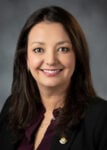
Incumbent Laura Wakim Chapman, R-Ohio, faces a challenge from Democrat Delegate Shawn Fluharty, who has represented the 5th District for the last 11 years.
Chapman touts her accomplishments in cutting taxes and improving school safety but says she has unfinished business and wants to remain in the state legislature.
“Some of the things I’ve pushed for haven’t quite made it across the finish line yet,” Chapman said in an interview with WTRF-TV. “I want to be able to dredge our creeks because we saw a little over a year ago the mass casualty event in Ohio County, and it’s just unacceptable—the loss of life across the state, but especially the northern panhandle.”
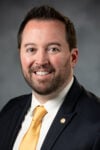
Fluharty wants voters to think about the last 10 years and what state government has not done for them. While the Republicans have wasted time on culture war issues, Fluharty argues your costs have continued to rise and, in turn, are lowering the standard of living for many.
“They could run any piece of legislation they want, but what are they running to help you: nothing,” Fluharty said. “After a decade of supermajority rule, we have a $400 million deficit, people are fleeing the state in record numbers, and nobody wants to come here. What did we get out of it? What do we have to show for it?”
District 2
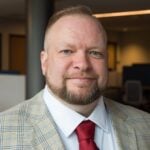
Republican Charlie Clements did not seek reelection in District 2 after serving nine years. Republican Toby Heaney and Democrat Chris Claypole are running to represent Calhoun, Doddridge, Ritchie, Tyler and Wetzel counties and parts of Gilmer, Marion, Marshall and Monongalia counties.
Heaney, a resident of Fairview, is a 24-year U.S. Army veteran with 24 years of service and one combat tour in Iraq. The former candidate for the House of Delegates seat in the 76th District has a Ph.D. in economics from West Virginia University and wants to promote economic growth, fiscal responsibility, protecting gun rights, lowering taxes, and working for in-state tuition for veterans.
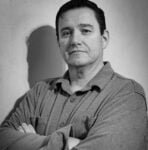
Democrat Chris Claypole is the grandson of former state Senator Eugene Claypole from Monongalia County and worked as a page at the State Capitol as a youth. A current resident of Mannington, Claypole is employed by WVU Medicine and wants to address the need for health care in rural areas of the state by adding more regional options. Claypole also wants local municipalities to have a louder voice on infrastructure priorities and support policies that promote public education.
There are a total of 19 races in the 34-member Senate with 18 of the 19 challenged races. All 19 were originally changed but Senator Eric Tarr, R-Putnam, was able in recent weeks to get two opponents removed from the ballot by judges because they didn’t meet residency qualifications.
Polls for the General Election open at 6:30 Tuesday morning and close at 7:30 Tuesday night.
Comprehensive election night coverage can be found through the MetroNews Radio Network both over the air on many radio stations across the state and streaming live on the MetroNews Television app. MetroNews Decision 2026 coverage begins at 7:06 p.m. Tuesday.