


State Supreme Court justices said no to allowing an elected delegate accused of threatening lawmakers to take his seat two years after the fact.
West Virginia Supreme Court justices heard arguments in September about whether state officials followed proper procedures when they vacated the seat of a delegate who had been arrested and then replaced him.
Chief Justice Haley Bunn wrote the court’s opinion. Justices William Wooton and Charles Trump wrote separate concurring opinions, with retired Justice Beth Walker, who sat in on the case, joining Trump.
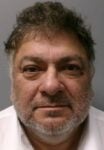
At issue was a House of Delegates seat originally won by Joseph de Soto, who continues to await trial on charges that he threatened the delegates who would have been his colleagues.
He won in the November, 2024, election to represent the Martinsburg area as a state delegate. He was then arrested in December, 2024, over allegations that he threatened to harm other state lawmakers.
De Soto, who was elected as a Republican, changed his affiliation to Democrat the day before his arrest.
After de Soto did not appear at the Capitol to be sworn in at the start of the 2025 legislative session, a majority of delegates voted for his seat to be vacated.
Gov. Patrick Morrisey appointed Republican Ian Masters to take the seat.
Masters has now served out most of the two-year term and has not run again for another term. In the general election earlier this month, voters in the district elected Chris Clagett, a Republican.
The case bounced from its inception to now through a combination of legislative stays, repeated procedural and pre-suit notice errors, delayed filings by the petitioners and unresolved criminal disposition for de Soto.
So, Bunn wrote, “Because this Court is unable to redress the Petitioners’ claimed injuries by granting their requested relief, we find that Petitioners lack standing.”
Bunn later noted, “In order to grant the relief sought — seating Mr. de Soto as a representative of the 91st Delegate District — Delegate Masters, who currently occupies that position, would have to be unseated.
“Petitioners failed to identify any authority or make any argument that Speaker Hanshaw, acting alone, has the ability to unseat Delegate Masters, and furthermore, Petitioners do not make any argument that the collective members of the House of Delegates (who are not parties to this proceeding) have the authority to unseat Delegate Masters under these circumstances.”
Democrats argued that the House majority’s process ran afoul of the state Constitution and also that state law and precedent say a Democrat should be named to the seat. Democrats asked the West Virginia Supreme Court for review, naming Morrisey in his official capacity.
The filing by Democrats contended the House of Delegates acted inconsistently by vacating the seat won by de Soto since he was among seven elected delegates who were not present to take the oath of office on the organizational day — but he was the only one knocked out in perpetuity.
After de Soto was not seated, the House majority then went a step farther by introducing a resolution to declare the seat vacant.
The vacancy was declared on the grounds of Article XI, Section 16 of the West Virginia Constitution. A key portion of that section says: “Any member who shall refuse to take the oath herein prescribed, shall forfeit his seat.”
Debate among some delegates then focused on whether de Soto’s failure to take the oath of office because of the arrest and home confinement constitutes refusal to do so.
That’s a point that the Democratic Party asked the state Supreme Court to resolve. A question being directed to the justices was “Whether the House of Delegates can declare vacant the seat of a duly elected, qualified, and ready-to-serve delegate for reasons related to misconduct.”
At this point, wrote Bunn, “Respondents cannot force Mr. de Soto to appear to take the oath, and Petitioners have not demonstrated that Mr. de Soto is willing or able to take the oath, especially considering his ongoing criminal proceedings.”