

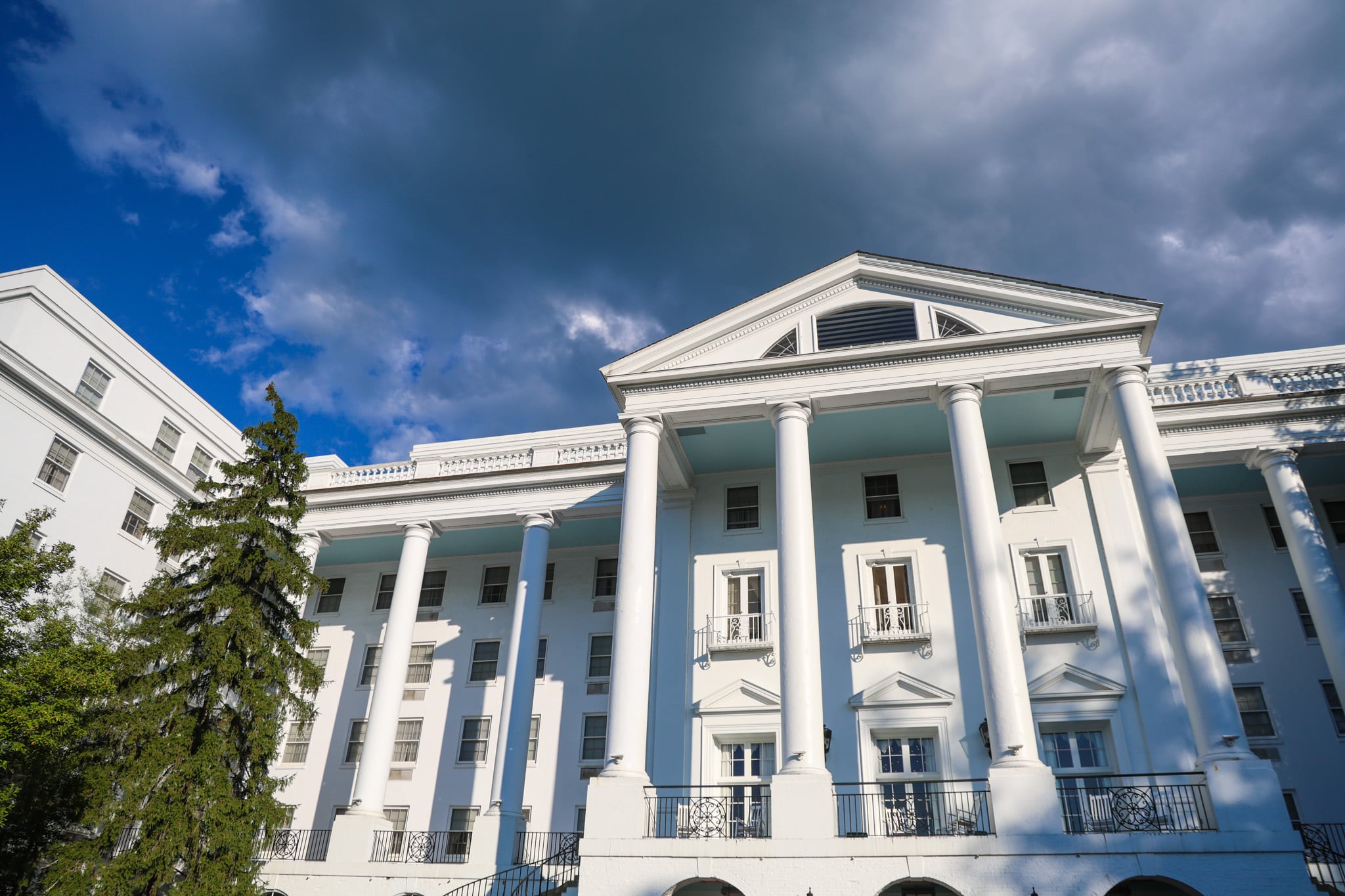
The Greenbrier Resort, partially owned by the family of U.S. Senator Jim Justice of West Virginia, must repay $52 million on a federal pandemic relief loan and interest after paying down nothing.
This week’s ruling was first reported by The Washington Sun and Tyler Spence, a West Virginia native.
U.S. District Judge Frank Volk entered the 10-page order on Wednesday, directing The Greenbrier to pay $35 million in Main Street Lending Program funding plus $17 million in interest.
This past summer, following a different financial dispute, the Justices entered a partnership with Kennedy Lewis Investment Management, with the firm owning 51 percent and the family owning 49 percent.
The judgement is against Greenbrier Hotel, LLC:
“The Greenbrier is aware of today’s ruling and respectfully disagrees with the decision. We are carefully reviewing all legal options, including appeal, to determine the appropriate next steps. The Greenbrier remains focused on serving its guests, supporting employees, and continuing its longstanding role in the community.”
The original $35 million lawsuit was filed in 2024 over a defaulted loan that was part of the federal government’s response to the economic threats of the covid-19 pandemic.
The Main Street Lending Program was designed to keep credit flowing to small and medium-sized businesses and nonprofits that were financially sound before the pandemic.
The federal Office of Inspector General for Pandemic Recovery audited the program before the office sunset in 2025 with a report calculating overall loan losses across the nation to be $572 million.
The federal audit noted that several loans that have been declared a loss by the Federal Reserve Board were under investigation for suspected fraud on the part of the borrower. Of the 82 loans that have been declared a loss by the Federal Reserve, 28 loans are or were under investigation for suspected fraud. That’s about one in every three defaulting loan recipient under federal investigation.
Justice, a Republican, took great pride in his communication and empathy as his administration steered West Virginia through the covid-19 pandemic when he was governor.
First Guaranty Bancshares first filed the lawsuit in federal court for the Middle District of Louisiana, where the bank is headquartered. The bank has a West Virginia connection through the chairman of its board, Marshall Reynolds, the Huntington businessman who owns Chapman Printing.
The venue later shifted to West Virginia.
The bank contended in its filing that in late 2020 the Greenbrier Hotel Corporation agreed to terms in a promissory note that was signed by Jill Justice, the governor’s daughter who is president of the corporation.
The filing indicates the principal on the loan was $35 million.
The loan was made under provisions of the Main Street Program of the Federal Reserve under the pandemic relief CARES Act. The Main Street Program was established to support lending to small and medium-sized for profit businesses and nonprofit organizations that were in sound financial condition before the onset of the covid-19 pandemic.
The Main Street Loan Program was established at the federal level in 2020 with 319 participating banks extending 1,830 loans to small- and medium-sized businesses.
The program had a total loan amount of $17.5 billion, with the U.S. Department of Treasury responsible for 95%, an amount of $16.6 billion, and the lender banks responsible for the remaining 5 percent.,
Payment terms were for five years, with no payments due the first year. After the first year, interest payments became due in accordance with the loan agreement. So no principal was due in the first or second year of the loan.
From there, the loans were meant to be paid down gradually — 15% of the principal due at the end of year three, another 15% due at the end of year four and a balloon payment of 70% at the end of year five.
The lawsuit by First Guaranty Bank alleged The Greenbrier paid down nothing on its loan.
The filing agreed with the basic terms that The Greenbrier did not owe anything at all through the first year. Then, in the second year after taking out the loan, The Greenbrier was supposed to make monthly interest-only payments.
Following that, The Greenbrier was supposed to make a payment by Dec. 22, 2023, of 15% of the outstanding principal balance. By Dec. 22 of 2024, another 15% of the principal was to be due. And then at the maturity date of Dec. 22, 2025, the loan was to be paid in full.
First Guaranty alleged the loan became delinquent at that first real due date when The Greenbrier Hotel Corporation did not pay that first 15% installment. The bank contends no payments on principal or interest were made in the months since then either.
By filing the federal complaint, First Guaranty said it was exercising its right to accelerate the maturity of the entire unpaid remaining balance and to increase the interest rate on the balance.
This week, the judge agreed.
The Greenbrier did not contest missing the payment schedule but argued that the bank breached its duty of good faith by refusing to alter the loan terms or remove a negative pledge restriction.
The federal court determined that under governing Louisiana law, an implied covenant of good faith cannot stand alone without an underlying contractual violation.
Because The Greenbrier could not point to any contractual obligation requiring the bank to accept loan modifications or rescind the addendum, the court found no genuine issues of material fact.
So, the judge granted summary judgment in favor of First Guaranty Bank, awarding the institution the full outstanding principal, accrued interest, and late fees while dismissing Greenbrier’s counterclaims.