

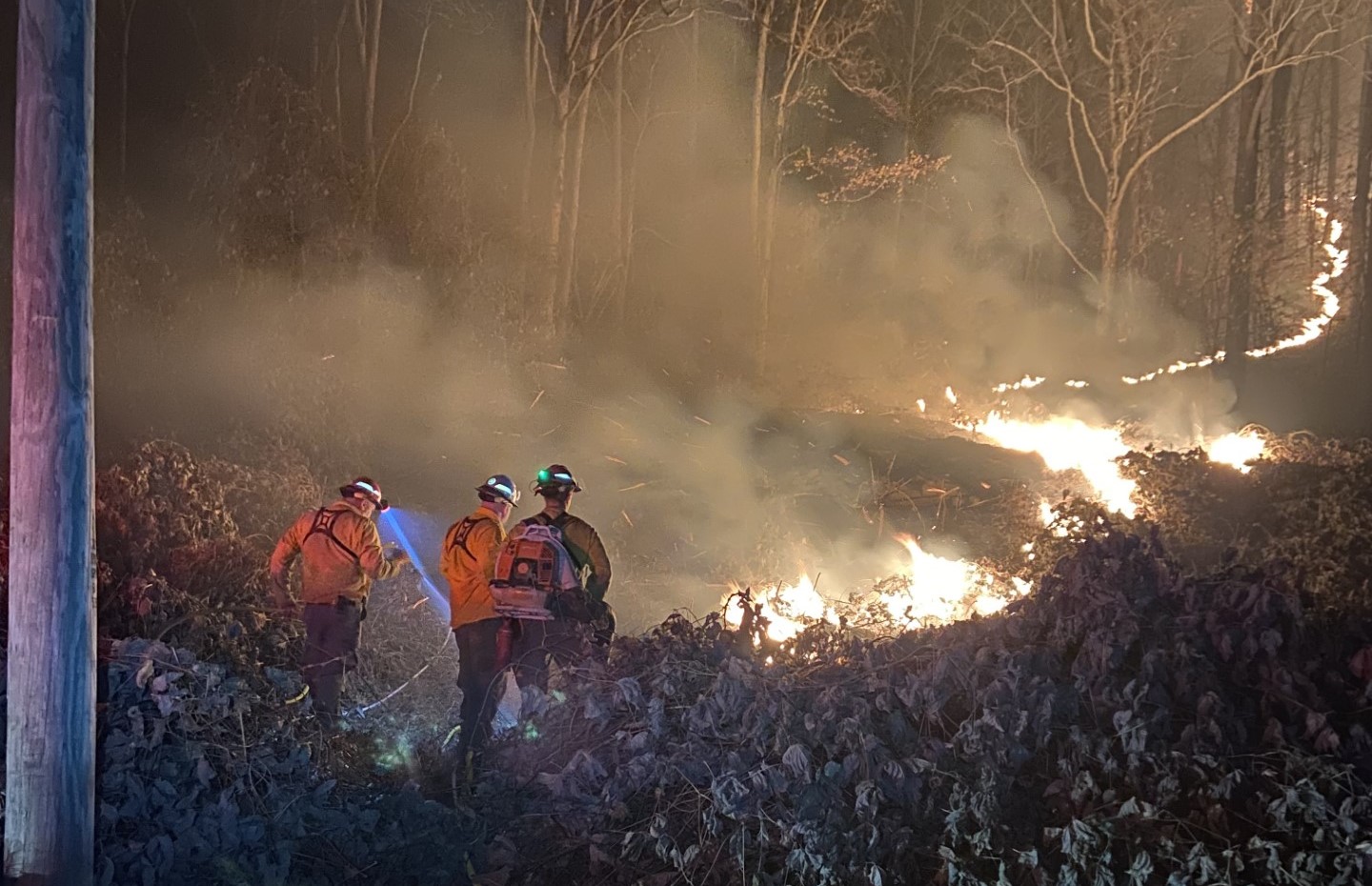
CHARLESTON, W.Va. — The start of 2024 will bring to a close the fall outdoor burning restrictions in West Virginia bringing to a close a busy year when more than 300 forest fires were recorded across the state.

West Virginia State Forester Jeremy Jones told MetroNews starting Jan. 1 people are once again permitted to start controlled fires during daylight hours.
“Our burning restrictions go away for the months of January and February, and then they come back in for our spring fire burning season which would be March 1,” Jones said.
However, Jones said he wanted to caution the public that while they are allowed to burn during the day in January and February, people should make sure that burning does not occur on a very dry day with a lot of sun and wind. He said it’s better to wait for a day in those months when conditions are more moist.
Jones said it was a busy fall for the Division of Forestry. He said the busiest portion came during the first few weeks of November when the division, along with local fire departments, had to extinguish over 80 forest fires, most of which occurred in the southern coalfields region of the state.
He said a major blaze took place in the New River Gorge National Park and Preserve during that time– deemed the Steep Mountain Fire– which occurred in addition to what they were already having to respond to.
“When the Park Service had that fire, the one that got all of the press, we were actually managing about 42 fires throughout the state that were essentially just as big, or what we would consider large fires, they were 1,000 acres or bigger,” he said.
Jones said since July 1, 2023, the forestry division and fire crews battled a total of 322 fires that had burned approximately 32,317 acres, with both of those numbers, particularly the acreage, resting well above the typical yearly average.
He said it was a particularly challenging season, because, the fires seemed to happen all at once, and the warmer than average temperatures that a portion of the fall experienced didn’t help alongside the shedding of the leaves.
“Once our leaf canopy falls off you know it doesn’t take long for an 80-degree day and sunshine to dry those out, and when they dry out they burn fairly easily unfortunately,” he said.
Jones said a little over a third of those fires were caused by debris burning that could have been prevented by using burning safety strips, not leaving the fire unattended, as well as following the other guidelines provided by the Division of Forestry.
He said it all turned out well in the end despite the series of challenges the increased number of blazes brought with them.
“The Division of Forestry did a tremendous job, along with our fire departments,” Jones said. “We were thankful we didn’t have any major injuries or anything of that nature this fall.”
He implores people to follow those guidelines during times of outdoor burning restrictions and to simply use common sense when starting the fires.
Jones said if people have any questions about the restrictions and guidelines, or when it’s safe to burn, to call the Division of Forestry’s office headquarters in Charleston at (304)558-2788, or call them at any of their regional offices.
It was also a tragic year for the Division of Forestry with the spring death of Fayette County Forester Cody Mullens. He died while battling a blaze in the Armstrong Creek area. Investigators determined the fire was intentionally set and a man has been charged.