


MORGANTOWN, W.Va. –– The state Supreme Court made its annual visit to the WVU College of Law Wednesday taking up four cases on its argument docket.
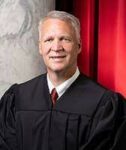
Chief Justice Tim Armstead, a graduate of the WVU College of Law, said the visits give students the opportunity not only to watch cases but also interact with and ask questions of the justices and attorneys presenting arguments.
“They’re hearing to do that and to talk with the students about the cases,” Chief Justice Armstead said. “So really, from an appellate court standpoint, this is one of the most hands-on experiences they’ll have at the WVU College of Law.”
The Court had both criminal and civil cases on its docket.
One, the appeal of the Marion County murder and sexual assault case against Brian Lyon, questions jury instructions and alleged inappropriate comments made by the prosecutor to the jury. Lyon was sentenced to life plus 150 years. Another case alleges property owned by a Morgantown realty company was taken without just compensation in violation of the State Constitution by the city of Morgantown for streetscapes and entry projects in the Sunnyside Up Tax Increment Finance District.
“Some will pursue a career in criminal law, perhaps as a prosecutor or public defender, and others will be on the civil side,” Armstead said. “That’s one of the reasons we try to give a mix of cases.”
First-year law student Caityln Kinsey said she was excited to watch trained professionals do the job she hopes to do someday.
“At the appellate level, it’s all about things like jury instructions and all the technicalities of a trial,” Kinsey said. “I’m most excited to see how the seasoned attorneys operate and present themselves.”
Parker Stout is also a first-year student who just did an academic version of oral arguments and now he gets to witness the Court and attorneys at work.
“I’ve never seen the Supreme Court oral argument before,” Stout said. “We just did our own oral arguments, so it will be exciting to have it done by real attorneys.”
Armstead hopes the statewide tours make the court and justices more approachable and understandable. For the students, watching the court in action gives them a realistic experience to take back to the classroom and into their careers.
“We’re hoping that by going out throughout the state as we’re doing today at the WVU College of Law, they see that this court system is not quite as intimidating as they think it is,” Armstead said.