


More than 20 West Virginia organizations wrote to senators Shelley Moore Capito and Jim Justice, urging them to reject the “One Big Beautiful Bill” that would limit access to Medicaid and Supplemental Nutrition Assistance Program.
Debate over the big reconciliation bill has reached a crescendo as leaders in the U.S. Senate aim for a vote this week.
Recent polling has shown that most Americans have negative views of the big bill, although many say they aren’t fully informed about it. A Fox News poll found that 38% of registered voters support the “One Big Beautiful Bill” based on what they know about it, while 59% oppose it.
The “One Big Beautiful Bill” advances many of President Trump’s top priorities, including extending the 2017 tax cuts enacted in his first term and expanding border enforcement while going ahead with deep spending cuts to Medicaid, SNAP and other federal programs.
“West Virginians have the most to lose and the least to gain from this package, with a significant portion of our population and economy reliant on Medicaid and SNAP, while we have few ultra-wealthy households,” wrote members of the state organizations.
Medicaid
The nonpartisan Congressional Budget Office’s latest cost estimate concludes that the bill would reduce federal Medicaid spending by $793 billion and increase the number of people without health insurance by 10.9 million, because of changes to Medicaid and the Affordable Care Act.
The proposals institute more rigorous requirements for Medicaid that are anticipated to cause millions of people to drop their Medicaid coverage.
One of the new provisions is “community engagement requirements” of at least 80 hours per month of work, education or service for able-bodied adults without dependents.
Critics have said the work requirement actually represents greater red tape for recipients who could forget to maintain their coverage, misunderstand steps or miss a key update.
States that have implemented similar policies show no increases in employment but many eligible people lose coverage, wrote the groups to the senators.
The letter to the senators contended an estimated 50,000– 110,000 West Virginians expected to lose Medicaid under new regulatory red tape, despite the vast majority of West Virginians on Medicaid already working or eligible for an exemption category.
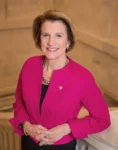
Senator Capito, speaking this week on MetroNews Talkline, again said she supports work requirements for Medicaid.
“The best way to try to preserve Medicaid for those who deserve it and qualify for it is to get the people that don’t deserve it and aren’t qualified off the plan,” Capito said.
“Now that sounds easy. It’s billions of dollars, and so that is where our first focus is, then, as you look at for the next 10 years, Medicaid is projected to grow by $1 trillion so what we are doing is coming in and saying, ‘Okay, we’re not going to let it grow that fast, because it’s going to overtake our already $37 trillion debt.'”
The effects are not so simple, said Kelly Allen, executive director of the West Virginia Center on Budget & Policy think tank while speaking this week on a regional press briefing about the megabill.

“We’ve heard our own Senator Capito say just this week that these cuts will not touch those deserving of Medicaid. But we know that’s not true,” Allen said.
“We know the vast majority of those on Medicaid in West Virginia and around the country are already working or meet an exemption category, and we know from experiences in Arkansas and Georgia that coverage losses are mostly concentrated among people who should still be eligible but have difficulty navigating new bureaucratic red tape.”
Capito, R-W.Va., did express concern about changes to a Medicaid provider tax that could affect the bottom line for hospitals, particularly rural ones. Senators have been discussing potential workarounds like a “stabilization fund” to soften that although such possibilities are still vaguely defined.
“We need to create some kind of backstop, financial backstop, for these hospitals. And that’s exactly what is going on right now. It’s something to help with operations and capital expenditures in these rural hospitals, so we don’t lose that healthcare delivery system,” Capito said on Talkline.
“So I cannot be a party to something that’s going to further inhibit West Virginians’ access to healthcare. And I don’t believe that this bill, in the end, will do that.”
SNAP
The bill would reduce federal spending on the Supplemental Nutrition Assistance Program, known as SNAP, by roughly $286 billion over the next decade, according to the Congressional Budget Office analysis
The CBO estimates that the bill would lead to lower SNAP enrollment by millions of people, and those remaining in the program would experience reduced nutrition allotments.
“Right here in West Virginia, more than 80,000 residents, or 1 in 3 SNAP recipients, would be at risk of losing food assistance under these policies,” groups wrote to the senators.
“That includes children in households where parents would lose food assistance as well as veterans and other vulnerable adults.”
A major aspect would expand the age range for work requirements.
The work requirements would mean 3.2 million people would lose food stamp benefits in an average month over the next decade, the Congressional Budget Office estimates.
Furthermore, the bill would require states to take on more of the costs of administering SNAP and limit future administrations’ ability to raise benefit amounts.
“Not only does the legislation cut a third of the program’s funding, it would for the first time shift costs to states to backfill the federal cuts,” wrote the community groups to the senators.
“Coal, Cuts, and Consequences: A Crisis in Appalachia,” a separate community event on Wednesday focused on recent layoffs in the coal industry in relation to the social safety net.
Participants said cuts to SNAP and Medicaid would deepen the economic and emotional toll on rural communities.

“So many of our fellow West Virginians are already being faced with the loss of food resources, as well as healthcare,” said Cyndi Kirkhart, chief executive of Facing Hunger Food Bank.
“And with the addition of these newly reported job losses, we want to bear witness to the concerns of those affected in these communities – which is truly the center of our work. We want to raise their voices and concerns to our local, state and federal lawmakers, as we’re all facing this together.”