


A Berkeley County judge who has denied requests to make school system officials honor religious exemptions for vaccines elaborated in a written order, saying the state has a compelling interest in promoting vaccination to suppress the spread of communicable disease.
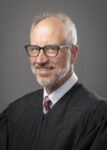
“The public interest lies strongly in favor of the prevention of contagious diseases. Weakened vaccination requirements, in contravention of the CVL, may lead to outbreaks and deaths from preventable diseases,” Berkeley Circuit Judge Michael Lorenson wrote, referring to the compulsory vaccination law.
“The public has a strong interest in reducing the rates of vaccine preventable diseases addressed by the CVL and in protecting the health and safety of public school students.”
Lorensen concluded a three-hour hearing last Friday by declining to order a preliminary injunction sought by families who want religious exemptions to be recognized by the school system. His written order filed this week elaborates on the judge’s reasoning.
The judge ordered an evidentiary hearing for 9 a.m. Nov. 12.
The question of whether the religious freedoms law affects the compulsory vaccination law has hit courtrooms and the political discourse around West Virginia.
Gov. Patrick Morrisey, who has ordered the Department of Health to process vaccine exemptions for religious or conscientious objector reasons, has said that “we must harmonize the two laws.”
West Virginia law requires students entering school for the first time to show proof of immunization against diphtheria, pertussis, tetanus, polio, measles, mumps, rubella, varicella, and hepatitis B unless properly medically exempted. There’s no explicit mention of religious or philosophical exemptions.
The “Equal Protection for Religion Act,” which went into law in 2023, lays out the ability of individuals who believe their religious rights have been violated to seek a claim in court.
The law says no state action may burden an individual’s exercise of religion unless it’s essential to furthering a compelling governmental interest and is the least restrictive means of achieving that.
The parents in the Berkeley County case went to court to try to allow their children to use public school system resources like special needs programs and athletics without the required vaccines or boosters. They contended that being denied those educational resources represents a substantial loss — irreparable harm.
Judge Lorensen concluded that the families’ “right to practice their religion freely does not include the unfettered liberty to expose the Berkeley County Schools’ community or medically fragile Berkeley County Schools’ students to communicable disease or death.
“Here, Plaintiffs’ children do not bear the medical risk of attempting to opt out of immunization on a religious basis. Rather, Plaintiffs seek to shift that risk onto the remaining Berkeley County Schools’ community, including its medically fragile students.”
The judge considered the families’ argument that they would suffer irreparable harm through the loss of publicly-guaranteed education by noting that the families did not seek legal relief before the school year began, and there are other educational opportunities available to them.
“If Plaintiffs do not wish for their children to comply with the valid, existing CVL, they may be properly exempt from compulsory school attendance by participating in homeschooling or other private schooling,” Lorensen wrote.
His position marked yet another split in local courts.
Raleigh County Judge Michael Froble granted a preliminary injunction for parents in a high-profile case there, citing religious freedoms. A permanent injunction hearing before Judge Froble, which got two days of expert testimony earlier this month, picks up again Oct. 8 and 9.
In Mineral County, Judge Cody Pancake denied an injunction, concluding that West Virginia’s religious freedoms law does not directly apply to the vaccine requirements in code.
Berkeley County’s Lorensen, in a footnote in his order, took note of the divergent outcomes in the other counties and commented, “The West Virginia Supreme Court of Appeals is anticipated to provide clarification related to Executive Order 7-25, EPRA, and the CVL in Spring 2026.”
Lorensen said in the courtroom last week that he could not make a legal reach that the religious freedoms law affects the vaccination law, which has been in code since 1931.
“I would be changing the law to recognize an exception,” Lorensen said of the specific language of the school vaccination law.
His written order noted that the Legislature has repeatedly considered religious exemptions and has fallen short each time:
“Plaintiffs ask this Court to agree that EPRA effectively amends the CVL by forcing a religious exemption into it, despite the fact that the Legislature has repeatedly taken up this issue, has not amended the law, and EPRA was not enacted for that purpose.”
Lorensen wrote, “In regard to the Plaintiffs’ request that this Court create a religious exemption to West Virginia’s CVL, this Court is mindful that its Constitutional role ‘is to interpret the statute, not to expand or enlarge upon it.'”