


West Virginia continues to have 5,960 children who have been removed from their homes and placed elsewhere, according to a dashboard run by the state.
Of those, hundreds are subject to residential placements out of state, the dashboard indicates.

Gov. Patrick Morrisey, in a news conference today, said his administration is working to improve the longstanding situation. The governor described a new revolving investment fund meant to reduce out-of-state placements, currently at 380, by investing in state facilities.
“This has been a issue that’s plagued the state for a very, very long time. And in the past, we’ve talked about the fact that the state has failed a lot of the children that are in the care of the state,” Morrisey said. “To me, that’s unacceptable.”
West Virginia children are typically sent to out-of-state placements because of a shortage of available local foster homes or specialized facilities that can meet their specific behavioral, medical or therapeutic needs.
“You see, for many, many, many years, West Virginia has been sending too many of our kids out of state to receive care that they should get right here at home,” Morrisey said.
“These placements are very costly, and they separate children from their families, their communities, and ultimately, can lead to longer stays. We have to be looking for ways to change that.”
He described a goal of expanding in-state treatment capacity while reinvesting the savings from the more costly out of state placements to build capacity in the state, saying “it’s our intent to work with the Legislature this year on a bill to establish a framework for reducing those out of state placements.”
The governor said the revolving investment fund could be used to renovate and repair existing state properties and provide high acuity psychiatric, neurodevelopmental and trauma services.
“The goal is is to take that revolving fund, as you put money in to refurbish the facilities and you bring people home, we think we can actually save money as a result, and then we can reinvest it back into the program with the goal of eventually eliminating out of state placements,” he said.
“I’m not here to give you a date on that, but we want to do that.”
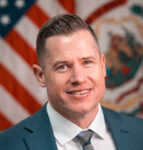
Human Services Secretary Alex Mayer added, “Children do better when they can stay connected to family and community whenever it is safe to do so. That is why we are investing in kinship care, adoption, and in-state capacity instead of relying on stopgap solutions.”
This week, an organization called the Legislative Action Team for Children and Families released policy priorities for the upcoming legislative session.

Jim McKay, chairman of the Legislative Action Team and state coordinator for Prevent Child Abuse West Virginia, said the coalition intentionally released its initial priorities early to help inform legislative conversations ahead of the session that starts Jan. 14.
On today’s remarks by the governor, McKay said the Prevent Child Abuse organization appreciates Morrisey’s efforts to make needed reforms and improvements to West Virginia’s child welfare system.
“It is encouraging that additional resources are being discussed so that children do not have to be out of state. However, we also urge the governor and lawmakers to provide extra resources so children don’t have to be removed from their homes and become involved with the child welfare system at all,” McKay said.
“As lawmakers and the governor work to address these issues, we look forward to enacting family-friendly policies that strengthen families and expanding local programs that prevent child abuse and reduce the need for foster care overall.”