


The U.S. Senate advanced a bipartisan measure aimed at blocking the Trump administration from conducting further military action in Venezuela, with Shelley Moore Capito and Jim Justice of West Virginia as no votes.
This was a vote to discharge the war powers measure from committee. A passage vote will come later.
Capito, in a briefing today with West Virginia reporters, said she views the removal of President Nicholas Maduro as a law enforcement action backed up by American military might.
Maduro and his wife were taken into custody early Saturday morning when U.S. forces descended onto his compound. An indictment against Maduro on drug conspiracy and gun charges was initially filed in March 2020 and unsealed Saturday in U.S. District Court in Manhattan.
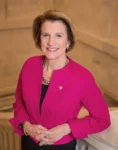
“This is a very precise mission. It was a law enforcement mission to bring a narcoterrorist to justice, saying that there are no safe harbors for those who profit, not just those that are killing Americans through drugs, but also the horrible gangs and terrorist organizations,” Capito, R-W.Va., said today.
She continued, “I’m supportive of what the President has done. I look forward to making sure that Venezuela becomes the democracy that it was in the past and can be in the future. It has a great and bright future.”
Republicans who supported the bill were Senators Lisa Murkowski of Alaska, Josh Hawley of Missouri, Susan Collins of Maine, Todd Young of Indiana and Rand Paul of Kentucky. All Democrats in the Senate were yes votes.
President Donald Trump responded with a social media post criticizing the five Republican senators by name and saying the action “hampers American Self Defense and National Security, impeding the President’s Authority as Commander in Chief.”
Article 1 of the U.S. Constitution gives Congress the authority to declare war. The War Powers Act of 1973 limits the president’s ability to commit U.S. forces to armed conflict without Congress’s approval, requiring the President to consult Congress.
The Trump administration did not seek congressional authorization to strike Venezuela or capture Maduro.
In a press conference on Saturday, President Donald Trump said the United States would temporarily take over running Venezuela and that U.S. oil companies would invest billions of dollars in the country’s energy sector.
Maduro is widely considered a dictator who retained power last year even as the opposition party and its leader, María Corina Machado, disputed election results. Machado, who was awarded the Nobel Peace Prize this year, lives in hiding
Delcy Rodríguez, who had been the vice president of Venezuela, is now the acting president.
Of the opposition leader, Machado, Trump said on Saturday: “I think it would be very tough for her to be the leader. She doesn’t have the support within, or the respect within, the country. She’s a very nice woman, but she doesn’t have the respect.”
COMMENTARY by HOPPY KERCHEVAL: Trump takes out Maduro. Now what?
In an interview with the New York Times published today, Trump said the interim government of the country, which is made up of former loyalists to Maduro, is “giving us everything that we feel is necessary.”
The president indicated that United States oversight of Venezuela could last for years.
In today’s briefing with Capito, reporter Charles Young of West Virginia News made reference to the president’s New York Times interview and asked, “What do you think the United States’ involvement in Venezuela should be?”
Capito responded that she believes the administration is looking long term toward “a transition to a democratically elected, stable government. But initially, the first thing is to stabilize where they are right now. And I think that’s the phase we’re in right now.”
She added, “I think there’s a lot of strong and there’s a lot of democracy-filled countries in and around the area that want to see a stable Venezuela. I think we’re going to have a much softer touch here than what maybe was initially reported. And I think that the Venezuelans are going to be be able to stand up,
“But we first have to get everything calmed down and make sure that the country doesn’t fall back into the hands of another narcoterrorist or a regime that is beholden to to Iran and others for their for their economics.”