


The Senate Finance Committee advanced a 10% personal income tax bill and an accompanying budget bill, unveiling it so unusually soon in the regular session that it prompted moments of levity.
Senator Ben Queen asked the committee’s staff counsel, “Is this the first time you’ve passed a budget on Day 34?”
Yes was the response. It was his first time rolling out a budget so early.
From across the table, long-serving Senator Mike Oliverio offered up: “Mine too.”
The budget bill, Senate Bill 250, now goes on to the Senate floor for consideration. So does the tax bill, Senate Bill 392.
But process, timing and comments made clear that it’s extremely unlikely that this will be the final version of either bill. If they pass the Senate intact, possibly later this week, the House of Delegates will have a say-so too.
There are a lot of spinning plates, which is part of the reason the Senate debuted its budget bill so early.
Gov. Patrick Morrisey, whose administration proposed a budget with a 5% personal income tax cut, has emphasized over and over that he really wants to get to a 10% cut.
The Hope Scholarship to support the educational expenses of families opting out of public schools is an expense that grows and grows, more than $300 million for the next fiscal year.
Meanwhile, legislators have reflected concern from communities around the state that the current system for public school funding is stretched thin, leading to the shutdown or consolidation of school after school. The governor’s proposal for the budget did not include additional dollars for public school support.
And the governor’s proposed budget anticipated using millions of dollars of year-end surplus to pay for Medicaid, the state-federal health insurance program. Some lawmakers have cautioned that’s a gamble.
So all of that meant it’s a good idea to get a jump on the budget, Senate Finance Chairman Jason Barrett said following today’s committee meeting.

“It is a little earlier than normal,” said Barrett, R-Berkeley. “We’ve heard a lot about the 10% tax cut. I think the Republicans in the Senate are trying to implement and are committed to a significant tax cut to the people of West Virginia.
“So this was really our way to move forward, to be a leader on the tax cut, send it over to the House and let the negotiations begin.”
Both chambers are considering potential financial relief for public schools, in particular legislation that would provide more dollars to account for the expense of special education.
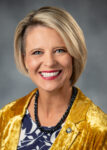
Senate Education Chairwoman Amy Nichole Grady, who is a member of the finance committee, said that as the budget framework develops she hopes that kind of financial support for public schools will be included.
“There are still some things missing from the budget from what I would like,” Grady, R-Mason, said after the finance meeting.
She alluded to the likelihood that the budget bill will evolve as it continues its journey. “So I am thoughtful and hopeful that there will be some changes made to it and then the consideration of adding some things, specifically for the school aid formula,” Grady said.
The Senate’s proposed budget bill has key differences from what the governor proposed.
If you’re taking notes, don’t write with permanent ink.
On the Hope Scholarship, the governor’s proposal attributes $230 million from general revenue and $108 million from supplemental appropriations. The Senate’s proposal has nothing from general revenue, $100 million from supplemental appropriations and $200 million if the state runs a surplus at the conclusion of the fiscal year.
On Medicaid, the governor’s proposal pays $139 million from general revenue and $170 million from any surplus available when the fiscal year ends. The Senate proposes $260 million from general revenue, $5.6 million from special revenue account sweeps and $46 million from fiscal ’26 “pre-funding.”
Then there’s the tax cut proposal.
The committee rolled out a new version of Senate Bill 392 to reflect the 10% personal income tax cut that the governor favors. That bill also has a vape tax as a partial offset.
A 10% income tax cut is expected to cost $250 million.
The vape tax change is expected to raise an extra $22 million for the state.
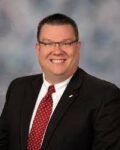
“And that gets us approximately 15 percent of the way there?” asked Senator Robbie Morris, R-Randolph.
“This is a first step.”

Senator Mike Woelfel, D-Cabell, said he has regularly supported tax cuts in the past.
“However, I have a great deal of reticence when it comes to this 10 percent tax cut,” Woelfel said. “I would have to be a no on this.”
After the meeting ended, Barrett emphasized this is a starting point.
“We’ve heard a lot about offsets and things to be able to get to the 10% tax cut. We have built an offset in this bill with the increase in the vape tax. So now we’re going to send that over to our colleagues in the House and ask them to come up with their plan and see if they have some additional offsets,” Barrett said.
Barrett said he does not anticipate this will be the final budget.
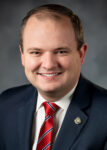
Queen, the Senate majority whip, commented during the meeting and set a marker for where the budget process stands.
“It’s responsible to kick the football to the other side of this building,” said Queen, R-Harrison, “I’m not sure the 10% makes it through.”