

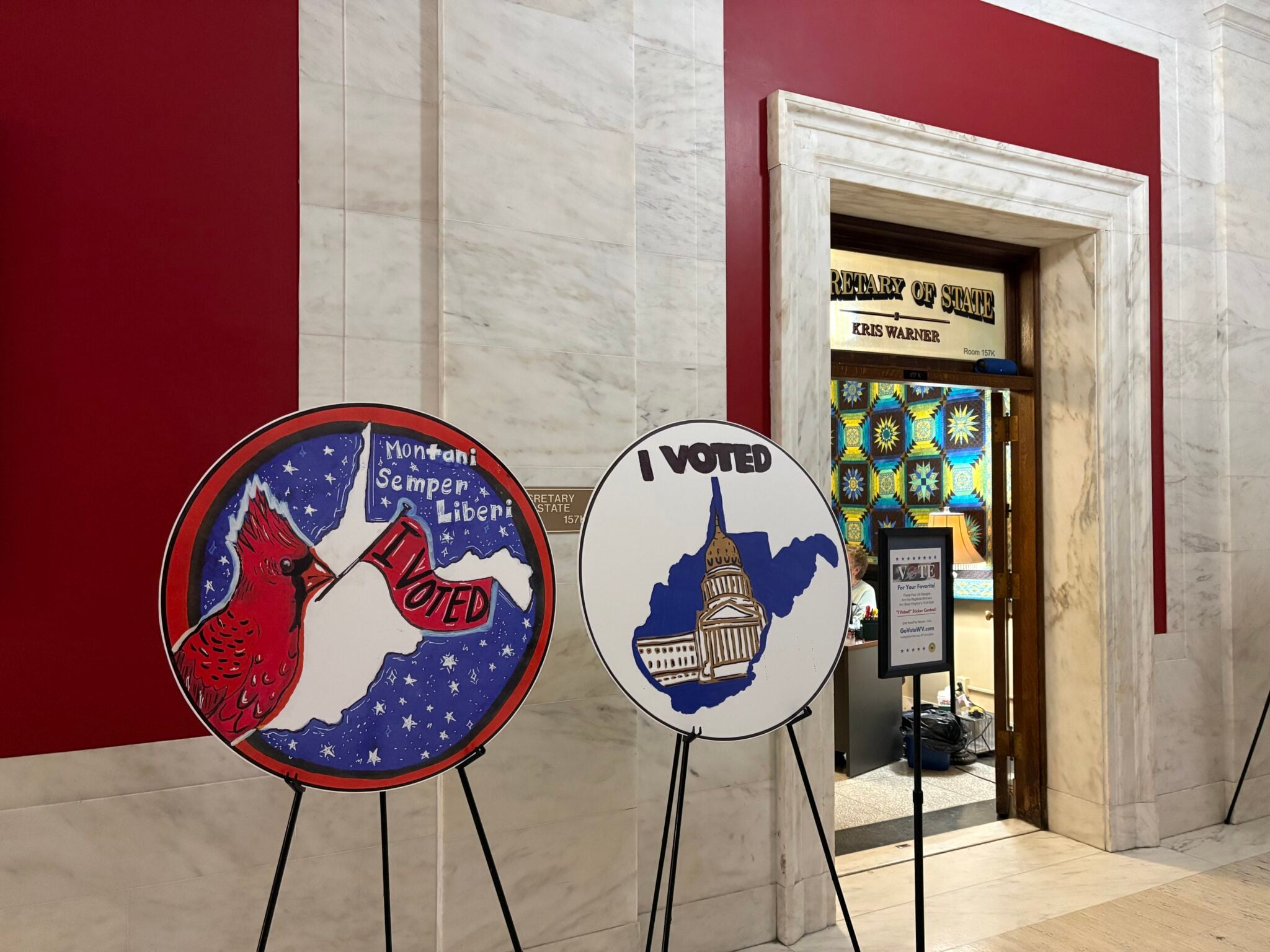
Aspects of a federal court dispute over voter information between the U.S. Department of Justice and West Virginia’s Secretary of State are starting to take shape.
The Department of Justice is suing to get state voters’ information like birth dates, residential addresses, drivers license numbers and partial Social Security numbers.
This has been an ongoing issue in West Virginia since Secretary of State, Kris Warner twice said no, citing state law and personal voter information.
The case has been assigned to U.S. District Judge Thomas Johnston, a George W. Bush appointee who has served on the federal bench since 2006. He served as chief judge for West Virginia’s southern district from 2017 to 2024.
Discovery in the case has been referred to U.S. Magistrate Judge Dwane Tinsley.
No hearing dates have been set so far, according to the federal file.
The Justice Department’s Civil Rights Division filed suit Feb. 26 against West Virginia for what it called failure to produce full voter registration lists upon request. That brought the Justice Department’s nationwide total to 29 states and the District of Columbia.
The federal court docket shows that attorney Christopher J. Gardner of the Voting Section of the Justice Department’s Civil Rights Division is representing the federal government as counsel.
In recent months, Gardner has represented the DOJ in voting-related litigation that includes cases involving Fulton County, Ga., and the State of Illinois.
Before that, Gardner was a Georgia-based attorney who was involved in challenges to Georgia’s 2020 election results.
The federal government has been seeking full voter registration lists including names, addresses, birthdates, driver’s license numbers and the last four digits of Social Security numbers.
Many states have refused to comply, arguing that the request exceeds federal authority over elections and compromises voter privacy.
An organization that has intervened in the case, West Virginia Alliance for Retired Americans, has filed a brief to bolster the Secretary of State’s position that turning over the voter registration records would violate state law.
“DOJ’s requested relief runs roughshod over these privacy protections, which Proposed Intervenor seeks to preserve,” wrote attorneys for the organization.
The Alliance for Retired Americans is a national non-profit advocacy organization founded by the AFL-CIO in 2001. It works to protect and improve Social Security, Medicare, Medicaid and pensions for older Americans. A major focus of its mission is safeguarding the right to vote
The organization operates through various state chapters across the country, with the West Virginia chapter consisting of more than 51,000 members.
The alliance and its various state chapters are actively intervening in federal lawsuits to prevent the U.S. Department of Justice from compelling states to release unredacted voter registration lists.
“The U.S. Department of Justice pursues an unprecedented campaign to compile sensitive personal information on voters nationwide in a centralized federal database,” lawyers for the Alliance for Retired Americans wrote in the filing for the West Virginia case.
The organization contends that the disclosure of sensitive data—such as Social Security numbers, phone numbers, and email addresses—poses a risk of data breaches and identity theft, which could discourage retirees from participating in the political process.
The alliance contends that the Department of Justice is overstepping its authority under the Civil Rights Act of 1960 to create an unprecedented national database.
“DOJ, in asking Defendants to disregard West Virginia law by turning over such sensitive information, threatens to irreparably harm Proposed Intervenor’s members,” wrote attorneys for the Alliance for Retired Americans.
“This is particularly important to the Alliance’s membership, which consists almost entirely of seniors who are deeply concerned about the risks of social security fraud, identity theft, and other types of financial fraud, which are very often targeted at seniors.”
Moreover, “Alliance members may reasonably be particularly hesitant to engage in the political process if it means inviting opportunities to have their private personal information released.”