

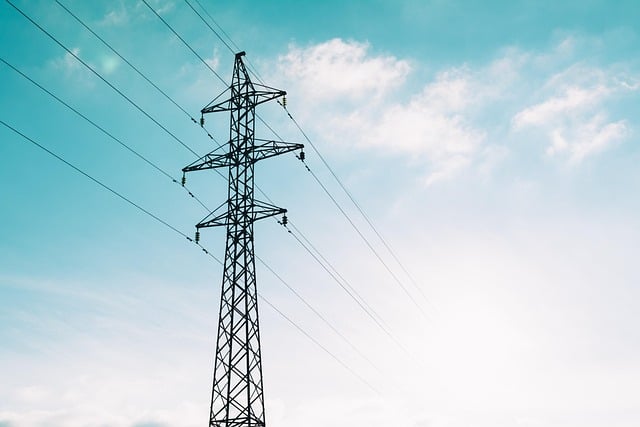
CHARLESTON, W.Va – Planning continues on the MidAtlantic Resiliency Link, a 500-kV transmission line planned to run through West Virginia as it connects Pennsylvania to Maryland and Virginia.
The project, mapped out by NextEra Energy to service the PJM Interconnection, is still in the permitting phase, but the company remains steadfast in finishing plans that it says will make significant improvements to the energy grid in the region.
“West Virginia’s growth for rate payers is 2-3 times more electric use than in previous years, but at the same time the investments have not kept up, and I think that’s the biggest issue: we have not kept up with the investments, especially large investments in things like the electric grid and transmission specifically,” NextEra Vice President of Development Matt Pawlowski said Tuesday on MetroNews Talkline.
Concerned West Virginians have raised numerous questions about the MARL line in the months since it was announced, and Pawlowski hopes outreach can dispel some notions in the near future. He expects rate payers to see small increases in exchange for long-term benefits.
“For about a dollar a month or under a dollar a month, the average ratepayer is going to see benefits to this state for decades and decades and decades to come. We are not waiting for the grid to fail. We need to modernize the grid now,” he said.
Property owners across the portion of the state that would contain the line have repeatedly spoken out against any future efforts to build the MARL over their land. Pawlowski indicated that the line’s path is not set in stone and the company wants to work alongside residents.
“You may have a piece of property that you want us to go on the right side of the property. That would be your preferred route rather than the left side of the property because of whatever reason. We’re going to take all of that input in, and we’ve been taking all of that input in as we’ve designated the route, but there’s going to be tweaks along the way,” he said.
The MARL is designed to carry energy both into and out of the area that it services and Pawlowski believes that it is a big benefit for West Virginia. He said that will create an efficient pathway for power generated in the Mountain State to be transported elsewhere.
“The Mid-Atlantic Resiliency Link is a bi-directional line, and what that means is power is flowing in, and a lot of people focus on the power flowing in, but power also flows out, and as you guys know, there’s a lot of generation in the state of West Virginia, and this provides a really good highway for the generation to flow out into the rest of the PJM system,” he said.
NextEra is also planning to utilize the tax revenue generated by the MARL project to support causes within West Virginia’s borders. A significant portion of that money is designated for West Virginia public schools.
Over the course of the project, $133 million for the state of West Virginia, and, again, we’re supporting public education with about 70% flowing into that, so that’s a really important statistic. Those are things that infrastructure projects bring to local communities,” he said.
Public meetings regarding the MARL project are planned around the state this summer.