

CHARLESTON, W.Va. — The Third Grade Success Act goes into effect this school year and Kanawha County education officials want parents to be ready.
House Bill 3035, passed by the state legislature in 2023, is geared toward ensuring students read at grade level and are proficient in basic math by the end of the third grade. If students don’t meet the minimum requirements in English-Language Arts (ELA) and/or math, they will be considered to be held back a year.
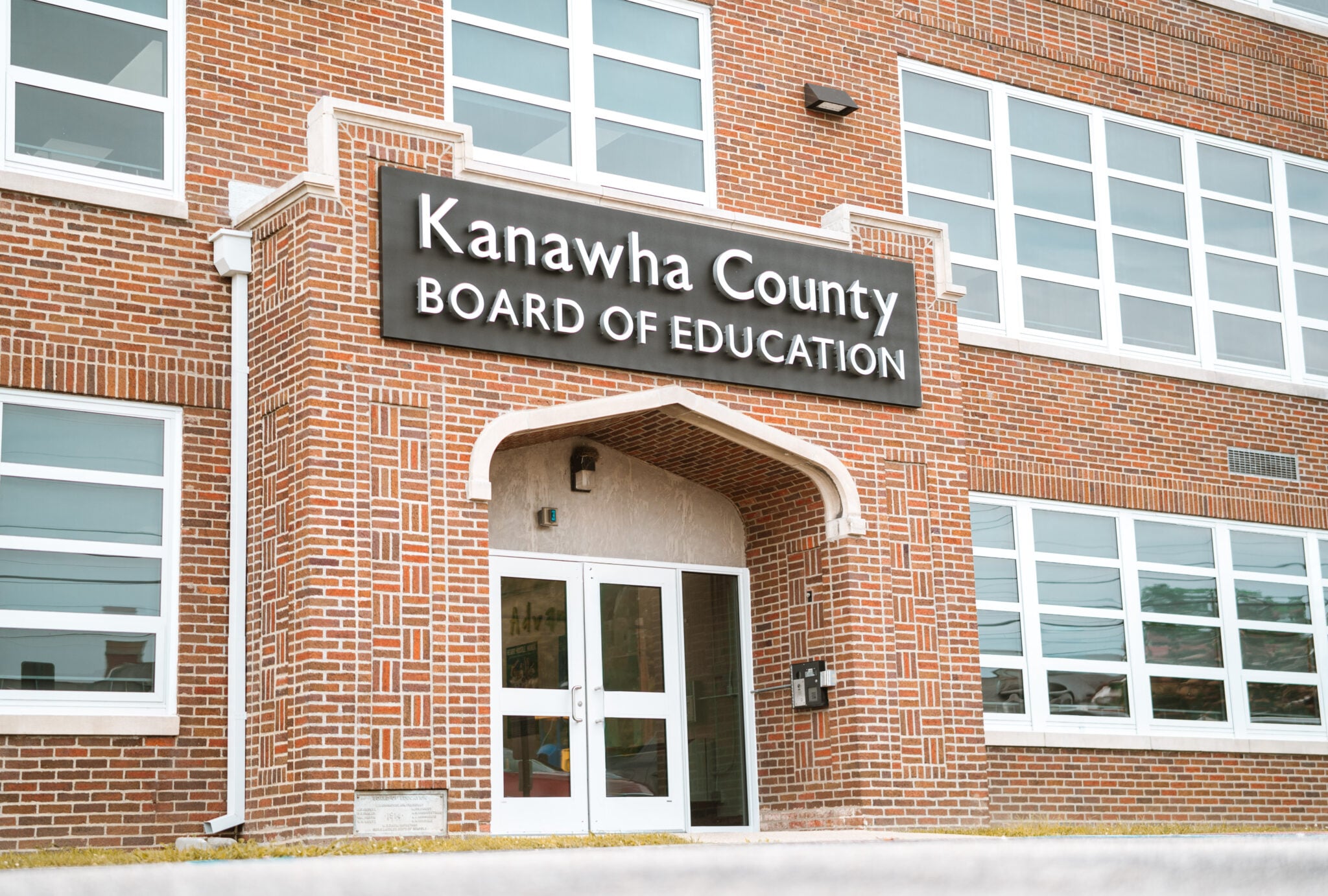
The Kanawha County Board of Education heard an update Monday from county Assistant Superintendent for Elementary Schools Amanda Mays on the efforts to reach parents and let them know of the changes.

Kanawha County Superintendent of Schools Dr. Paula Potter said they’ve made extensive efforts for awareness.
“We are informing everyone with as much information as we can, so no one is taken by surprise what might happen,” Potter said. “We continually get updates, on a regular basis, on the Third Grade Success Act. Amanda (Mays) has done great training with all of our teachers and principals, who’ve been doing trainings with their staff and parents.”
Mays said that all parents of third graders received a letter, regardless of their child’s scores, at the beginning of the 2026-27 year. She said that this letter primes parents to have an understanding of where their child is, and where that child needs to be by May 2027.
“It’s very specific, because it shows exactly what their beginning-of-the-year score is, and what the end-of-the-year score has to be in order to not be considered for retention as part of this policy,” Mays explained.
Mays said those beginning-of-the-year scores are from an initial General Summative Assessment (GSA) examination. She said those benchmarks are just that, a chance for students to grow upon throughout the year.
She said that Kanawha County Schools has made sure to train all elementary school principals on this. Mays noted that her “exact presentation,” which she gave to county education leaders during the meeting, was the same one she gave to 39 elementary schools in Kanawha County. She said they’ve gone to great lengths to ensure that all parents get the same message and are on the same page.
“All schools scheduled at least one, but many scheduled multiple opportunities for parents to come, to hear this information,” Mays said. “Some on Parent-Teacher Conference Day did a second time, some have during school, before school, after school; they’ve really accommodated all parents in every way we can, so we can get in front of them and say this directly to them.”
Mays said they didn’t want it just to be one letter sent home with a child. It was a ‘sign and return’ letter to make sure that parents can see it, and that Kanawha County Schools could confirm as much, she said.
What parents need to know is that in late April/early May, Mays said, the big test for third graders is scheduled.
“All students take the GSA — the General Summative Assessment — they will get two scores in third grade,” Mays said. “They’ll have an English-Language Arts score, and that comes from a reading test and a writing test, and those are given on two different days, and also from a math test. They’ll have an ELA, or an English-Language Arts score, and a math score.”
The benchmarks are a minimum 550 points in ELA and 401 points in math, Mays said. She added that if the student scores the minimum points or higher, they will be considered for “promotion.” In other words, they’ll advance to the fourth grade the following year. If they don’t meet the benchmarks, Mays said there are many factors that get weighed.
“If the answer is no, then we start to review their entire profile,” Mays said. “We look at their grades, we look at the number of interventions they’ve received, what does their intervention history look like? If they are red in DIBELS (Dynamic Indicators of Basic Early Literacy Skills), we are progress monitoring them every 10 days. If they are yellow in DIBELS, we progress monitor them every 15 days.”
Mays said regardless of the school, there’s a comprehensive sheet that tracks the data the same way. If students don’t qualify for advancing to the fourth grade, Mays said, there are eight exemptions that apply to make “promotion” possible. She said that the school system detailed the exemption process last year in preparation for the Third Grade Success Act implementation this year. As an example, she said, they got a sense of how many students would be held back last year, had the bill been in effect.
Mays explained one exemption in particular to the school board.
“The ‘good-cause exemption,’ they still have to attend summer school and they still have to retake the GSA,” Mays said. “If they don’t do one of those two things, they can’t be considered for the good-cause exemption. I think that’s where parents think they can just write a letter, we’ll say ‘ok,’ and that’s not the case. It specifically says those two conditions have to be met.”
All in all, she said, they are doing everything in their power to have conversations with parents and make them aware. Mays said that if an exemption applies, a student could be considered for a “promotion.” However, if the student doesn’t apply for the exemption, they’ll get “intensive intervention” through the end of May and are required to attend summer school and retake the GSA in the area where they didn’t meet the minimum score.
Those required to retake the GSA will do so at the end of the summer session, Mays said.
The timing of summer school is still up in the air. Potter said they’d like to extend summer session for right after the school year itself ends. A large concern the school system is addressing is daycare concerns, she added, and how parents can swing that with their child. Additionally, the location of summer school is under consideration.
When asked by Kanawha County Board of Education President Kate White, Mays said that the state hasn’t pledged money to pay for the summer schools.
Mays said the final step is an SAT examination, the scores from which determine whether or not the child will advance to fourth grade or be held back in third.
As for the logistics of a student repeating third grade, it varies from school to school. Potter said that if a school only has one third grade teacher, that same instructor would be in charge of the “retained” student. In some cases, she said, teachers may have to move grade levels. She said those decisions all depend on the results in summer school; whether or not students advance to the fourth grade.
Mays had some advice for parents to prepare their children.
“Read aloud, read to a friend, read to a sibling, read to a parent, read to another family member, read to a stuffed animal, record yourself reading,” Mays said. “Just read.”
She said similar approaches should be taken with writing; give children an opportunity to practice. Along with that, Mays said, students have opportunities at school to read and write, with intervention time to “close those learning gaps.” The same is true for math, she said, supporting “areas where they have a deficit.” At home, she encouraged parents to give their children word problems to allow them to think through what they’ll be tested on.
The end-of-the-year GSA testing window opens April 26. She said that all third graders will test that week in Kanawha County. Fourth and fifth graders may be tested the next week, but the third grade timeline has to have built-in time for the “quick turnaround” needed from test results. Mays and board members agreed that there’s hope the scores come back immediately, but it could take longer.
Some school board members shared concerns about drawbacks of the bill.

School board member Mike Arbogast said that research confirms that holding kids back is not the answer.
“This is one of those things where this House Bill 3035 may look good in theory,” Arbogast said. “But they don’t the ramifications of what’s coming from it. I really encourage anybody from the legislature that might be listening out there to please reach out to educational professionals and get input before these types of things happen.”
Another board member, Becky Jordan, worried about parents’ response if their child is held back.
“Well, you know what’s going to happen if they don’t make it,” Jordan said. “They’ll just pull them like they do if they have truancy because the state allows that. There’s nothing holding them back from doing that.”